CM Yogi Inaugurates RUPAAM Campus in Lucknow for Rs 464 Cr
Synopsis
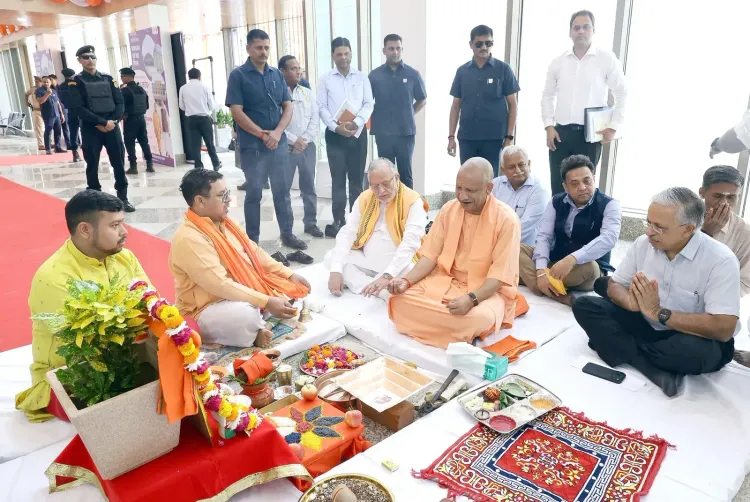
Uttar Pradesh Chief Minister Yogi Adityanath on 3 July 2026 inaugurated the new RUPAAM campus in Lucknow, built at over Rs 464 crore. The academy aims to train civil servants and is envisioned as India's leading school of public leadership, anchoring UP's push for innovation-driven governance.
Key Takeaways
CM Yogi Adityanath inaugurated the new RUPAAM campus in Lucknow on 3 July 2026 .
The campus was built at a cost of over Rs 464 crore .
RUPAAM stands for Dr.
Ram Manohar Lohia Uttar Pradesh Administration and Management Academy , named after the socialist leader and independence activist.
The academy is intended to serve as a leading school of public leadership in India, focused on training civil servants and administrators.
CM Yogi called for a spirit of innovation and excellence in administration, linking the campus to broader good governance goals in Uttar Pradesh .
The initiative is part of Uttar Pradesh's ongoing investment in administrative capacity building under the BJP -led state government.
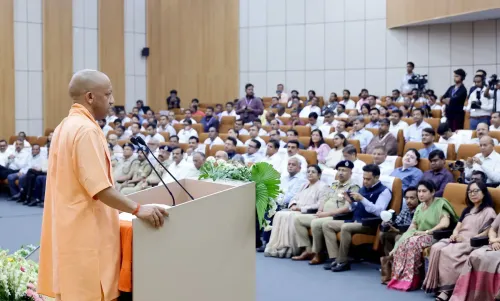
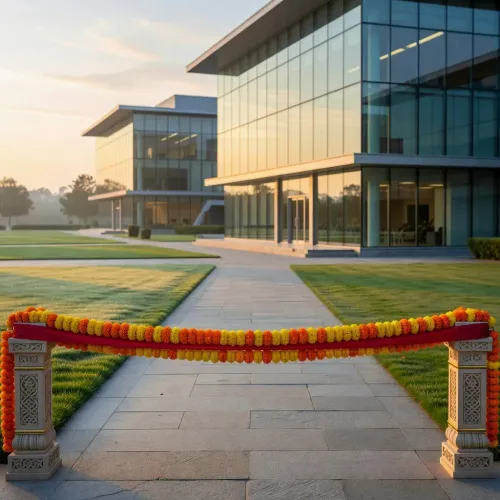
Uttar Pradesh Chief Minister Yogi Adityanath on Friday, 3 July 2026, inaugurated the new campus of the Dr. Ram Manohar Lohia Uttar Pradesh Administration and Management Academy (RUPAAM) in Lucknow, built at a cost of over Rs 464 crore. The facility is designed to reshape administrative training for civil servants across the state and is envisioned as a leading school of public leadership in India.
Context
Posting on X, CM Yogi Adityanath said, 'प्रशासन में इनोवेशन और एक्सीलेंस का भाव होना चाहिए' ('There must be a spirit of innovation and excellence in administration'). He added that if every officer and employee works with dedication to national interest and public service, nothing can stop Uttar Pradesh from reaching new heights of good governance and development. The inauguration of the RUPAAM campus, he stated, is an extension of that very spirit.
The academy is named after Dr. Ram Manohar Lohia, the eminent Indian independence activist and socialist leader, underscoring the institution's grounding in the tradition of public service. CM Yogi expressed full confidence that RUPAAM will develop and expand as one of India's foremost schools of public leadership.
Policy Backdrop
Administrative capacity building has emerged as a key pillar of governance reform in several Indian states. Dedicated leadership academies and training institutes have been set up or upgraded across the country to improve bureaucratic efficiency and public service delivery, and Uttar Pradesh — India's most populous state — has been investing in such institutional infrastructure under the BJP-led state government.
The RUPAAM campus in Lucknow, the state capital, positions Uttar Pradesh to offer structured, modern training programmes for its large cadre of civil servants and administrative staff. The emphasis on innovation and excellence in the Chief Minister's remarks signals an intent to move beyond conventional training frameworks toward outcome-oriented governance models.
Stakeholders and Impact
Civil servants, IAS officers, state administrative service officers, and other government employees across Uttar Pradesh are the primary beneficiaries of the new campus. A dedicated, purpose-built facility of this scale is expected to significantly expand the state's training capacity and standardise the quality of administrative education.
For the broader public, improved administrative training translates into better service delivery, faster decision-making, and more accountable governance at the district and block levels — areas where citizens most directly interact with the state machinery. The investment of over Rs 464 crore also signals the government's long-term commitment to institutional development rather than short-term administrative fixes.
What's Next
Attention will now turn to the rollout of training modules at the new RUPAAM campus and whether the institution can attract faculty and curriculum partnerships that match its stated ambition of becoming a national-level school of public leadership. The government's ability to translate infrastructure investment into measurable improvements in Uttar Pradesh's administrative performance indicators will be the true test of the project's impact.
Policymakers and governance observers will watch whether RUPAAM evolves into a model that other states look to replicate, particularly as India's states compete to improve ease of living indices and public service benchmarks ahead of future electoral cycles.
Point of View
Not just administrative directives. Naming the academy after Dr. Ram Manohar Lohia — a socialist icon — is a politically calculated gesture of ideological inclusivity from a BJP chief minister, broadening the symbolic appeal of the project. The Rs 464 crore price tag also establishes a visible infrastructure legacy ahead of future electoral cycles in a state that has historically been a bellwether for national politics. Whether RUPAAM delivers on its ambition of becoming a national model will depend on curriculum design and faculty quality, not just the scale of its campus.
NationPress
2 Oct 2026
Frequently Asked Questions
What is RUPAAM and what is its purpose?
RUPAAM stands for Dr. Ram Manohar Lohia Uttar Pradesh Administration and Management Academy. It is a dedicated institution in Lucknow focused on training civil servants and administrative officers of Uttar Pradesh, with the goal of improving governance and public service delivery across the state.
How much did the new RUPAAM campus cost?
The new RUPAAM campus in Lucknow was built at a cost of over Rs 464 crore, as stated by Chief Minister Yogi Adityanath at the inauguration on 3 July 2026.
Who inaugurated the RUPAAM campus?
Uttar Pradesh Chief Minister Yogi Adityanath inaugurated the new RUPAAM campus in Lucknow on Friday, 3 July 2026.
Who is Dr. Ram Manohar Lohia, after whom the academy is named?
Dr. Ram Manohar Lohia was a prominent Indian independence activist and socialist political leader. He is widely respected across party lines for his contributions to India's freedom struggle and his advocacy for social justice and equality.
What did CM Yogi say about the vision for RUPAAM?
CM Yogi Adityanath said he is fully confident that RUPAAM will develop and expand as one of India's leading schools of public leadership. He emphasised that innovation and excellence in administration, combined with dedication to national interest and public service, are essential to taking Uttar Pradesh to new heights of development.