CM Yogi Orders Crop Survey, New Relief Package After Cyclone Rains
Synopsis
Chief Minister Yogi Adityanath has directed all Uttar Pradesh district administrations to survey crop losses from cyclone-driven unseasonal rain and hailstorms and disburse immediate compensation. He also promised a new relief package to ensure full coverage of crop damage for the state's farming communities.
Key Takeaways
The Chief Minister's Office of Uttar Pradesh announced on November 1, 2026 that all district administrations have been directed to survey cyclone-related crop damage.
CM Yogi Adityanath ordered immediate disbursement of compensation to farmers affected by unseasonal rain, excess rainfall, and hailstorms.
A new relief package specifically for crop-loss compensation has been promised; details on eligibility and amounts are yet to be announced.
The directive covers all 75 districts of Uttar Pradesh, India's most populous and agriculturally significant state.
The state's response builds on precedent from similar relief measures ordered in 2018 and 2020 , and is expected to complement the central Pradhan Mantri Fasal Bima Yojana framework.
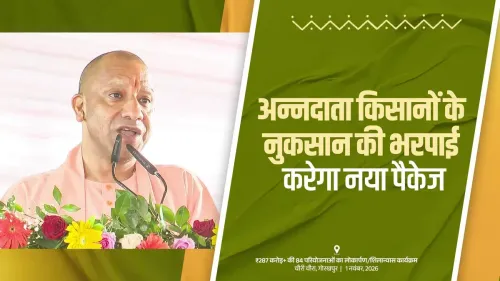
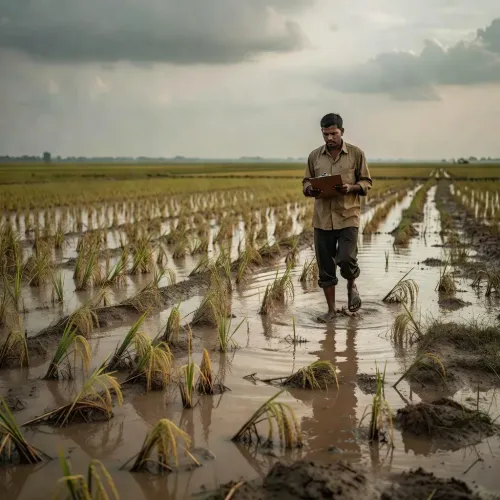
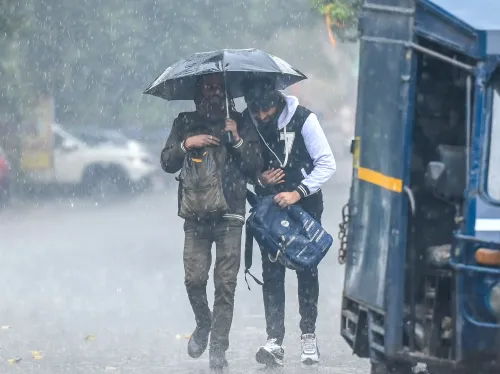
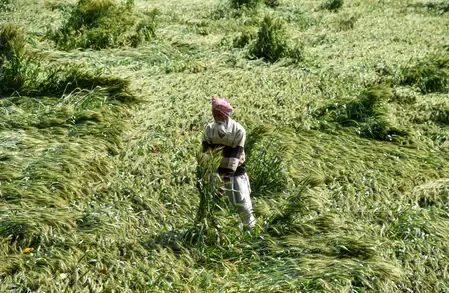
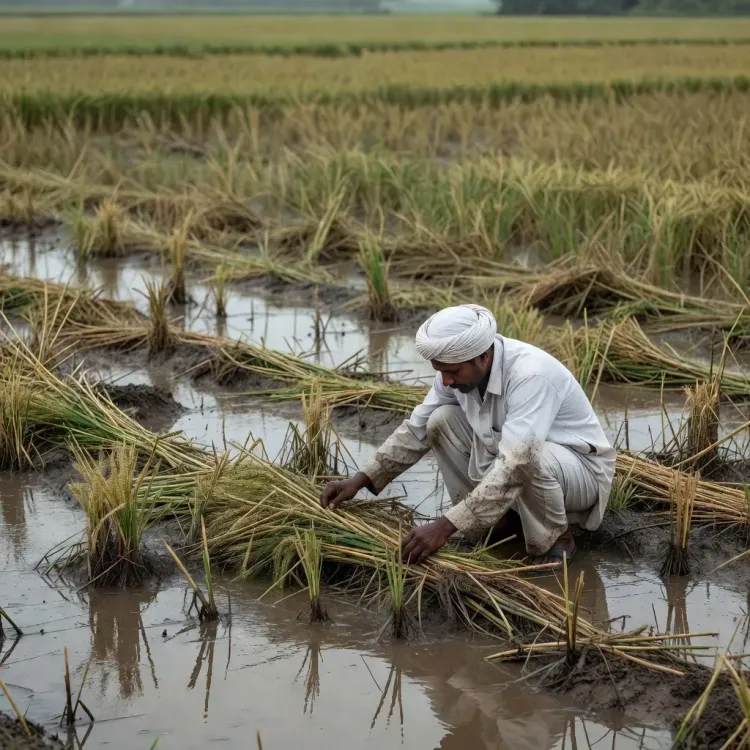
Farmers across Uttar Pradesh are staring at damaged fields — and the state government is moving fast. Chief Minister Yogi Adityanath, through the Chief Minister's Office of Uttar Pradesh, announced on Sunday, November 1, 2026 that district administrations have been directed to conduct immediate surveys of crop losses caused by cyclone-driven unseasonal rain, excessive rainfall, and hailstorms — and to disburse compensation to affected farmers without delay.
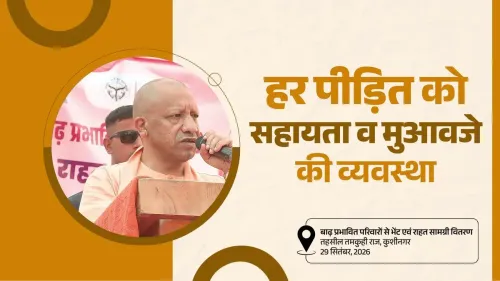
The Chief Minister's statement, posted in Hindi, declared: 'हम अन्नदाता किसानों के लिए एक नया पैकेज भी लेकर आएंगे' — 'We will also bring a new package for the annadata (food-provider) farmers, through which compensation for crop damage will be ensured.' The use of the word annadata, a term of deep reverence for the farming community, signals both the emotional register and the political priority the state government is attaching to this moment.
What the Cyclone Damage Means for UP's Agrarian Economy
Uttar Pradesh is India's most populous state and one of its largest agricultural producers, with tens of millions of farming households spread across its 75 districts. Unseasonal rains and hailstorms hitting at the tail end of the kharif season or at the onset of rabi sowing can devastate standing crops — from paddy to mustard — at precisely the moment farmers are most financially exposed. Every district administration has now been put on notice to complete damage assessments and move compensation to affected cultivators immediately.
This is not the first time the Yogi government has activated this machinery. Uttar Pradesh ordered similar crop-loss surveys and ex-gratia relief in 2018 and again in 2020 following unseasonal weather events. The pattern reflects a recurring state-level response to the vulnerability of northern India's agriculture to erratic monsoon tails and pre-winter weather systems.
A 'New Package' — and What Comes Next
The most consequential line in the statement is the promise of a new relief package specifically designed to make farmers whole after this cyclone event. The specifics — eligibility criteria, compensation amounts, disbursement mechanism, and timeline — have not yet been detailed. What the announcement does establish is political intent at the top: the Chief Minister is personally associated with both the survey directive and the forthcoming package.
This state-level relief is expected to complement the Pradhan Mantri Fasal Bima Yojana, the central government's crop insurance framework launched in 2016, which provides a baseline insurance net that state packages typically supplement rather than replace. Whether the new package will dovetail with PMFBY claims processes or operate as a standalone ex-gratia scheme will be among the key details to watch as the government formalises its response.
The clock is ticking. Farmers with damaged crops need rapid relief to fund the next sowing cycle — delay turns a weather disaster into a debt spiral. How fast the district administrations complete their surveys, and how quickly the new package reaches the field, will define whether this announcement translates into real recovery.
Point of View
Compensate, announce a package — a sequence the Yogi government has run before and one that carries both genuine welfare intent and visible electoral signalling in a state where farmer welfare is a perennial political fault line. The promise of a 'new package' rather than routing all relief through existing central insurance schemes suggests the government wants direct, attributable visibility for this intervention. The critical variable is speed: if district surveys drag and the package remains unspecified for weeks, the announcement risks being remembered as a statement rather than a rescue. For UP's agrarian economy, the gap between a press-release promise and a farmer's bank credit is where policy either earns or loses credibility.
NationPress
1 Nov 2026
Frequently Asked Questions
What has CM Yogi Adityanath announced for farmers affected by cyclone damage in UP?
CM Yogi Adityanath has directed all district administrations in Uttar Pradesh to conduct immediate surveys of crop losses caused by cyclone-driven unseasonal rain, excess rainfall, and hailstorms, and to disburse compensation to affected farmers without delay. He also announced a new relief package to ensure full compensation for crop damage.
Which districts in UP will receive crop damage surveys?
The directive covers all districts of Uttar Pradesh. The Chief Minister's Office stated that instructions have been issued to the administrations of all districts in the state.
What is the new farmer relief package announced by the UP government?
CM Yogi Adityanath announced that a new package for farmers — referred to as annadata — will be introduced to ensure compensation for crop damage from the recent cyclone-related weather events. Specific details such as amounts, eligibility, and timelines have not yet been disclosed.
How does UP's state relief for crop damage relate to the Pradhan Mantri Fasal Bima Yojana?
The Pradhan Mantri Fasal Bima Yojana, launched in 2016, provides a central crop insurance framework. UP's state-level relief packages have historically supplemented rather than replaced PMFBY, offering ex-gratia payments to farmers whose losses may not be fully covered by the central scheme.
Has the UP government announced similar crop relief measures before?
Yes. The Uttar Pradesh government ordered comparable crop-loss surveys and relief disbursements following unseasonal weather events in 2018 and 2020, making this part of an established state-level response to agricultural distress from extreme weather.