CM Yogi pays tribute to revolutionary Khudiram Bose
Synopsis
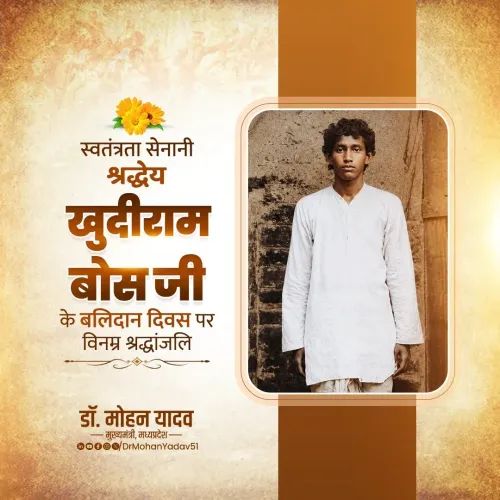
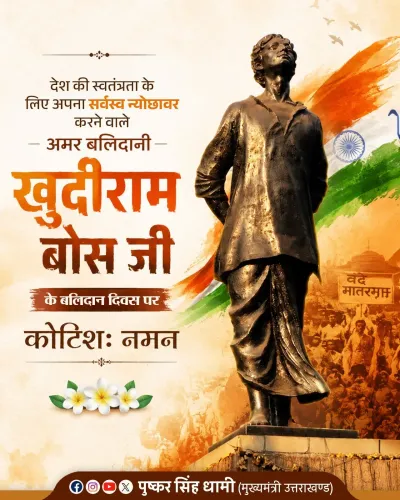
Uttar Pradesh Chief Minister Yogi Adityanath paid tribute to revolutionary martyr Khudiram Bose on his death anniversary, calling his sacrifice at age 18 an enduring inspiration for every Indian to walk the path of 'Nation First.'
Key Takeaways
CM Yogi Adityanath posted a tribute to Khudiram Bose on his death anniversary on 11 August 2026 .
Khudiram Bose was executed by the British in 1908 at the age of 18 after a conviction linked to an attempt on the life of British judge Douglas Kingsford .
CM Yogi described Bose's sacrifice as an awakening force that stirred the entire country against colonial rule.
The tribute invokes the theme of 'Rashtra Pratham' ('Nation First'), a recurring ideological thread in BJP public communication.
The post comes days before Independence Day on 15 August , a period of heightened national commemoration across India.
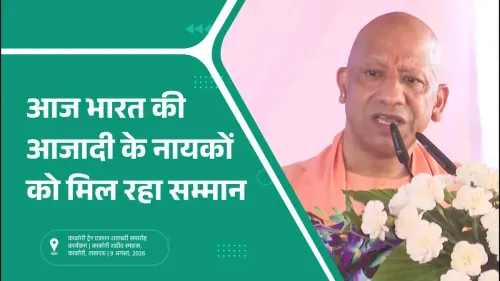
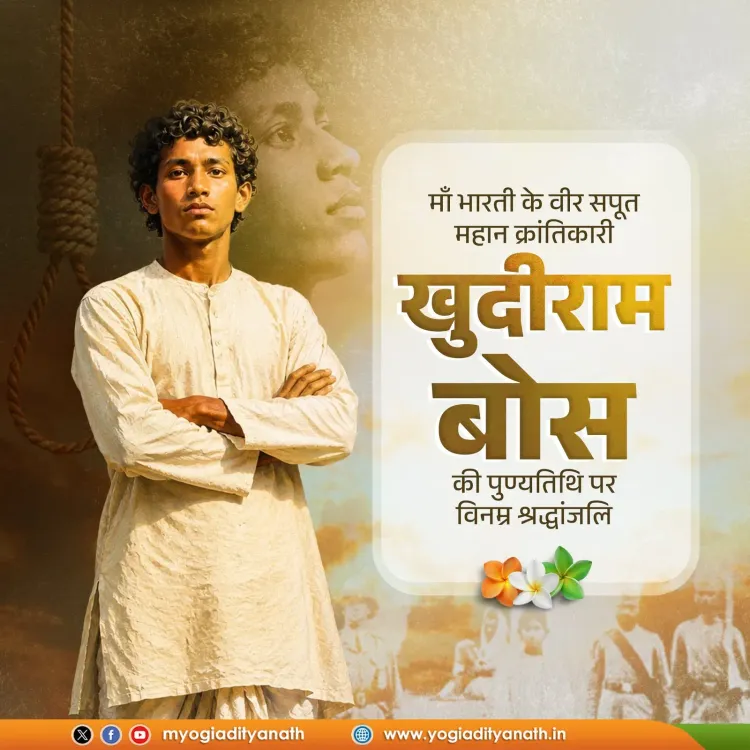
At just eighteen years old, Khudiram Bose walked to the gallows without flinching — and in doing so, shook the conscience of a nation. Uttar Pradesh Chief Minister Yogi Adityanath marked the death anniversary of the young revolutionary on Tuesday, 11 August 2026, with a heartfelt tribute on X, honouring his sacrifice in the fight against British colonial rule.
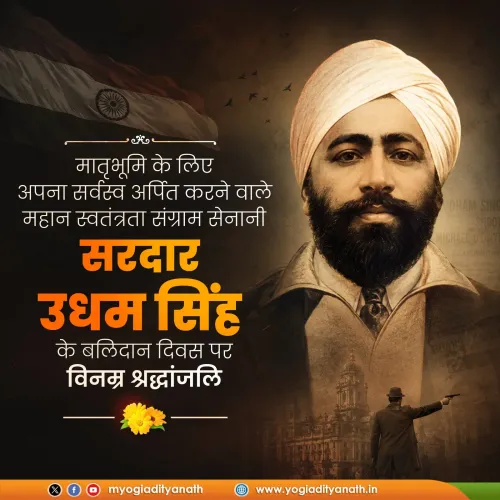
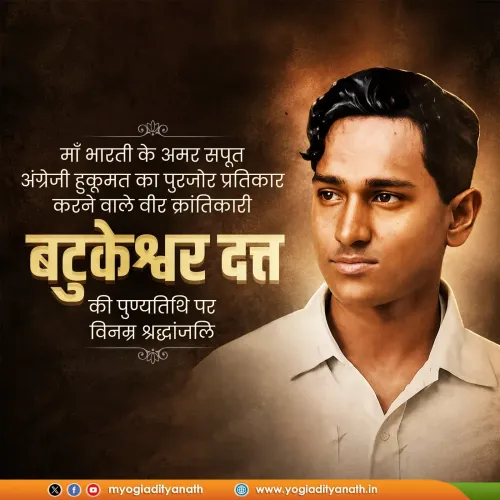
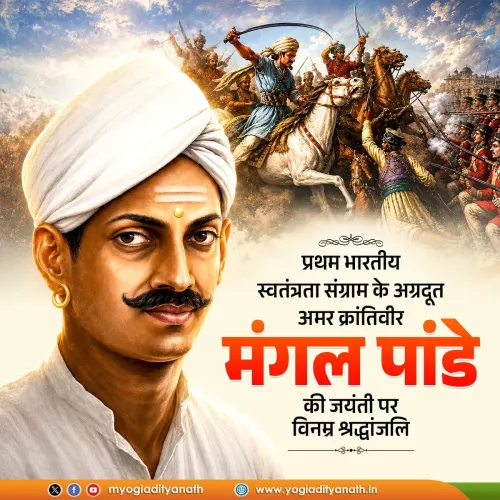
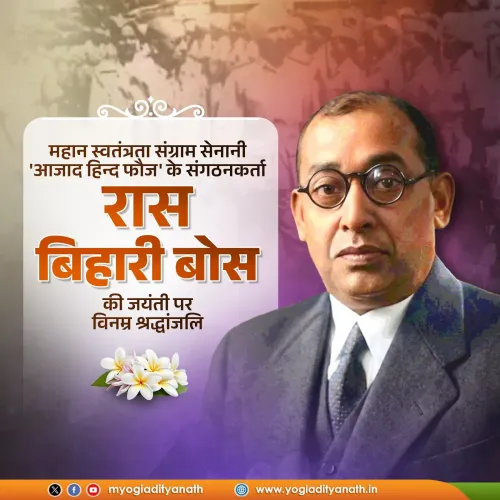
In his post, CM Yogi wrote: 'माँ भारती के वीर सपूत, महान क्रांतिकारी खुदीराम बोस की पुण्यतिथि पर विनम्र श्रद्धांजलि' — 'A humble tribute on the death anniversary of Khudiram Bose, the brave son of Mother India and a great revolutionary.' He added that by dedicating himself to the 'great yajna of the motherland's liberation' at such a young age, Bose awakened the entire country against British rule, and that his sacrifice, radiance, and resolve would continue to inspire every Indian to walk the path of 'Nation First.'
Eighteen years old, and unafraid
Khudiram Bose was a Bengali revolutionary who became one of the youngest martyrs of India's independence struggle. He was convicted for his role in an attempt to assassinate British judge Douglas Kingsford — a figure widely despised for his harsh sentencing of Indian nationalists — and was executed by hanging in 1908. His courage at the scaffold, reportedly facing death with calm defiance, turned him into an enduring symbol of youthful sacrifice and anti-colonial resistance.
Why BJP leaders invoke the pre-Gandhian revolutionaries
The tribute fits a deliberate pattern. BJP leaders have consistently elevated revolutionary figures from the independence era — those who chose armed resistance over constitutional methods — alongside more mainstream icons. By publicly honouring figures like Khudiram Bose, the party reinforces its ideological emphasis on fierce, unconditional nationalism and the primacy of the nation over the individual. The timing, just days ahead of Independence Day on 15 August, amplifies that message across a wide audience.
Such commemorations also serve a generational purpose. The invocation of an eighteen-year-old martyr speaks directly to Indian youth — framing patriotism not as an abstract duty but as something that has been paid for, at the highest price, by people their own age.
Point of View
The party constructs a nationalism rooted in sacrifice and defiance rather than gradualism. The timing ahead of Independence Day maximises reach and emotional resonance. Over time, this pattern of commemoration has helped the BJP shape a distinct historical narrative that competes with the Congress-centric account of the freedom movement.
NationPress
11 Aug 2026
Frequently Asked Questions
Who was Khudiram Bose?
Khudiram Bose was a Bengali revolutionary and one of the youngest martyrs of India's independence movement. He was executed by the British in 1908 at the age of 18 after being convicted in connection with an attempt to assassinate British judge Douglas Kingsford .
Why did CM Yogi pay tribute to Khudiram Bose?
CM Yogi Adityanath posted the tribute on Khudiram Bose's death anniversary , honouring his sacrifice against British colonial rule and describing him as an inspiration for every Indian to prioritise the nation above all else.
When was Khudiram Bose executed?
Khudiram Bose was executed by hanging in 1908 , making him one of the youngest revolutionaries to be martyred during India's struggle for independence.
What is the significance of BJP tributes to freedom fighters?
BJP leaders regularly honour revolutionary figures from the independence era to reinforce themes of nationalism and sacrifice. These tributes particularly spotlight pre-Gandhian armed revolutionaries, reflecting the party's emphasis on fierce, unconditional patriotism.
What did CM Yogi say about Khudiram Bose?
CM Yogi called Bose a 'brave son of Mother India' and said his sacrifice at just eighteen years of age awakened the entire country against British rule. He added that Bose's 'sacrifice, radiance, and resolve' would continue to inspire Indians to walk the path of 'Nation First.'