CM Yogi pushes for integrated court complexes across UP
Synopsis
Uttar Pradesh Chief Minister Yogi Adityanath has called for all courts to be built under one roof alongside residential facilities for judicial officers, signalling a push to upgrade the state's subordinate court infrastructure and reduce case-pendency bottlenecks.
Key Takeaways
CM Yogi Adityanath on 28 July 2026 called for integrated court complexes combining all courts and judicial officer housing under one roof.
Uttar Pradesh operates one of India's largest subordinate court systems, with infrastructure gaps linked to case pendency.
The Centrally Sponsored Scheme for Development of Infrastructure Facilities for Judiciary , running since 1993–94 , funds court buildings and judicial residences but has seen uneven state-level execution.
Multiple states have already adopted integrated judicial campus models, citing gains in efficiency and officer welfare.
The next indicator to watch: dedicated budget allocations for district-level court complexes in UP's upcoming state budget.
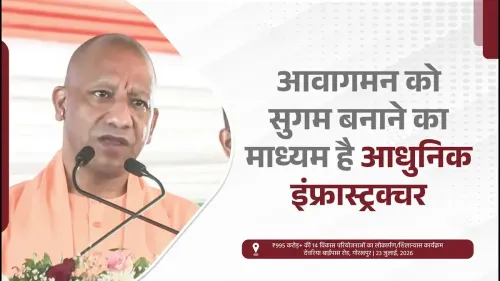
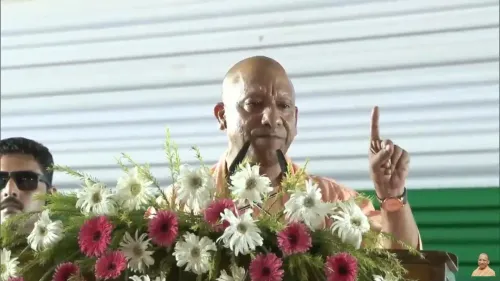
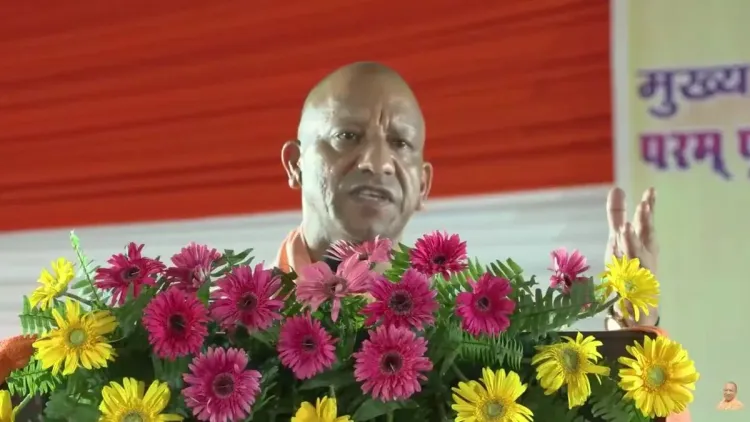
A single roof for every court, and a home nearby for every judge — Uttar Pradesh Chief Minister Yogi Adityanath has laid out a clear infrastructure vision for the state's judiciary, calling for integrated court complexes that combine judicial halls with residential facilities for judicial officers.
Posting on Tuesday, 28 July 2026, CM Yogi wrote: 'एक छत के नीचे सभी न्यायालय बनें, वहीं न्यायिक अधिकारियों के लिए आवासीय सुविधा भी हो' — 'All courts should be built under one roof, and residential facilities for judicial officers should be available at the same place.'
Why integrated complexes matter for UP's courts
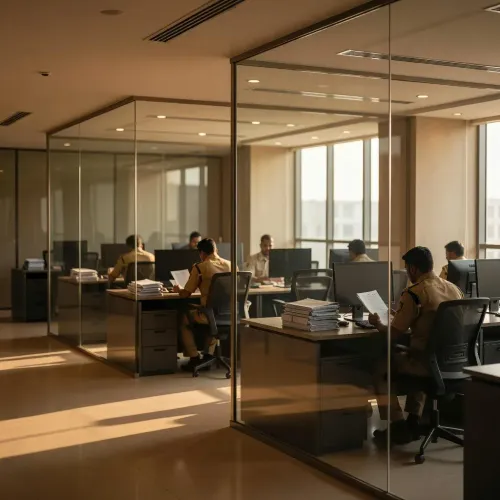
The demand is not new, but the urgency is real. Uttar Pradesh runs one of the country's largest subordinate court systems, spanning dozens of districts, and case pendency has long been tied to inadequate physical infrastructure — cramped courtrooms, scattered facilities, and judicial officers commuting long distances or living far from their postings. Consolidating courts under one complex, with housing attached, directly attacks two of those friction points at once.
The idea also has a national policy anchor. The Centrally Sponsored Scheme for Development of Infrastructure Facilities for Judiciary, operational since 1993–94, was designed precisely to fund court buildings and judicial residences — but uptake and execution have been uneven across states and budget cycles.
A pattern seen across states — but execution is the test
Several states have already moved toward integrated judicial campuses, citing gains in efficiency, security, and officer morale. The logic is straightforward: when a judge lives within the complex, late sittings become easier, security improves, and the court functions more like a self-contained institution. For litigants, a single, well-organised campus also means less confusion and fewer wasted trips.
For Uttar Pradesh, the real test will come in the state budget provisions that follow — whether district-level court complex projects receive dedicated allocations and timelines, or whether the vision stays at the level of aspiration.
If the infrastructure follows the intent, UP's litigants — and the judges who serve them — stand to gain something courts have needed for decades: a place built to do the job.
Point of View
But it also serves a political one — visible, brick-and-mortar delivery in a domain voters associate with justice and state capacity. The real policy question is whether UP translates this vision into district-level budget lines, or whether it remains a directional statement. With the centrally sponsored scheme already available as a funding vehicle, the gap between intent and execution is now a political accountability test.
NationPress
29 Jul 2026
Frequently Asked Questions
What did CM Yogi Adityanath say about court infrastructure in UP?
CM Yogi called for all courts in Uttar Pradesh to be built under one roof, with residential facilities for judicial officers available at the same location, as part of a push for integrated court complexes.
What is the Centrally Sponsored Scheme for judiciary infrastructure in India?
It is a central government scheme operational since 1993–94 that funds the construction of court buildings and residential quarters for judicial officers across Indian states.
Why does judicial housing matter for court efficiency?
When judges live within or close to court complexes, it enables longer sittings, improves security, and reduces delays caused by long commutes — all of which help address case pendency.
How many district courts does Uttar Pradesh have?
Uttar Pradesh has one of the largest subordinate court systems in India, spanning all 75 districts, though the exact number of court halls and their infrastructure status varies by district.
What should I watch for after CM Yogi's court infrastructure announcement?
Watch for dedicated budget allocations in the UP state budget for district-level court complex construction, and any follow-up announcements on specific project timelines or tenders.