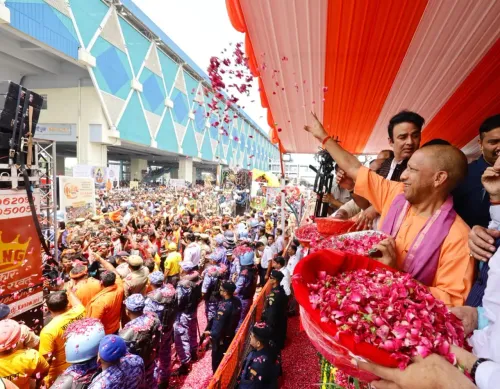
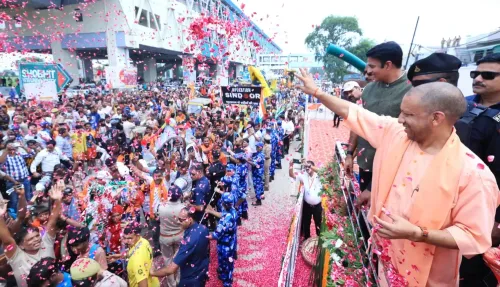
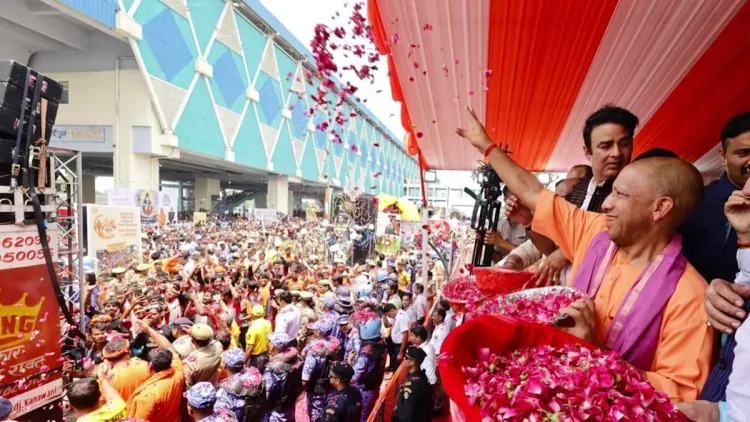
CM Yogi showers flowers on Kanwariyas in Meerut during Shravan
Synopsis
UP Chief Minister Yogi Adityanath honoured Kanwar Yatra pilgrims with a flower shower in Meerut during Shravan 2026, invoking social harmony and reaffirming the state government's full commitment to pilgrim safety, convenience, and dignity along the route.
Key Takeaways
CM Yogi Adityanath personally participated in welcoming Kanwar Yatra pilgrims in Meerut on 8 August 2026 with an aerial flower shower.
The event falls during the sacred Shravan month , the peak season for the annual Shiva pilgrimage across northern India.
CM Yogi framed the yatra as a message of 'social harmony and national unity,' transcending caste, sect, and regional boundaries.
The Uttar Pradesh Government has pledged full commitment to security, convenience, and dignity for all Kanwariyas on the route.
Meerut is a key transit point on one of UP's busiest Kanwar corridors linking Haridwar's Ganga ghats to temples in the Gangetic plain.
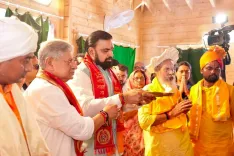
Hundreds of kilometres on foot, carrying sacred Ganga water under the August sun — and in Meerut on Saturday, 8 August 2026, Uttar Pradesh Chief Minister Yogi Adityanath met them with a shower of flowers. The gesture, a public honouring of Kanwar Yatra pilgrims mid-route, turned a moment of devotion into a statement of state solidarity.
Posting on X, CM Yogi opened with the Sanskrit invocation 'Shivo bhoothva Shivam yajet' ('Become Shiva to worship Shiva') — a line that frames the pilgrim not merely as a devotee but as a participant in the divine. He described the flower shower in Meerut district as an act of welcome and honour for the Shiva devotees undertaking the sacred Shravan month pilgrimage.
What the Kanwar Yatra means — and who it moves
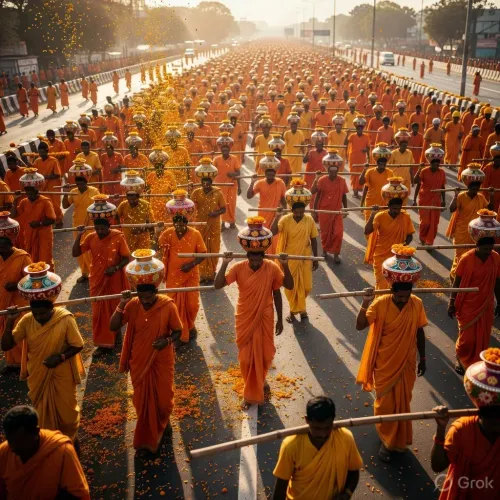
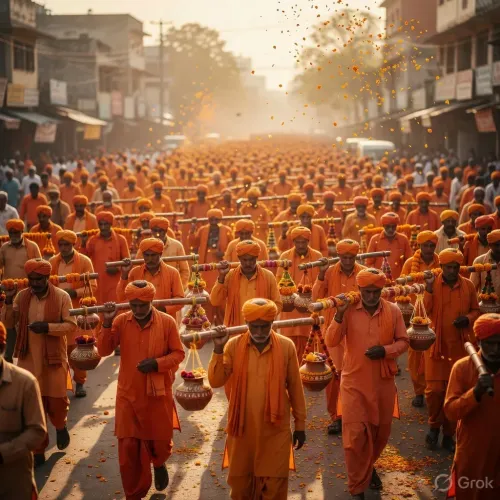
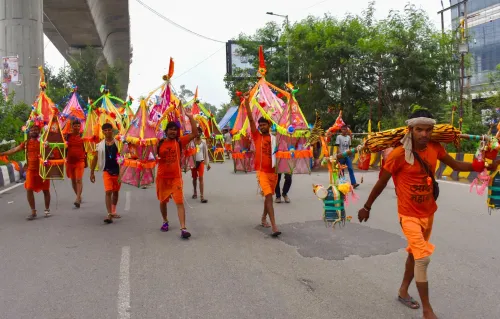
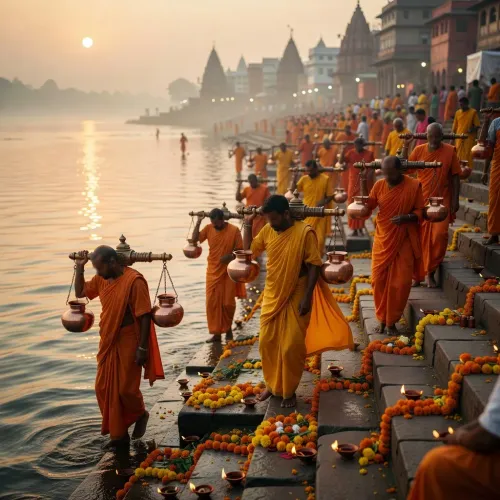
The Kanwar Yatra is one of India's largest annual foot pilgrimages. Every Shravan month, millions of Shivbhakts (Shiva devotees) — called Kanwariyas — carry saffron-draped kanwars (shoulder poles) bearing pots of Ganga water, walking dozens to hundreds of kilometres to pour that water on a Shiva lingam at a local temple. The routes cut across Uttar Pradesh, Uttarakhand, Delhi, and Haryana, drawing participants from every caste, region, and economic background.
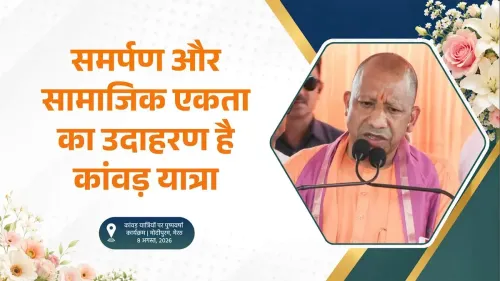
CM Yogi underlined exactly that point. The pilgrims, he wrote, are 'rising above the boundaries of caste, sect, province and region' to deliver 'a wonderful message of social harmony and national unity.' It is a framing the Uttar Pradesh Government has consistently applied to the yatra — positioning a religious event as a civic and national one.
The state's commitment to pilgrim safety in Meerut and beyond
CM Yogi also made a direct administrative pledge: the UP Government is 'fully committed' to the security, convenience, and dignity of Kanwar Yatra pilgrims. Uttar Pradesh administrations have for decades deployed special police cordons, medical camps, and traffic management arrangements along Kanwar routes each Shravan, and the 2026 edition is no exception.
Meerut, situated in western UP along one of the busiest Kanwar corridors connecting the Ganga ghats of Haridwar to temples deeper in the Gangetic plain, sees some of the heaviest pilgrim traffic each year. The Chief Minister's visit and the aerial flower shower signal that the state's top leadership is personally invested in the yatra's smooth conduct — not just administratively, but visibly.
He closed his post with the devotional cry that echoes across every Kanwar route every Shravan: 'Har-Har Mahadev.' The crowd, the kilometres, and the sacred water all answered back.
Point of View
Sanskrit invocation on record — fits a broader pattern of the BJP-led UP government investing political capital in large Hindu pilgrimages as both governance showcases and cultural statements. By publicly framing the yatra as a vehicle for 'social harmony' and 'national unity,' the Chief Minister seeks to universalise a religious event into a civic one, broadening its appeal beyond devout Shiva worshippers. The administrative pledge on pilgrim safety is not new, but the personal, on-ground optics in a high-traffic district like Meerut signal that the 2026 Shravan season is being treated as a political priority, not just a logistical one. How the state manages crowd safety and communal sensitivities for the remainder of the yatra will determine whether the symbolism translates into governance credibility.
NationPress
8 Aug 2026
Frequently Asked Questions
What is the Kanwar Yatra and when does it happen?
The Kanwar Yatra is an annual Hindu pilgrimage held during the Shravan month (typically July-August) in which millions of Shiva devotees, called Kanwariyas, carry Ganga water on foot over long distances to offer at Shiva temples. It is one of the largest foot pilgrimages in India.
Why did CM Yogi Adityanath shower flowers on pilgrims in Meerut?
CM Yogi Adityanath showered flowers on Kanwar Yatra pilgrims in Meerut on 8 August 2026 as a gesture of honour and welcome during the sacred Shravan month, also reaffirming the UP government's commitment to pilgrim safety and convenience.
What arrangements does the UP government make for Kanwar Yatra?
The Uttar Pradesh Government deploys special police, medical camps, and traffic management along Kanwar routes every Shravan month. CM Yogi has pledged the state is 'fully committed' to the security, convenience, and dignity of all Kanwariyas.
What did CM Yogi say about social harmony and the Kanwar Yatra?
CM Yogi stated that Kanwariyas walking hundreds of kilometres with devotion and discipline are 'rising above the boundaries of caste, sect, province and region' and delivering 'a wonderful message of social harmony and national unity.'
Why is Meerut significant for the Kanwar Yatra?
Meerut in western Uttar Pradesh sits along one of the busiest Kanwar corridors, connecting the Ganga ghats of Haridwar to temples deeper in the Gangetic plain, making it a major transit point for millions of pilgrims each Shravan.