Jal Shakti Minister Paatil on water source protection
Synopsis
Union Jal Shakti Minister C. R. Paatil has shared a personal article arguing that lasting drinking water security requires protecting water sources through groundwater recharge and community ownership, framing these as the pillars that make Har Ghar Jal truly sustainable.
Key Takeaways
Paatil , Union Minister of Jal Shakti, shared an article titled 'Catch the Rain, Cherish the Water' on 8 August 2026 .
He identifies source sustainability , groundwater recharge , and community ownership as the three pillars for durable drinking water access.
The article connects to the Har Ghar Jal goal under the Jal Jeevan Mission , launched in 2019 to provide tap water to every rural household.
The piece echoes the Catch the Rain campaign ( 2021 ) and the Jal Shakti Abhiyan ( 2019 ), forming a philosophical thread across multiple water-sector interventions.
Paatil frames the conservation effort as part of PM Narendra Modi 's broader push for a water-secure India.
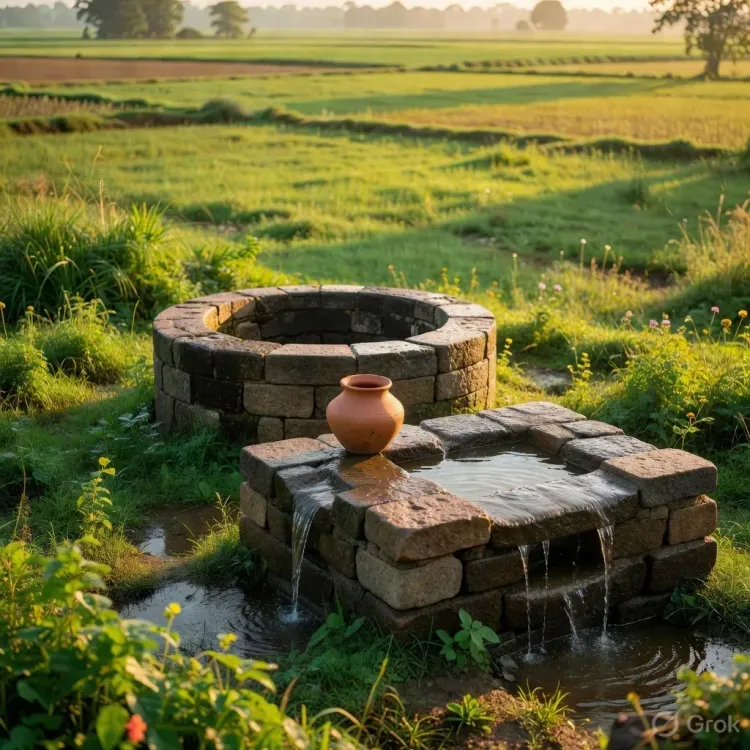
India's water security mission has a new articulation — and it begins not at the tap, but at the source. Union Jal Shakti Minister C. R. Paatil on Saturday, 8 August 2026 shared a personal article titled 'Catch the Rain, Cherish the Water', arguing that sustainable drinking water starts with protecting the very springs, aquifers, and catchments that feed the system.
From the tap back to the source
The central argument Paatil advances is deceptively simple: you cannot secure what you haven't conserved. In his article, he frames source sustainability, groundwater recharge, and community ownership as the three load-bearing pillars that will determine whether the Har Ghar Jal promise — tap water to every rural household — holds up a decade from now or quietly runs dry.
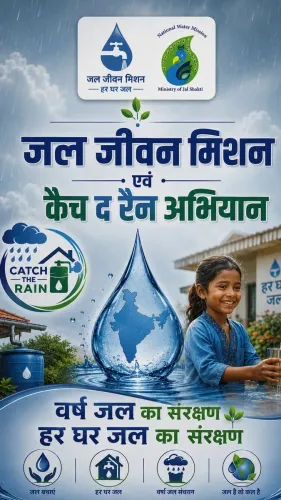
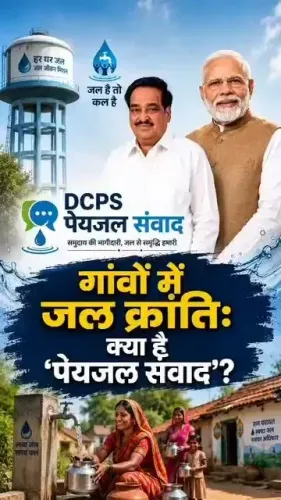
Har Ghar Jal is the citizen-facing brand of the Jal Jeevan Mission, the flagship programme launched in 2019 to connect every rural home to a functional tap water supply. Laying pipes was the first act. Keeping water flowing through them is the harder, longer second act — and that is precisely the challenge Paatil's article addresses.
The 'Catch the Rain' lineage
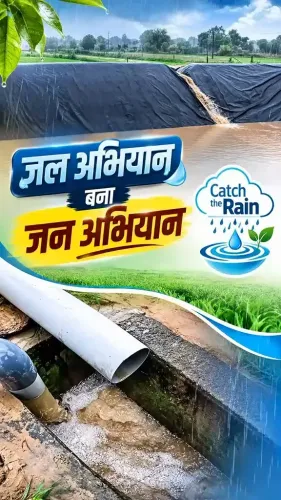
The article's title deliberately echoes the Catch the Rain campaign, rolled out in 2021 to drive rainwater harvesting infrastructure and public awareness ahead of the monsoon season. That campaign itself built on the Jal Shakti Abhiyan of 2019, which mobilised district administrations to map and revive water bodies across stressed geographies. Paatil's piece can be read as the philosophical connective tissue between those interventions — a minister explaining not just what the government is doing, but why the logic holds together.
The stress on community ownership is notable. Water schemes that communities maintain last; schemes that communities inherit as government property often don't. Village-level stewardship of recharge pits, check dams, and watershed structures has been a consistent ask from water-sector practitioners, and its presence in a minister's public writing signals where the policy conversation is heading.
Every drop as a building block
Paatil closes his post by tying the conservation ethic directly to Prime Minister Narendra Modi's leadership, framing each conserved drop as a contribution to 'India's water-secure future.' The language is aspirational, but the scaffolding underneath it — source protection married to last-mile infrastructure — is the kind of integration that water-security planners have long called for.
India's depleting groundwater tables, erratic monsoons, and rapid urbanisation make that integration urgent. The question is whether community ownership, the hardest of the three pillars to engineer from New Delhi, can be built at the scale the mission demands.
Point of View
Because source protection yields diffuse, long-term benefits rather than ribbon-cutting moments. Publishing it as a personal article, rather than a policy circular, lets the minister test ideas in the open and build a conceptual case for the next phase of Jal Jeevan Mission. The emphasis on community ownership, in particular, signals that New Delhi is aware that top-down infrastructure without local buy-in has a poor track record — and is beginning to say so publicly.
NationPress
8 Aug 2026
Frequently Asked Questions
What is Har Ghar Jal and how does it relate to Jal Jeevan Mission?
'Har Ghar Jal' is the citizen-facing promise of the Jal Jeevan Mission, the flagship programme launched in 2019 to provide functional tap water connections to every rural household in India.
What is the Catch the Rain campaign in India?
The Catch the Rain campaign was launched in 2021 by the Jal Shakti Ministry to promote rainwater harvesting structures and public awareness about water conservation, particularly before the monsoon season.
What did C. R. Paatil write about water conservation?
C. R. Paatil shared a personal article titled 'Catch the Rain, Cherish the Water' arguing that sustainable drinking water depends on protecting water sources through groundwater recharge and community ownership, not just building infrastructure.
What is source sustainability in the context of India's water policy?
Source sustainability refers to protecting and replenishing the natural water bodies — springs, aquifers, and catchment areas — that feed drinking water systems, ensuring that infrastructure like taps and pipelines remain functional over the long term.
What is the Jal Shakti Abhiyan?
The Jal Shakti Abhiyan was launched in 2019 to mobilise district administrations across India to map, conserve, and revive water bodies, forming an early pillar of the government's integrated water conservation strategy.