Jal Shakti Minister Paatil calls for community water conservation
Synopsis
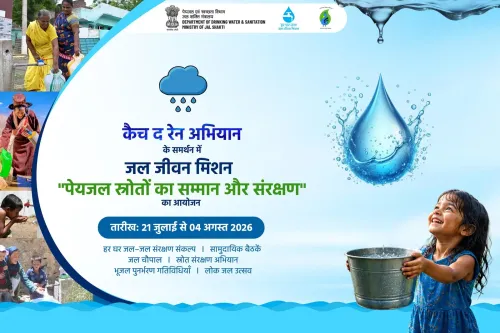
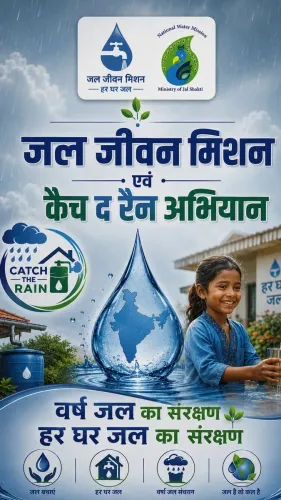
Union Jal Shakti Minister C. R. Paatil on 22 July 2026 called on citizens, gram panchayats, schools, self-help groups, and anganwadi centres to actively participate in the 'Peyjal Sroton Ka Samman Evam Sanrakshan' campaign under the Jal Jeevan Mission's Catch the Rain initiative, to protect drinking water sources and sustain Har Ghar Jal gains.
Key Takeaways
Union Jal Shakti Minister C.
Paatil on 22 July 2026 launched a call to action for the 'Peyjal Sroton Ka Samman Evam Sanrakshan' campaign under Jal Jeevan Mission .
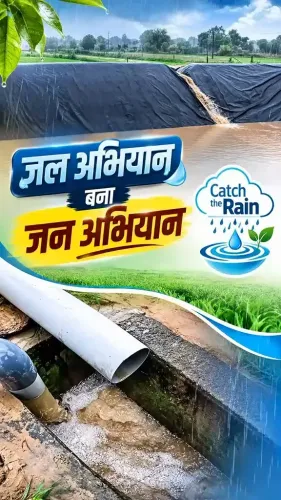
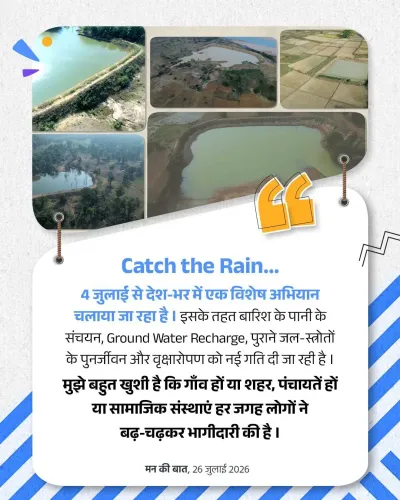
The campaign supports the Catch the Rain initiative and focuses on rainwater harvesting, groundwater recharge, water source cleaning, water body rejuvenation, and water saving.
Paatil specifically called on gram panchayats, self-help groups, youth clubs, schools, anganwadi centres , and community institutions to participate.
The drive aims to make the gains of Har Ghar Jal — universal piped drinking water access — sustainable through people's participation.
The Jal Jeevan Mission was announced in 2019 and the Catch the Rain campaign was rolled out nationally in 2021 , forming the policy backbone of this effort.
Union Jal Shakti Minister C. R. Paatil on Wednesday, 22 July 2026 called on citizens, gram panchayats, self-help groups, schools, anganwadi centres, and community institutions to actively participate in the 'Peyjal Sroton Ka Samman Evam Sanrakshan' (Respect and Conservation of Drinking Water Sources) campaign, launched in support of the #CatchTheRain initiative under the Jal Jeevan Mission. The minister urged grassroots participation in rainwater harvesting, groundwater recharge, water body rejuvenation, and source protection across the country.
Context
Paatil's post, written in Hindi, calls the campaign a 'janabhagidari aadharit prayas' (people's participation-based effort) aimed at saving every drop of rain and securing drinking water sources. He urged all stakeholders to take part in activities ranging from rainwater harvesting and groundwater recharge to the cleaning and conservation of water sources and water body rejuvenation. The minister framed the initiative as a collective responsibility: 'Let us all together respect and protect our drinking water sources and make the achievements of 'Har Ghar Jal' permanent through people's participation.'
Policy Backdrop
The Jal Jeevan Mission, announced in the 2019 Union Budget, was designed to deliver functional household tap connections to all rural households under the Har Ghar Jal objective. The Catch the Rain campaign, rolled out nationally in 2021 by the Ministry of Jal Shakti, complements this supply-side infrastructure drive by promoting demand-side conservation — particularly rainwater harvesting and groundwater recharge ahead of and during the monsoon season. The 'Peyjal Sroton Ka Samman Evam Sanrakshan' campaign sits within this broader architecture, emphasising source sustainability as a prerequisite for long-term water security.
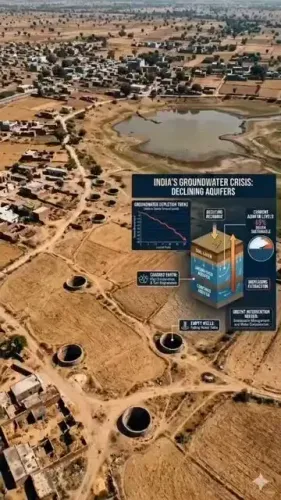
India's groundwater depletion and monsoon variability have made source protection a policy priority. Ensuring that tap connections remain functional requires not just pipes and pumps but also living, replenished water sources — a gap that community-level conservation efforts are designed to address.
Stakeholders and Impact
Gram panchayats and rural households are the primary stakeholders, as the Jal Jeevan Mission's reach is concentrated in rural India. Self-help groups, youth clubs, schools, and anganwadi centres are explicitly named in the minister's call to action, signalling an intent to embed water conservation into everyday community structures rather than leaving it to government agencies alone. This multi-institution approach is consistent with the mission's design, which relies on village-level water and sanitation committees for last-mile delivery and maintenance.
The campaign's emphasis on 'janabhagidari' (public participation) also reflects a recognition that infrastructure gains under Jal Jeevan Mission can erode if the underlying water sources are not protected — a concern that is especially acute in water-stressed states.
What's Next
State-level implementation reports on source protection activities and updated Jal Jeevan Mission coverage data are expected to be closely watched ahead of the next monsoon season, as they will indicate how effectively community conservation efforts are translating into sustained water availability. Paatil's post closes with a forward-looking note: 'Today's small initiatives will lay a strong foundation for a water-secure India for future generations' — signalling that the ministry views grassroots conservation as integral to the mission's long-term legacy.
Point of View
The ministry must now ensure that the underlying water sources remain viable — a task that no central scheme can accomplish without local buy-in. By naming gram panchayats, self-help groups, schools, and anganwadi centres in the same breath, the minister is effectively distributing accountability for water security down to the village level. This is a deliberate political and administrative signal that the 'Har Ghar Jal' achievement will be judged not just by connections installed but by water actually flowing through them. The framing of 'small initiatives today, water-secure India tomorrow' also positions the BJP's water agenda as a generational project, useful optics ahead of any state-level electoral cycles where rural water access remains a live issue.
NationPress
21 Oct 2026
Frequently Asked Questions
What is the 'Peyjal Sroton Ka Samman Evam Sanrakshan' campaign?
It is a community participation-based campaign launched under the Jal Jeevan Mission in support of the Catch the Rain initiative, aimed at rainwater harvesting, groundwater recharge, water source cleaning, water body rejuvenation, and water conservation at the local level.
What is the Catch the Rain campaign?
Catch the Rain is an annual water conservation campaign launched nationally in 2021 by the Ministry of Jal Shakti to promote rainwater harvesting and groundwater recharge, particularly ahead of and during the monsoon season.
What is the Jal Jeevan Mission?
The Jal Jeevan Mission is a central government scheme announced in the 2019 Union Budget to provide functional household tap connections to all rural households in India under the 'Har Ghar Jal' objective.
Who is C. R. Paatil?
C. R. Paatil is the Union Minister of Jal Shakti, a senior BJP leader, and a former president of the BJP's Gujarat state unit.
How can gram panchayats participate in water conservation under Jal Jeevan Mission?
Gram panchayats can participate by organising rainwater harvesting drives, maintaining and cleaning local water sources, supporting groundwater recharge activities, and working with village-level water and sanitation committees to sustain tap water connections.