Amit Shah, CM Fadnavis Launch Digital Shield for Co-op Banks

Synopsis
Union Minister Amit Shah and Maharashtra CM Devendra Fadnavis inaugurated a Security Operations Centre and a nine-service digital bundle for urban cooperative banks on 8 August 2026, marking the most comprehensive technology upgrade yet under the Ministry of Cooperation's modernisation drive.
Key Takeaways
A dedicated Security Operations Centre (SOC) was launched to provide round-the-clock cyber-threat monitoring for urban cooperative banks.
A nationwide service bundle covering Core Banking, UPI-IMPS, Mobile Banking, WhatsApp Chatbot, AEPS, DBT, Sovereign Cloud, Compliance, and Cyber Security was activated on a single platform.
The platform is managed by NUCFDC (National Urban Cooperative Finance and Development Corporation) .
Integration of AEPS and DBT means cooperative bank customers can now receive government welfare transfers directly through their UCB accounts.
The launch is part of a multi-year push that began with the creation of the Ministry of Cooperation in July 2021 .
Senior leaders present included Deputy CM Eknath Shinde , Union MoS Krishnapal Gurjar , Union MoS Murlidhar Mohol , and NUCFDC Chairman Jyotindra Mehta .
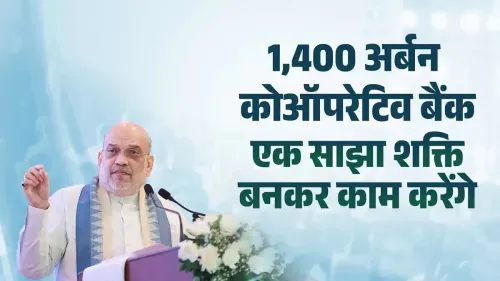
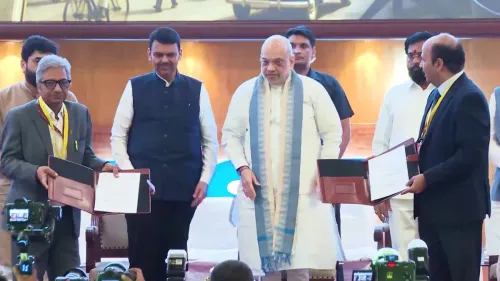
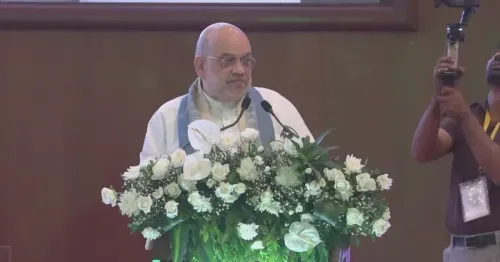
Urban cooperative banks across India got a significant digital upgrade on Saturday, 8 August 2026, when Union Home and Cooperation Minister Amit Shah inaugurated a suite of new digital services for the cooperative banking sector in Mumbai, with Maharashtra Chief Minister Devendra Fadnavis as the principal host. At the heart of the launch: a dedicated Security Operations Centre (SOC) designed to stand watch against the rising tide of cyber attacks and online fraud targeting cooperative banks.
What the SOC means for cooperative bank customers
The new Security Operations Centre is not a passive firewall — it is a continuous-monitoring facility built specifically to serve urban cooperative banks (UCBs), a segment that has historically lagged behind commercial banks in cyber-defence infrastructure. The SOC will track threats in real time, identify intrusions early, and trigger rapid countermeasures, giving smaller cooperative institutions the kind of round-the-clock security cover that was previously the preserve of large public and private sector banks.
The stakes are real: as UCBs have expanded into digital payments, their exposure to phishing, account takeovers, and payment fraud has grown sharply — yet their in-house IT security teams are often thin. A shared SOC model pools resources and expertise across institutions, making enterprise-grade protection viable even for modest-sized banks.
One platform, nine services — the bundled banking stack
Alongside the SOC, Shah and Fadnavis launched a nationwide service bundle under the National Urban Cooperative Finance and Development Corporation (NUCFDC) that consolidates nine distinct capabilities onto a single platform: Core Banking, Mobile and Internet Banking, UPI-IMPS payments, Cyber Security, WhatsApp Chatbot, Compliance tools, Sovereign Cloud, AEPS (Aadhaar Enabled Payment System), and DBT (Direct Benefit Transfer).
The significance of that last pair — AEPS and DBT — should not be underestimated. Plugging cooperative banks into government welfare transfer rails means that millions of beneficiaries in semi-urban and rural areas who bank with UCBs can now receive subsidies, pensions, and scheme payments directly, without switching to a commercial bank. It is financial inclusion delivered through an institution people already trust in their locality.
Centre-state coordination and the Ministry of Cooperation's long game
The event drew senior political presence from both Delhi and Nagpur. Deputy Chief Minister Eknath Shinde, Union Ministers of State Krishnapal Gurjar and Murlidhar Mohol, state ministers Babasaheb Patil and Jaykumar Rawal, and NUCFDC Chairman Jyotindra Mehta were all present — a line-up that underscores how seriously the government is treating cooperative-sector modernisation as a joint centre-state project.
That project has roots in the creation of the Ministry of Cooperation in July 2021, the first dedicated ministry for the sector in India's history. Since then, the policy thrust has been to bring UCBs — long governed by a patchwork of state laws and RBI guidelines — into the mainstream of India's digital payments architecture, anchored by NPCI's UPI framework launched back in 2016. Today's launch is the most comprehensive technology package yet delivered under that mandate.
The next test is execution: whether the bundled platform rolls out smoothly to UCBs across additional states, and whether the RBI moves toward making SOC adoption mandatory for the sector. A shared cyber-defence nerve centre is only as strong as the banks connected to it.
Point of View
State-regulated patchwork into a digitally integrated network operating on national infrastructure. By bundling SOC-grade cyber security with UPI, AEPS, and DBT on a single platform, the Centre is simultaneously addressing two political imperatives: protecting small depositors from online fraud and ensuring welfare transfers reach beneficiaries through trusted local institutions. The high-profile presence of the Home and Cooperation Minister signals that cooperative-sector reform remains a flagship political project, not a bureaucratic afterthought. Whether this momentum translates into mandatory RBI standards and a genuine nationwide rollout will determine if today's inauguration is a turning point or a well-photographed ceremony.
NationPress
23 Sept 2026
Frequently Asked Questions
What is the Security Operations Centre launched for cooperative banks?
The SOC is a dedicated cyber-security facility that continuously monitors urban cooperative banks for threats like cyber attacks and online fraud, identifies them early, and enables rapid countermeasures — giving smaller banks access to enterprise-grade security on a shared-cost model.
What services are included in the NUCFDC bundled banking platform?
The bundle includes Core Banking, Mobile and Internet Banking, UPI-IMPS payments, Cyber Security, WhatsApp Chatbot, Compliance tools, Sovereign Cloud, AEPS (Aadhaar Enabled Payment System), and DBT (Direct Benefit Transfer) — all managed from a single platform.
Who launched the digital services for cooperative banks on 8 August 2026?
Union Home and Cooperation Minister Amit Shah inaugurated the services, with Maharashtra Chief Minister Devendra Fadnavis as the principal host, alongside Deputy CM Eknath Shinde and other senior ministers.
What is NUCFDC and what role does it play?
NUCFDC — the National Urban Cooperative Finance and Development Corporation — is the central body providing nationwide technology and financial services to urban cooperative banks, and it is the implementing agency for the bundled digital platform.
How does this affect cooperative bank customers and welfare beneficiaries?
Customers will benefit from safer digital banking and access to UPI payments. Crucially, integration with AEPS and DBT means government welfare transfers and subsidies can now be credited directly to accounts held in urban cooperative banks.