Amit Shah Reviews National Roadmap for Cooperative Banking, Organics, Exports
Synopsis
Union Home Minister Amit Shah reviewed national roadmaps for cooperative banking, organic products, and exports on 18 June 2026. He underlined MuleHunter.AI integration with I4C for cybersecurity, NUCFDC support for digital banking, and NCOL and NCEL roles in boosting organic procurement and global exports to raise farmer incomes.
Key Takeaways
Amit Shah reviewed national roadmaps for cooperative banking, organic products, and cooperative exports on 18 June 2026 .
Integration of MuleHunter.AI with I4C aims to extend real-time cyber fraud detection to cooperative banks.
NUCFDC and Sahkar Saarthi will support cooperative banks in adopting digital platforms and cybersecurity measures.
NCOL will increase procurement of organic products and strengthen testing and certification infrastructure.
NCEL will accelerate global market linkages for cooperative exporters, with a direct aim of raising farmer incomes.
The review marks a shift from institution-building to the implementation phase for the Ministry of Cooperation 's reform agenda.
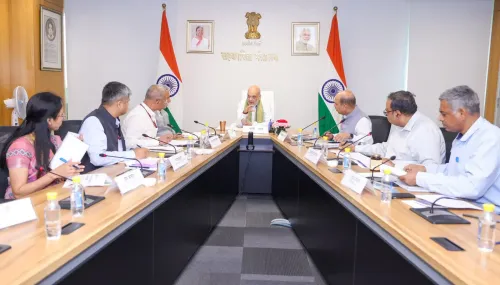
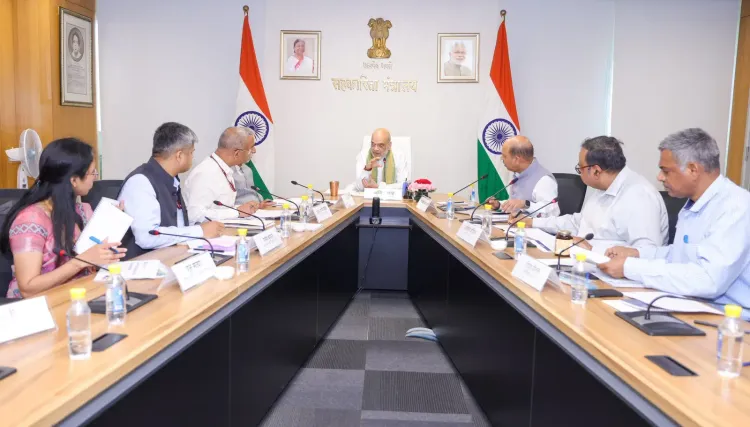
Union Home Minister Amit Shah on Thursday, 18 June 2026, reviewed the national roadmaps prepared for cooperative banking, organic products, and cooperative exports, signalling a renewed push to modernise India's cooperative sector across three critical verticals.
Context
Shah posted on X that he reviewed the national roadmap built for cooperative banking, organic products, and cooperative exports — three pillars that the Ministry of Cooperation has been developing since its creation in July 2021. The post, written in Hindi, underlines the ministry's intent to translate structural reforms into measurable outcomes for farmers and cooperative institutions.
In his words, the integration of MuleHunter.AI with I4C (Indian Cyber Crime Coordination Centre), along with the roles of Sahkar Saarthi and NUCFDC, 'will prove extremely important' in connecting cooperative banks to digital platforms and adopting cybersecurity measures.
Policy Backdrop
The Ministry of Cooperation was carved out as a standalone ministry in July 2021 to give focused policy attention to India's vast cooperative network. Since then, the government has pursued layered reforms: the computerisation of Primary Agricultural Credit Societies (PACS), the creation of a National Cooperative Database, and the launch of two new national-level cooperatives — NCOL (National Cooperative Organics Limited) and NCEL (National Cooperative Exports Limited) — both approved by the Union Cabinet in January 2023.
MuleHunter.AI is an AI-based tool developed to detect mule bank accounts used in cyber financial fraud, and its integration with I4C — the nodal body under the Ministry of Home Affairs for coordinating national cybercrime response — is designed to extend real-time fraud monitoring to the cooperative banking network. NUCFDC (National Urban Cooperative Finance and Development Corporation) provides financial and developmental support to urban cooperative banks, making it a key partner in the digitisation drive.
Stakeholders and Impact
Shah highlighted that NCOL will expand procurement of organic products, strengthen testing and certification, while NCEL will accelerate global market linkages — steps he said will directly raise farmer incomes. These two organisations are designed to plug cooperative farmers into export value chains that were previously accessible mainly to large agri-businesses.
For cooperative banks — which serve tens of millions of rural and semi-urban depositors — the cybersecurity integration addresses a growing vulnerability, as digital payment adoption in smaller cooperative institutions has outpaced their fraud-detection capabilities. The Sahkar Saarthi initiative adds a support layer for onboarding these banks onto digital platforms.
What's Next
The Ministry of Cooperation is expected to track progress on these roadmaps through periodic reviews, with possible legislative amendments to strengthen the cooperative framework being watched for the upcoming sessions of Parliament. The review signals that the government is moving from institution-building — creating NCOL and NCEL — to the implementation phase, where operational targets and inter-agency integrations will define outcomes.
If the cybersecurity and digital integration milestones are met, cooperative banks could gain access to the same fraud-detection infrastructure available to scheduled commercial banks, a development that would mark a significant levelling of the financial-security playing field for India's cooperative sector.
Point of View
With clear inter-agency linkages now being formalised. The decision to integrate MuleHunter.AI with I4C for cooperative banks is notable because it extends the Home Ministry's cybercrime infrastructure into the financial cooperative space, blurring the traditional boundary between the two ministries Shah oversees. Anchoring farmer income growth to cooperative export and organic certification pipelines reflects a deliberate strategy to route agricultural value addition through the cooperative network rather than private trade channels. This review, if followed by legislative or budgetary action, could define the cooperative sector's trajectory ahead of the next Union Budget.
NationPress
18 Sept 2026
Frequently Asked Questions
What is MuleHunter.AI and how will it help cooperative banks?
MuleHunter.AI is an AI-based tool that detects mule bank accounts used in cyber financial fraud. Its integration with I4C will allow cooperative banks to access real-time fraud monitoring, strengthening their cybersecurity as they expand onto digital platforms.
What is NCOL and what role will it play in organic farming?
NCOL, or National Cooperative Organics Limited, is a national-level cooperative entity created to promote organic product production, certification, and marketing. It will expand procurement of organic products and strengthen testing and certification to support organic farmers.
What is NCEL and how does it help farmers access global markets?
NCEL, or National Cooperative Exports Limited, was established to facilitate exports by cooperative societies and link farmers to global value chains. Shah's review highlighted its role in accelerating global market linkages to raise farmer incomes.
What is the Ministry of Cooperation and when was it created?
The Ministry of Cooperation is a dedicated Union government ministry created in July 2021 to give focused policy attention to India's cooperative sector, covering cooperative banking, marketing, and exports.
What is NUCFDC and what is its role in cooperative banking?
NUCFDC, or National Urban Cooperative Finance and Development Corporation, provides financial and developmental support to urban cooperative banks. It is a key partner in the government's drive to connect cooperative banks to digital platforms.