CM Yogi Pays Floral Tribute to Dr. Shyama Prasad Mukherjee in Lucknow
Synopsis
Uttar Pradesh Chief Minister Yogi Adityanath offered floral tributes at Dr. Shyama Prasad Mukherjee's statue in Lucknow on 23 June 2026, the 73rd anniversary of the Bharatiya Jana Sangh founder's death in detention in Srinagar, reaffirming the BJP's ideological continuity with its predecessor party.
Key Takeaways
Yogi Adityanath paid floral tributes at Dr.
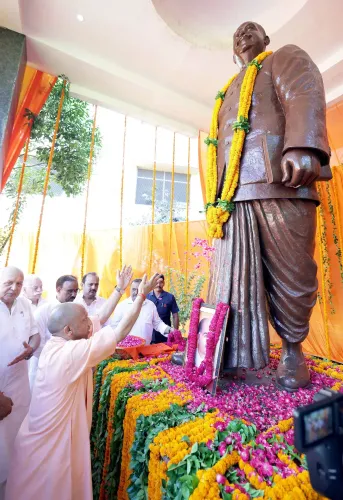
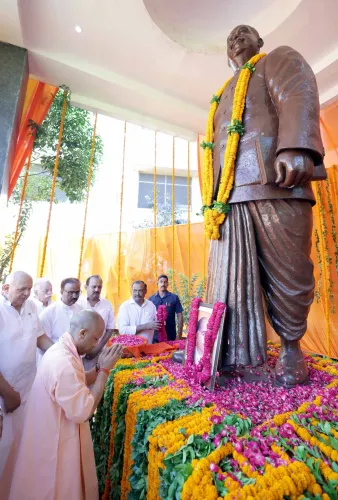
Shyama Prasad Mukherjee 's statue in Lucknow on 23 June 2026 .
Mukherjee died in detention in Srinagar on 23 June 1953 , while protesting the special entry permit required for Jammu and Kashmir .
He founded the Bharatiya Jana Sangh in 1951 , the direct predecessor of the BJP .
Annual tributes on 23 June have intensified since the 2019 revocation of Article 370 , which the BJP frames as a fulfilment of Mukherjee 's mission.
The observance is part of a broader BJP pattern of state-level commemorations of party founders across Uttar Pradesh .
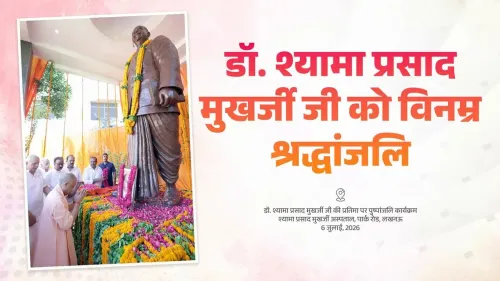
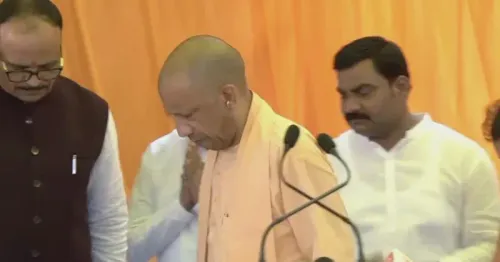
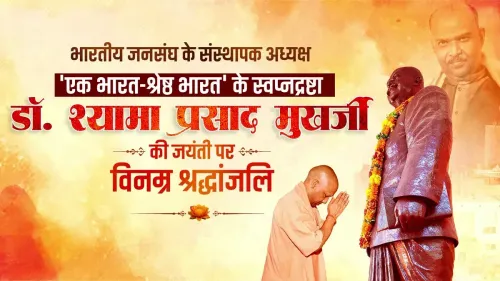
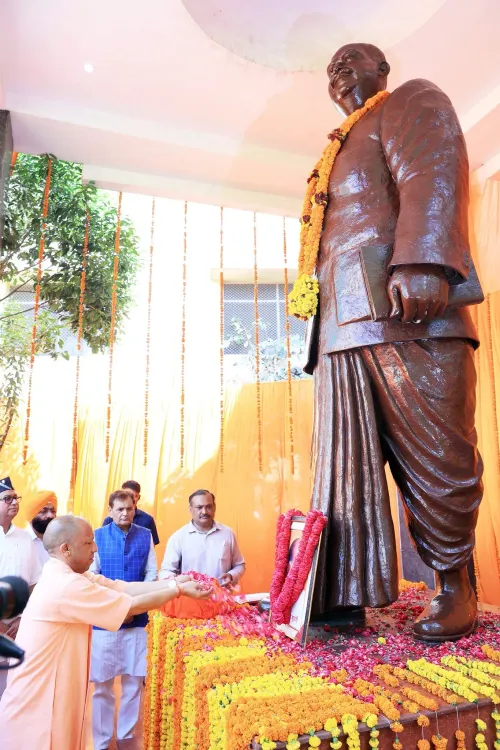
Uttar Pradesh Chief Minister Yogi Adityanath on Tuesday, 23 June 2026, offered floral tributes at the statue of Dr. Shyama Prasad Mukherjee in Lucknow, marking the 73rd martyrdom anniversary of the founder-president of the Bharatiya Jana Sangh. The Chief Minister paid his respects and bowed to the memory of the leader whose death in detention remains a defining moment in the BJP's political narrative.
Posting on X, Yogi Adityanath wrote: 'Bharatiya Jana Sangh ke sansthapak adhyaksh Dr. Shyama Prasad Mukherjee ji ke balidan diwas par aaj Lucknow mein unki pratima par pushp arpit kar shraddhanjali di.' ('On the martyrdom day of the founder-president of the Bharatiya Jana Sangh, Dr. Shyama Prasad Mukherjee, I offered flowers at his statue in Lucknow today and paid my respects. I bow to his sacred memories.')
Context
Dr. Shyama Prasad Mukherjee died on 23 June 1953 in a detention facility in Srinagar, while campaigning against the special constitutional status accorded to Jammu and Kashmir. He had crossed into the state without the permit then required under its separate entry laws, in a deliberate act of political protest. His death in custody galvanised a generation of nationalist politicians and cemented his place as a martyr figure in the ideological tradition that eventually became the Bharatiya Janata Party.
The Bharatiya Jana Sangh, which Dr. Mukherjee founded in 1951, promoted integral nationalism and opposed the Congress-era approach to Jammu and Kashmir. The Jana Sangh served as the direct ideological and organisational predecessor to the BJP, making Mukherjee a foundational figure for the current ruling party at both the state and central levels.
Policy Backdrop
Annual tributes to Dr. Mukherjee on 23 June have grown more prominent in BJP-ruled states since the August 2019 revocation of Article 370 and the reorganisation of Jammu and Kashmir into two Union Territories. Party leaders and governments routinely frame that decision as a fulfilment of the mission for which Mukherjee gave his life, drawing a direct line between his 1953 protest and the 2019 constitutional change.
For Uttar Pradesh under Yogi Adityanath, such commemorations form part of a wider pattern of state-level observances honouring party founders and ideological icons. The Chief Minister has consistently participated in tributes to figures central to the BJP's political heritage, positioning the state government as a custodian of that tradition.
Stakeholders and Impact
BJP workers and Hindu nationalist organisations across Uttar Pradesh and the country use 23 June as a day of political reaffirmation, organising events at local levels to recall Mukherjee's legacy. For the party's rank and file, the Chief Minister's personal presence at the Lucknow statue carries symbolic weight, signalling continuity between the Jana Sangh's founding ideals and the BJP's current governance agenda.
The annual observance also serves as a moment of outreach to communities that identify strongly with cultural nationalism and the cause of full integration of Jammu and Kashmir into the Indian Union — constituencies that remain central to the BJP's electoral coalition in Uttar Pradesh.
What's Next
Parallel tribute events by other BJP chief ministers and central leaders are expected across the country on 23 June, with some likely to include statements linking Mukherjee's legacy to ongoing national-integration and anti-separatism policy positions. In Uttar Pradesh, the commemoration may be followed by party programmes at the district level, reinforcing the organisational reach of the annual observance. The broader BJP narrative connecting the Jana Sangh founder's sacrifice to contemporary governance decisions is likely to remain a recurring theme in party communication through the year.
Point of View
Not merely a ceremonial gesture. By publicly marking the martyrdom anniversary, the Chief Minister reinforces the BJP's self-image as the ideological heir to the Jana Sangh's uncompromising stance on national integration. The observance gains added resonance in the post-Article 370 era, where the party routinely presents the 2019 constitutional change as the realisation of Mukherjee's sacrifice. For a Chief Minister who leads both a state government and a major religious institution, such commemorations also serve to consolidate the party's cultural-nationalist base ahead of any future electoral cycle.
NationPress
22 Sept 2026
Frequently Asked Questions
Who was Dr. Shyama Prasad Mukherjee?
Dr. Shyama Prasad Mukherjee was the founder and first president of the Bharatiya Jana Sangh , established in 1951 , which served as the direct predecessor to the BJP . He died in detention in Srinagar on 23 June 1953 while protesting the special entry permit required to enter Jammu and Kashmir .
Why is 23 June observed as Shyama Prasad Mukherjee's martyrdom day?
23 June marks the day in 1953 when Dr. Shyama Prasad Mukherjee died in a detention facility in Srinagar , making it his martyrdom anniversary, referred to in Hindi as balidan diwas . The BJP and affiliated organisations observe the day with tributes across the country.
What did CM Yogi Adityanath do on 23 June 2026?
Uttar Pradesh Chief Minister Yogi Adityanath offered flowers at the statue of Dr. Shyama Prasad Mukherjee in Lucknow on 23 June 2026 and posted about the tribute on X, bowing to the memory of the Bharatiya Jana Sangh founder.
What is the connection between Shyama Prasad Mukherjee and Article 370?
Dr. Mukherjee was a prominent opponent of the special constitutional status granted to Jammu and Kashmir under Article 370 and died while protesting the separate entry laws the state maintained. The BJP frames the 2019 revocation of Article 370 as a fulfilment of his political mission.
What was the Bharatiya Jana Sangh?
The Bharatiya Jana Sangh was a political party founded by Dr. Shyama Prasad Mukherjee in 1951 to promote integral nationalism and oppose the Congress approach to Jammu and Kashmir . It is the direct ideological and organisational predecessor of the present-day Bharatiya Janata Party .