CM Yogi: UP Farmers Get ₹4,300 Cr Under PM-KISAN 23rd Instalment
Synopsis
Prime Minister Modi transferred over ₹4,300 crore directly to Uttar Pradesh farmers under the 23rd instalment of PM-KISAN, Chief Minister Yogi Adityanath's office announced on 22 June 2026, underscoring UP's status as the scheme's largest beneficiary state.
Key Takeaways
The Chief Minister's Office of Uttar Pradesh announced on 22 June 2026 that the 23rd instalment of PM-KISAN has been released.
More than ₹4,300 crore was transferred directly into the bank accounts of Uttar Pradesh farmers in this instalment alone.
PM-KISAN provides ₹6,000 per year to eligible landholding farmer families in three instalments of ₹2,000 each.
The scheme uses direct benefit transfer to minimise leakages and ensure funds reach cultivators without intermediaries.
Uttar Pradesh is consistently among the top recipient states under PM-KISAN due to its large agricultural population.
The announcement was attributed to Chief Minister Yogi Adityanath in the official post.
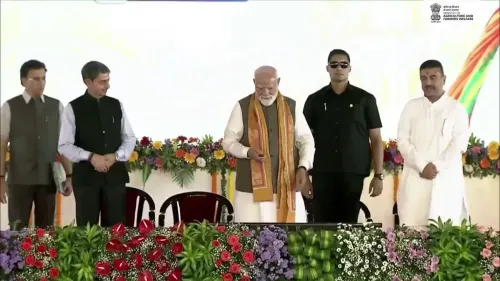
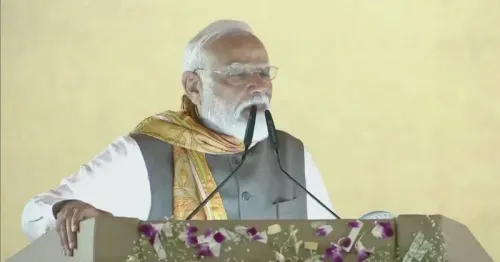
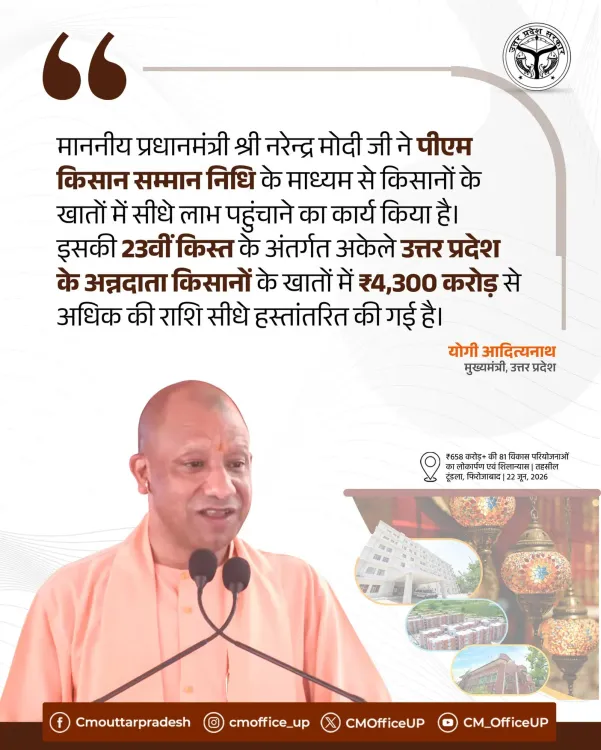
The Chief Minister's Office of Uttar Pradesh announced on Monday, 22 June 2026, that Prime Minister Narendra Modi has transferred more than ₹4,300 crore directly into the bank accounts of farmers in Uttar Pradesh under the 23rd instalment of the PM Kisan Samman Nidhi (PM-KISAN) scheme.
The post, attributed to Chief Minister Yogi Adityanath, stated in Hindi: 'इसकी 23वीं किस्त के अंतर्गत अकेले उत्तर प्रदेश के अन्नदाता किसानों के खातों में ₹4,300 करोड़ से अधिक की राशि सीधे हस्तांतरित की गई है' — meaning, 'Under the 23rd instalment alone, more than ₹4,300 crore has been directly transferred into the accounts of the annadata (food-provider) farmers of Uttar Pradesh.'
Context
PM-KISAN is a central government scheme that provides ₹6,000 per year in direct income support to eligible landholding farmer families, paid in three equal instalments of ₹2,000 each. The scheme was launched in February 2019, with the first instalment covering the period April–July 2019. Funds are transferred directly to beneficiary bank accounts, bypassing intermediaries and minimising leakages. The 23rd instalment marks a continued cadence of disbursements under the programme, which has now run for over seven years. The direct benefit transfer model was adopted specifically to ensure that agricultural support reaches cultivators without diversion.Policy Backdrop
Uttar Pradesh is India's most populous state and consistently accounts for one of the largest shares of PM-KISAN payouts nationally, owing to its extensive agricultural base and high density of small and marginal farmers. The state's farm sector supports a significant portion of its rural population, making central income-support transfers particularly consequential here. Successive central governments have expanded the direct benefit transfer architecture across welfare programmes to reduce administrative friction and improve last-mile delivery. PM-KISAN represents one of the flagship applications of this model in the agricultural sector.Stakeholders and Impact
The primary beneficiaries are Uttar Pradesh's landholding farmer families, often referred to in official communications as annadata. The ₹4,300 crore figure cited by the Chief Minister's Office represents the state's share of the 23rd instalment, reflecting the scale of UP's cultivator population relative to other states. Chief Minister Yogi Adityanath has consistently used official communications to highlight central welfare transfers to the state, framing them as evidence of coordinated governance between Lucknow and New Delhi. The direct-to-account mechanism also allows state and central administrations to track disbursement in real time.What's Next
With the 23rd instalment now released, attention will turn to subsequent PM-KISAN disbursements and whether the state government announces any complementary agricultural support measures in the next state budget cycle. The scale of per-instalment transfers to Uttar Pradesh is likely to remain a focal point in political messaging ahead of any upcoming electoral or policy milestones. Broader questions around PM-KISAN's coverage — including whether tenant farmers and agricultural labourers without land titles benefit — continue to shape the policy debate around farm welfare in India.Point of View
Particularly given Uttar Pradesh's outsized share of national farm-support payouts. By attributing the transfer directly to Prime Minister Modi while issuing the statement from the Chief Minister's official account, the communication reinforces the political alignment between the BJP governments in Lucknow and New Delhi. The ₹4,300 crore figure for a single instalment in a single state illustrates the fiscal scale of India's direct benefit transfer architecture in agriculture. As PM-KISAN approaches its eighth year, the policy debate is shifting toward coverage gaps — particularly for tenant farmers — which may shape the next phase of the scheme's design.
NationPress
22 Jun 2026
Frequently Asked Questions
What is PM Kisan Samman Nidhi and how much do farmers get?
PM Kisan Samman Nidhi (PM-KISAN) is a central government scheme that provides ₹6,000 per year in direct income support to eligible landholding farmer families, paid in three instalments of ₹2,000 each directly into their bank accounts.
How much money did UP farmers receive in the PM-KISAN 23rd instalment?
According to the Chief Minister's Office of Uttar Pradesh, more than ₹4,300 crore was transferred directly into the accounts of Uttar Pradesh farmers under the 23rd instalment of PM-KISAN.
When was the PM-KISAN 23rd instalment released for Uttar Pradesh?
The Chief Minister's Office of Uttar Pradesh announced the transfer on 22 June 2026.
Why does Uttar Pradesh receive such a large share of PM-KISAN funds?
Uttar Pradesh is India's most populous state with a very large agricultural base, meaning it has one of the highest numbers of eligible PM-KISAN beneficiary families among all states.
When was PM-KISAN launched and who started it?
PM-KISAN was launched in February 2019 by the central government under Prime Minister Narendra Modi, with the first instalment covering the period April–July 2019.