CM Yogi: UP farmers get disaster relief in 8-10 days
Synopsis
Uttar Pradesh CM Yogi Adityanath claims the BJP double-engine government is disbursing State Disaster Relief Fund compensation to farmers for crop, livestock, and housing losses within 8 to 10 days — a benchmark that sets a concrete, verifiable standard for UP's post-disaster relief machinery.
Key Takeaways
CM Yogi Adityanath posted on 12 October 2026 claiming disaster compensation is now reaching UP farmers within 8 to 10 days .
The relief covers three categories: crop damage, housing damage, and livestock loss — all via the State Disaster Relief Fund (SDRF).
The 'double-engine government' framing refers to BJP governing both Uttar Pradesh and the Centre , enabling faster fund coordination.
The announcement coincides with the kharif harvest season and post-monsoon period, when agricultural loss claims peak in UP.
The 8-to-10-day claim is specific enough to be independently verified against actual SDRF disbursal data, giving it accountability weight.
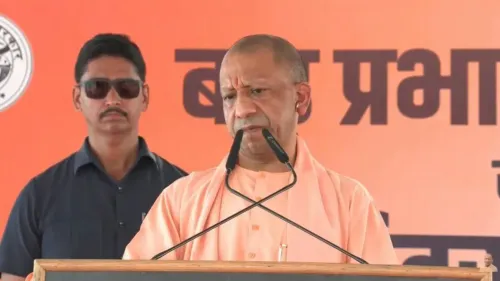
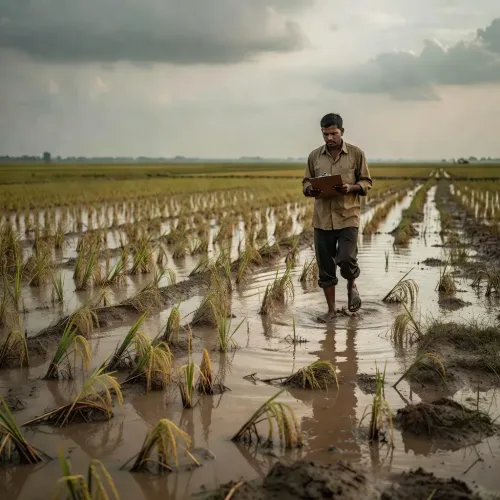
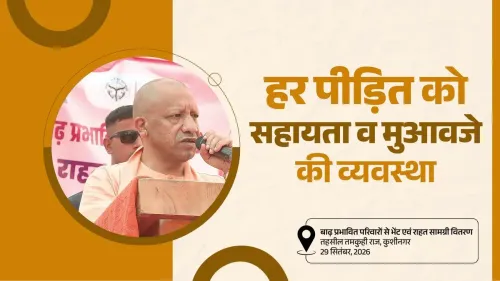
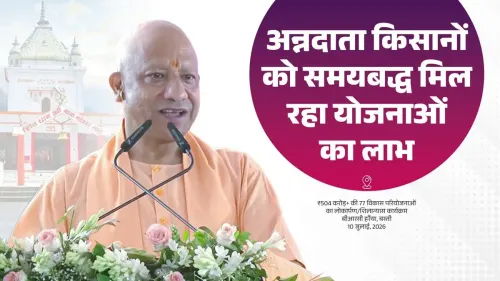
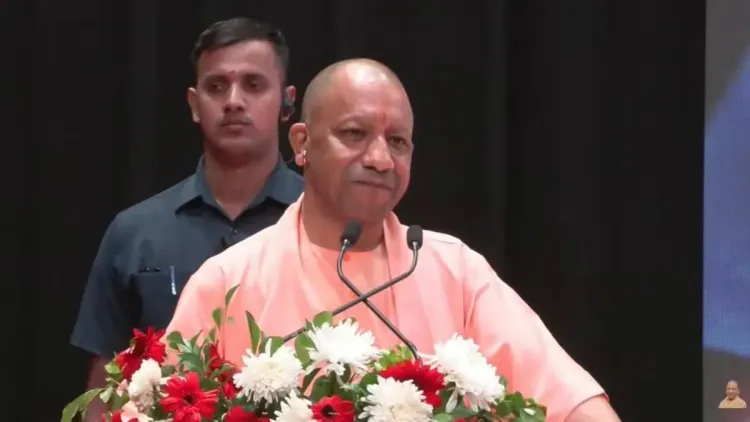
When floods or storms strip a farmer of his crop, his cattle, or the roof over his head, every single day without compensation is a day closer to ruin. Uttar Pradesh Chief Minister Yogi Adityanath is now claiming that his administration has slashed that wait to a matter of days — not weeks or months. On Monday, 12 October 2026, the Chief Minister posted on X, asserting that the 'double-engine government' is delivering disaster relief payouts to farmers within just 8 to 10 days of damage, covering losses to crops, homes, and livestock through the State Disaster Relief Fund.
In his post, CM Yogi wrote: 'आज डबल इंजन सरकार मात्र 8 से 10 दिन के अंदर ही अपने अन्नदाता किसानों को फसल, मकान और पशुधन क्षति पर आपदा राहत कोष से मुआवजा उपलब्ध करा रही है...' — ('Today, the double-engine government is providing compensation from the disaster relief fund to our farmer-providers for losses to crops, homes, and livestock in just 8 to 10 days...').The 'double-engine' promise and what it means for UP's farmers
The term 'double-engine government' is a core BJP political formulation, signalling alignment between a state government and the central government, both led by BJP. The argument is that this alignment removes bureaucratic friction and speeds up fund flow — making accelerated compensation timelines like the one CM Yogi is citing politically and administratively plausible in the party's framing. Uttar Pradesh, India's most populous state, carries one of the country's largest agricultural populations, making the speed of post-disaster relief a matter of acute economic consequence for millions of rural households.
Disaster compensation in India is governed by the State Disaster Response Fund (SDRF), which is jointly funded by the Centre and states. Historically, disbursements under this mechanism have been criticised for delays caused by damage surveys, inter-departmental clearances, and last-mile banking bottlenecks. A turnaround of 8 to 10 days — if validated — would represent a significant operational improvement over traditional timelines that often stretched to months.
Crops, livestock, and homes: the three pillars of the relief claim
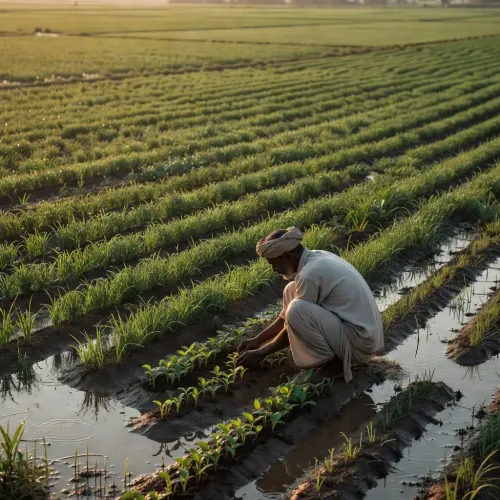
The Chief Minister's post specifically names three categories of loss: crop damage, housing damage, and livestock loss. Each category has distinct survey and verification requirements under SDRF norms, which makes the claim of a unified fast-track window across all three particularly ambitious. The inclusion of livestock is notable — cattle loss strikes hardest at marginal farmers and those from agrarian communities who depend on animals for both income and food security.
The post appears timed to the kharif harvest season and the tail end of the monsoon, a period when crop loss due to excess rainfall, flooding, or hailstorms tends to peak across the state's plains. UP's flood-prone districts along the Ganga, Ghaghra, and Yamuna river belts see repeated agricultural distress in this window.
Accountability will be in the data
Announcements of faster relief are a political staple — but the metric CM Yogi has put forward is specific enough to be verifiable: 8 to 10 days, across three loss categories, via the SDRF. That specificity is itself a form of accountability. Farmers and opposition parties now have a concrete benchmark to test against ground-level disbursal records in the coming weeks.
If the numbers hold under scrutiny, it marks a genuine administrative achievement for a state that has struggled historically with post-disaster bureaucratic delays. If they do not, the precision of the claim makes it an easy target.
Point of View
Which the party has used extensively to argue that political alignment between state and Centre produces governance dividends for ordinary citizens. By anchoring the message in a precise figure — 8 to 10 days — rather than a vague promise, the Chief Minister is also raising the bar for accountability in a state where farmer distress has historically been a potent opposition issue. The timing, at the tail end of monsoon season, is strategically sound: it speaks directly to a constituency — UP's massive agrarian base — that is freshest in its experience of crop and property loss. Whether the claim survives scrutiny from opposition parties and farmer groups will determine whether it becomes a lasting policy credential or a political liability.
NationPress
12 Oct 2026
Frequently Asked Questions
What is the 'double-engine government' Yogi Adityanath refers to?
The 'double-engine government' is a BJP phrase describing states where the BJP governs both at the state level and at the Centre, arguing that this political alignment removes bureaucratic friction and speeds up the flow of funds and schemes to beneficiaries.
How quickly is Uttar Pradesh now giving disaster compensation to farmers?
CM Yogi Adityanath has claimed that the UP government is disbursing disaster relief within 8 to 10 days of damage being reported, covering losses to crops, livestock, and homes.
What is the State Disaster Relief Fund (SDRF)?
The SDRF is a government mechanism jointly funded by the Central and state governments to provide rapid financial assistance to citizens affected by natural disasters such as floods, hailstorms, and droughts.
What types of losses are covered under UP's disaster relief for farmers?
According to CM Yogi's post, the compensation covers three categories: crop damage , housing damage , and livestock loss — all disbursed through the State Disaster Relief Fund.
Why is fast disaster relief particularly important for UP farmers?
Uttar Pradesh has one of India's largest agricultural populations. Delays in post-disaster compensation — which historically stretched to months — can push marginal farmers into debt or distress sales, making speed of disbursal a critical economic lifeline.