CM Yogi: UP Has 36 Sectoral Policies, ₹50L Cr Investment Pipeline
Synopsis
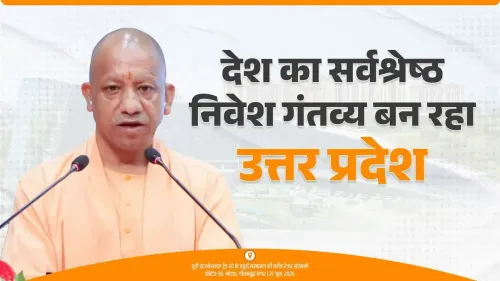
Chief Minister Yogi Adityanath says Uttar Pradesh has 36 sectoral policies, investment proposals exceeding ₹50 lakh crore, ground-breaking on ₹15 lakh crore, and ₹7.5 lakh crore more ready for implementation — positioning UP as India's top investment destination.
Key Takeaways
36 sectoral policies now in place in Uttar Pradesh, according to CM Yogi Adityanath's statement on 26 October 2026.
Total investment proposals received exceed ₹50 lakh crore , making it one of the largest state-level investment pipelines claimed in India. ₹15 lakh crore worth of investment proposals have already undergone ground-breaking, moving from announcement to physical execution.
An additional ₹7.5 lakh crore in proposals is described as ready for ground-level implementation — the near-term conversion number to watch.
The statement explicitly dismisses both 'policy paralysis' and security concerns as factors affecting UP's investment climate.
The claim builds on UP's industrial policy overhaul since 2017 , including single-window clearance and two editions of the Global Investors Summit.
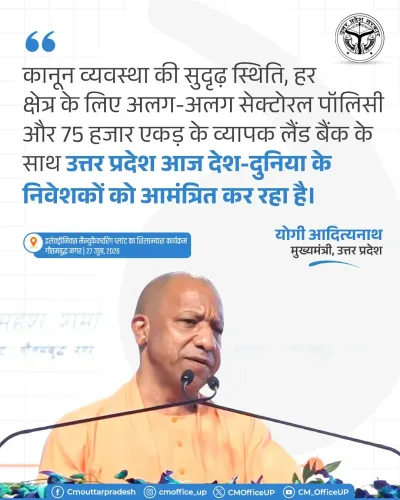
Uttar Pradesh has shed its old image of policy paralysis and law-and-order drift — at least according to the state's top office. On Monday, 26 October 2026, the Chief Minister's Office of Uttar Pradesh posted a direct statement from Chief Minister Yogi Adityanath, asserting that the state now holds 36 sectoral policies, has attracted investment proposals worth more than ₹50 lakh crore, and has already broken ground on ₹15 lakh crore of those commitments.
The three-tier investment scorecard CM Yogi is putting on the table
The statement lays out what amounts to a three-tier ledger. At the top: total proposals exceeding ₹50 lakh crore — the headline figure the government uses to signal investor confidence. The middle tier is the 'ground-broken' category, where ₹15 lakh crore worth of projects have moved from MoU to actual construction or commissioning. The third and arguably most watched number: ₹7.5 lakh crore in proposals described as 'ready to land on the ground' — investments that, in official language, are at the cusp of implementation.
The distinction matters enormously in Indian state-investment politics, where the gap between announced and executed capital is a perennial credibility test. By separating proposals into these three buckets, the CM's office is pre-empting the standard critique: that big-number investment summits generate press releases, not factories.
From 'bimaru' to boardroom pitch: the policy infrastructure behind the claim
Uttar Pradesh spent decades tagged with the 'BIMARU' label — a shorthand for India's economically lagging states. Chief Minister Yogi Adityanath, in office since 2017, has consistently staked his economic legacy on reversing that perception. The UP Industrial Investment and Employment Promotion Policy 2017 introduced single-window clearance and tiered incentives for manufacturing. The state followed up with the Global Investors Summit 2018 and a larger second edition in 2023, both of which generated large-scale investment commitments and gave the government a platform to publicise improving ease-of-doing-business rankings.
The assertion of 36 sectoral policies — covering industries from electronics to defence manufacturing, logistics to data centres — is the government's answer to the 'policy paralysis' charge. The implicit comparison is to earlier administrations, where investors frequently cited regulatory ambiguity and security concerns as dealbreakers. The CM's statement directly names and dismisses both: 'Uttar Pradesh today is not a victim of policy paralysis, nor is there any security problem.'
What the ₹7.5 lakh crore 'ready to implement' figure actually signals
Of all the numbers in the statement, the ₹7.5 lakh crore 'ready to land' figure is the one to track. It represents the pipeline that will test, over the next several quarters, whether the state's execution machinery can match its pitch. Investors in this category have gone past the proposal stage but have not yet begun physical operations — a window in which land acquisition hurdles, utility connections, and regulatory clearances can still derail timelines.
Upcoming quarterly economic reviews from the state's industrial development authority will be the first public checkpoint on whether this pipeline actually converts. A possible follow-up investors' meet or announcement of additional sectoral policies could also serve as a signal of the government's confidence in its own momentum.
Nine years after the first major policy reset, Uttar Pradesh is no longer arguing for a seat at the investment table — it is presenting a receipt. Whether that receipt reflects full payment or just a down payment is the question the next set of ground-breaking ceremonies will have to answer.
Point of View
The CM's office is directly addressing the two historic objections that kept large capital away from Uttar Pradesh. Separating the investment pipeline into three distinct tiers — proposed, ground-broken, and ready to implement — is a rhetorical move designed to shift the conversation from promises to proof. The ₹7.5 lakh crore 'ready to implement' bucket will become a political liability if conversion stalls, making the next six months a genuine test of execution credibility. This framing also aligns UP's pitch tightly with national Make in India and supply-chain diversification narratives, positioning the state as the logical beneficiary of post-pandemic manufacturing relocation.
NationPress
26 Oct 2026
Frequently Asked Questions
How much investment has Uttar Pradesh attracted under CM Yogi Adityanath?
According to a statement from the CM's office on 26 October 2026, UP has received investment proposals worth more than ₹50 lakh crore, with ₹15 lakh crore already at the ground-breaking stage and ₹7.5 lakh crore ready for implementation.
How many sectoral policies does Uttar Pradesh currently have?
The Chief Minister's Office stated on 26 October 2026 that UP currently has 36 sectoral policies covering a wide range of industries.
What is the difference between 'ground-broken' and 'ready to implement' investments in UP?
'Ground-broken' investments (₹15 lakh crore) have moved to physical construction or commissioning, while 'ready to implement' investments (₹7.5 lakh crore) have cleared the proposal stage but have not yet begun operations on the ground.
What is the Global Investors Summit Uttar Pradesh?
The Global Investors Summit is a state-organised investment conclave held to attract domestic and foreign capital to Uttar Pradesh. The first edition was held in 2018 and a second, larger edition took place in 2023, both generating large investment commitments for the state.
How has Uttar Pradesh improved its investment climate since 2017?
Since 2017, UP introduced the Industrial Investment and Employment Promotion Policy featuring single-window clearance and tiered incentives, expanded sectoral policies to 36, hosted two Global Investors Summits, and improved law-and-order — all cited as factors in attracting a ₹50-lakh-crore-plus investment pipeline.