CM Yogi Directs Stronger Startup Support as UP Reaches Top Performer Rank

Synopsis
Uttar Pradesh has climbed to the 'Top Performer' category in the Government of India's 2025 DPIIT Startup Rankings, up from 'Aspiring Leader' in 2018. CM Yogi Adityanath has directed officials to strengthen the new startup policy with maintenance allowances, prototype grants, seed capital, and patent incentives.
Key Takeaways
Uttar Pradesh has been placed in the 'Top Performer' category of the Government of India's DPIIT Startup Rankings for 2025 .
The state was in the 'Aspiring Leader' category as recently as 2018 , marking a significant multi-tier improvement.
CM Yogi Adityanath directed that the upcoming startup policy must support ventures from early stage through global expansion.
Key provisions called for include a maintenance allowance for founders, prototype grants , and seed capital assistance .
Enhanced incentives for patent filing and quality certification are also part of the proposed policy strengthening.
The DPIIT Startup Ranking is conducted annually under the national Startup India framework launched in January 2016 .
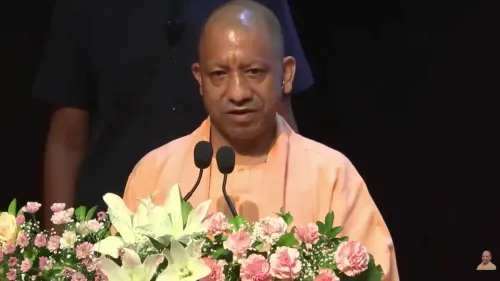
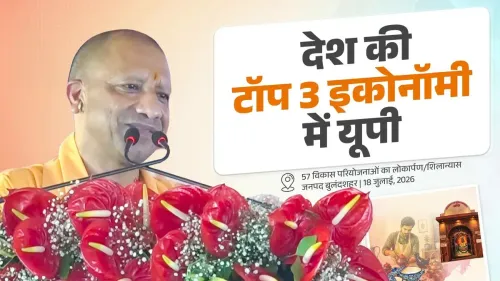
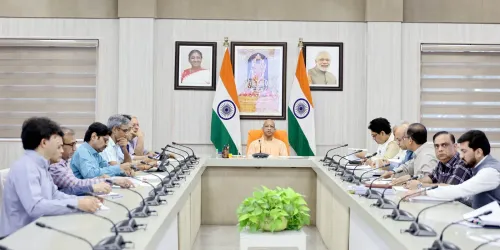
The Chief Minister's Office of Uttar Pradesh announced on Sunday, 7 June 2026 that the state has advanced to the 'Top Performer' category in the Government of India's State Startup Rankings for 2025, up from the 'Aspiring Leader' category it occupied in 2018. Chief Minister Yogi Adityanath simultaneously directed officials to make the state's upcoming startup policy more effective at every stage of a venture's lifecycle, from early ideation to global competition.
Context
The post, shared by the Chief Minister's Office, states: 'Varsh 2018 mein Aspiring Leader shreni se aage badhte hue Uttar Pradesh varsh 2025 mein Bharat Sarkar ki Startup Ranking mein Top Performer shreni mein sthan prapt kar chuka hai' — meaning, 'Having moved beyond the Aspiring Leader category in 2018, Uttar Pradesh has now secured a place in the Top Performer category of the Government of India's Startup Ranking in 2025.' The ranking is conducted annually by the Department for Promotion of Industry and Internal Trade (DPIIT) under the national Startup India framework, which was launched in January 2016 to foster entrepreneurship and ease of doing business.
The jump from 'Aspiring Leader' to 'Top Performer' represents a multi-tier climb in the DPIIT assessment framework, which evaluates states on parameters including policy support, incubation infrastructure, funding access, and regulatory simplification. Uttar Pradesh, India's most populous state, released its first dedicated startup policy in 2018–19 following the initial national ranking cycle.
Policy Backdrop
CM Yogi Adityanath directed that the new startup policy must strengthen support instruments at each stage of a venture's growth. Specific provisions he called for include a maintenance allowance (bharan-poshan bhatta) for early-stage founders, prototype grants, seed capital assistance, and enhanced incentives tied to patent filing and quality certification.
These directives signal that the revised policy is intended to address gaps that typically cause early-stage startups to stall — particularly the absence of living-cost support for founders and the high expense of intellectual property registration. Indian states have increasingly used the DPIIT Startup Ranking as a competitive benchmark, layering supplementary state-level incentives atop central Startup India mechanisms to attract founders and investors.
Stakeholders and Impact
The primary beneficiaries of the proposed policy enhancements are early-stage entrepreneurs and startups registered in Uttar Pradesh. A maintenance allowance would directly reduce the financial risk borne by first-time founders, while prototype grants and seed capital support target the critical pre-revenue phase where most ventures fail due to funding gaps.
Broader stakeholders include incubators, accelerators, academic institutions, and investors operating within the state's ecosystem. An improved policy framework could also strengthen Uttar Pradesh's case as a destination for venture capital and corporate innovation partnerships, particularly as the state positions itself ahead of future investor summits.
What's Next
The immediate focus will be on the formal rollout of the revised Uttar Pradesh Startup Policy, including the budgetary allocation required to operationalise the maintenance allowance, prototype grant, and seed capital schemes. Timelines for notification and disbursement mechanisms have not yet been announced.
The state's sustained improvement in DPIIT rankings, if maintained in subsequent cycles, could position Uttar Pradesh alongside traditionally dominant startup states. The effectiveness of the new policy will ultimately be measured by the volume of registered startups, the pace of fund disbursement, and the number of ventures that successfully scale to later funding rounds.
Point of View
Funded schemes will determine whether the ranking gain translates into durable entrepreneurial momentum.
NationPress
21 Oct 2026
Frequently Asked Questions
What is UP's rank in the 2025 DPIIT Startup Ranking?
Uttar Pradesh has been placed in the 'Top Performer' category in the Government of India's DPIIT State Startup Rankings for 2025, according to an announcement by the Chief Minister's Office.
What was Uttar Pradesh's startup ranking category in 2018?
In 2018, Uttar Pradesh was in the 'Aspiring Leader' category of the DPIIT Startup Ranking, making the 2025 'Top Performer' classification a significant upgrade.
What is the DPIIT Startup Ranking?
The DPIIT Startup Ranking is an annual assessment by the Department for Promotion of Industry and Internal Trade that evaluates Indian states on their startup ecosystems, including policy support, funding access, incubation, and regulatory environment.
What new benefits will UP's startup policy include?
CM Yogi Adityanath has directed that the new policy strengthen a maintenance allowance for founders, prototype grants, seed capital assistance, and incentives for patent filing and quality certification.
What is Startup India?
Startup India is a national programme launched by the Government of India in January 2016 to foster entrepreneurship, innovation, and ease of doing business for startups, with state participation encouraged through the annual DPIIT ranking exercise.