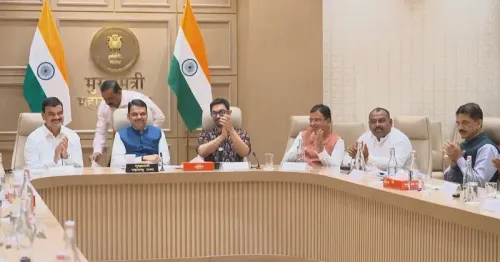
CMO Maharashtra to include Water Cup villages in state schemes
Synopsis
The Chief Minister's Office of Maharashtra said government water-conservation schemes are being linked so the work can scale, and Water Cup villages will be part of that effort. The 28 November 2026 note tagged CM Devendra Fadnavis and Paani Foundation.
Key Takeaways
The Chief Minister's Office of Maharashtra said on 28 November 2026 that government water-conservation schemes are being linked for a more comprehensive statewide push.
Villages participating in the Water Cup will be included in that integration, the office said.
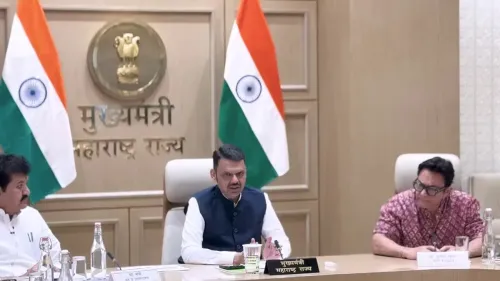
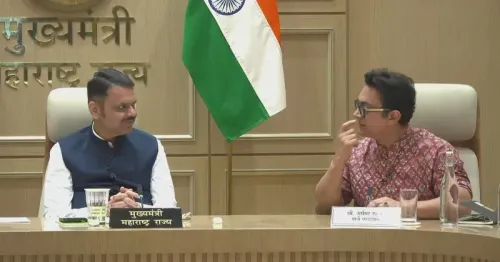
The post tagged Chief Minister Devendra Fadnavis and Paani Foundation, and referenced the Maha Water Cup and Aamir Khan.
Jalyukt Shivar Abhiyan (2015) and the Satyamev Jayate Water Cup (2016) form the policy lineage for combining state schemes with community contests.
The announcement does not specify funding, timelines, or groundwater targets.
Maharashtra is stitching its official watershed programmes into one larger effort, and the villages that already compete for the Water Cup are being pulled into that net. The Chief Minister's Office of Maharashtra said on 28 November 2026 that various government schemes are being linked so water-conservation work across the state can take a more comprehensive form.
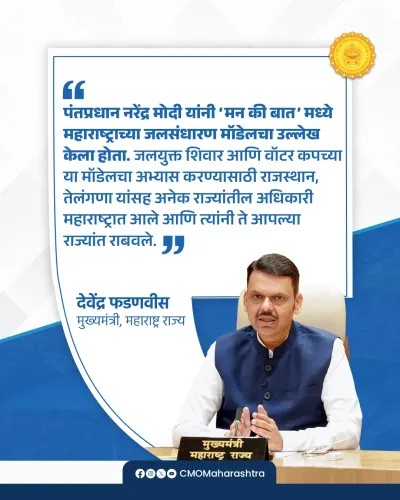
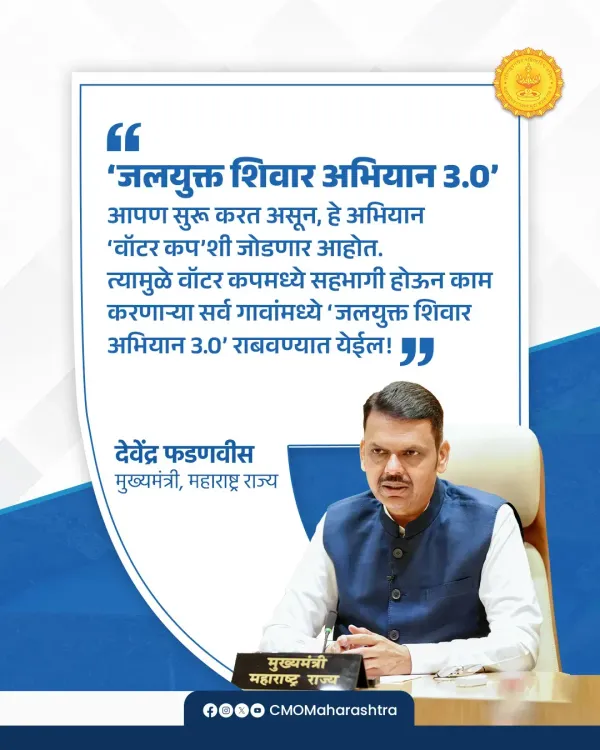
Translating the Marathi post, the office said: 'To give a more comprehensive form to water-conservation works in the state, various government schemes are being linked. Villages participating in the Water Cup will also be included.' The original punchline was वॉटर कपमधील सहभागी गावांचाही समावेश होणार. The message tagged Chief Minister Devendra Fadnavis and Paani Foundation, and carried hashtags for Maharashtra, the Maha Water Cup and actor Aamir Khan.
Water Cup villages move onto the government map
Paani Foundation, the organisation founded by Aamir Khan, has used the annual Water Cup as a competitive spur for community-led watershed work in Maharashtra villages. The CMO note does not spell out new funding lines or a start date. It does put contest villages explicitly inside the state's attempt to join its own schemes together.
That matters for drought-prone rural belts. Farmers in the rain-shadow districts have long depended on a mix of state earthworks and village labour — bunds, percolation tanks, trench work — rather than a single pipeline.
Jalyukt Shivar and the 2016 Water Cup lineage
The Fadnavis government launched the Jalyukt Shivar Abhiyan in 2015 to build permanent drought-proofing infrastructure in villages. A year later, Paani Foundation's Satyamev Jayate Water Cup, begun in 2016, turned watershed repair into a public contest among Maharashtra villages.
Successive Maharashtra governments have periodically tried to combine official watershed schemes with NGO-driven competitions of this kind. The stated logic is scale: state money and engineering on one side, community mobilisation on the other.
The test is groundwater, not another announcement
The people this is meant to reach are drought-prone villages and rural farmers who live with an erratic monsoon and falling wells. What follows will be the rollout — how schemes actually mesh, and whether later Water Cup cycles show deeper participation or a measurable lift in groundwater.
Those details are not in Saturday's post. The promise on the table is simpler: Water Cup villages will not sit outside the government's combined conservation push.
If the stitch holds, the next proof will not be another hashtag. It will be whether the wells in those competing villages actually rise.
Point of View
Not merely into a hashtag.
NationPress
28 Nov 2026
Frequently Asked Questions
What did the Maharashtra CMO announce on 28 November 2026?
The Chief Minister's Office of Maharashtra said various government schemes are being linked to give water-conservation works a more comprehensive form, and villages participating in the Water Cup will also be included.
What is the Maha Water Cup?
The Maha Water Cup is a village-level competition associated with Paani Foundation to recognise best water-conservation practices in Maharashtra. It grew out of the Satyamev Jayate Water Cup begun in 2016.
Who runs Paani Foundation and how is Aamir Khan linked?
Paani Foundation is an NGO established by actor Aamir Khan to promote community-led watershed management in Maharashtra. The CMO post tagged both the foundation and Aamir Khan.
What is Jalyukt Shivar Abhiyan?
Jalyukt Shivar Abhiyan is a Maharashtra rural water-conservation programme launched in 2015 during Devendra Fadnavis's earlier tenure to create permanent drought-proofing infrastructure in villages.
Does the post give a timeline or budget for the scheme link-up?
No. Saturday's post states that schemes are being joined and that Water Cup villages will be included, but it does not set out a start date, budget, or village-wise list.