AIIMS performs India's first robotic-guided DBS for Parkinson's
Synopsis
AIIMS New Delhi has performed India's first robotic-guided deep brain stimulation for Parkinson's, working with Tel Aviv University. Robotic guidance lets surgeons place brain electrodes with pinpoint accuracy, bringing a precision therapy to a public hospital that also treats tremor, dystonia, epilepsy, OCD and Tourette syndrome.
Key Takeaways
AIIMS New Delhi performed India's first robotic-guided deep brain stimulation for Parkinson's, announced on 28 November 2026 .
The procedure was done in collaboration with Tel Aviv University, Israel .
Sarat Chandra (AIIMS) and Prof.
Ido Straus (Tel Aviv University), with Prof.
Robotic guidance enables precise placement of electrodes in specific brain regions.
DBS is also used for essential tremor , dystonia , epilepsy , OCD , and Tourette syndrome .
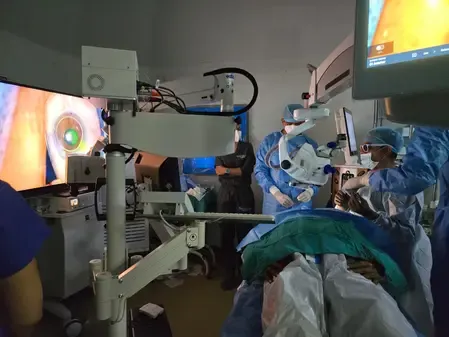
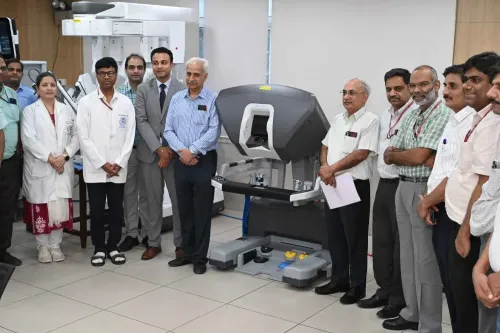
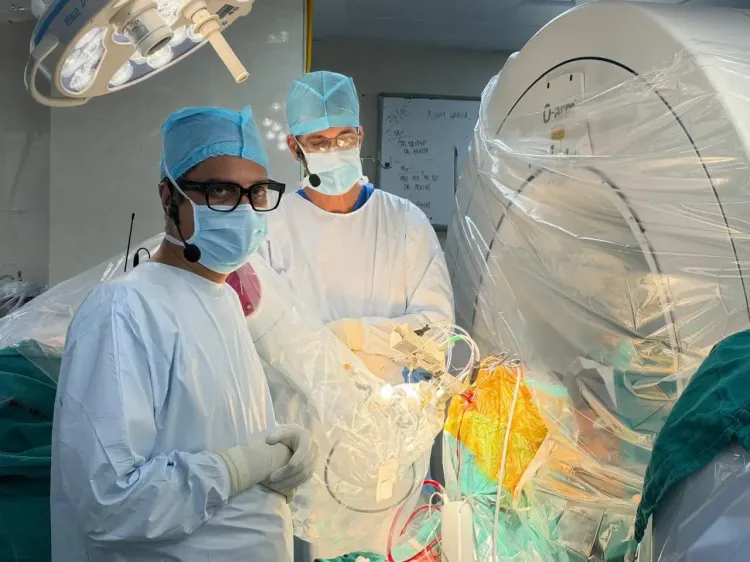
Doctors at the All India Institute of Medical Sciences (AIIMS), New Delhi, have performed India's first robotic-guided deep brain stimulation (DBS) procedure on a patient with Parkinson's disease, the institute said on Saturday, 28 November 2026. The procedure was done in collaboration with Tel Aviv University, Israel. Robotic guidance helps surgeons place stimulation electrodes in very specific regions of the brain.
AIIMS shared the milestone in a post on X. The achievement puts the country's premier public medical university at the forefront of advanced neuromodulation therapy in India.
Key Developments
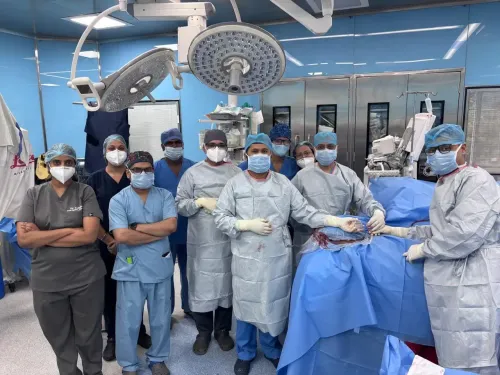
The procedure was led by Prof. P. Sarat Chandra of AIIMS and Prof. Ido Straus of Tel Aviv University. They were joined by Prof. Ela Varsi, Prof. Manjari Tripathi, and teams from the institute's Departments of Neurosurgery and Neurology.
According to the hospital, the main gain from robotic guidance is precision. The system supports exact placement of electrodes in targeted brain areas, which is central to the therapy's effectiveness for people living with Parkinson's disease.
How Deep Brain Stimulation Works
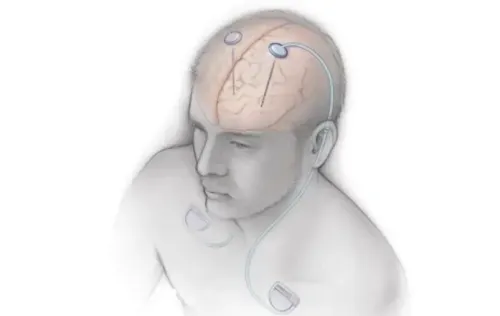
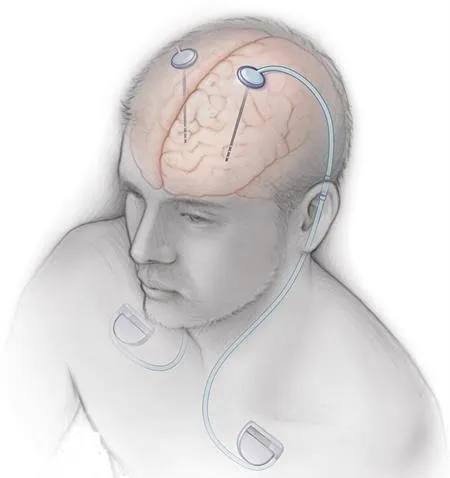
DBS works by delivering electrical impulses through electrodes implanted in the brain. These impulses alter brain activity and act on the cells and chemicals linked to certain medical conditions.
The impulses are controlled by a small device, similar to a pacemaker, placed under the skin in the upper chest. A wire running beneath the skin connects the device to the electrodes in the brain.
Beyond Parkinson's, the treatment is commonly used for essential tremor and dystonia. Dystonia is a group of conditions in which muscles contract involuntarily, such as Meige syndrome. Doctors also use DBS for epilepsy, obsessive-compulsive disorder, and Tourette syndrome, a condition that causes repetitive movements and sounds.
A Busy Month for AIIMS Neurosciences
Notably, this is not the institute's only neurosurgical development this month. Earlier in November, AIIMS said its Department of Neurosurgery had conducted a pilot study that developed a novel technique to slow the progression of glioblastoma. Glioblastoma is a fast-growing adult brain tumour, and the technique is meant for patients waiting for life-saving surgery.
Separately, the Digital India BHASHINI Division (DIBD), under the Ministry of Electronics and Information Technology (MeitY), showcased BHASHINI's speech technologies at AIIMS during the Global Digital Health Summit (GDHS) 2026. The tools are used to support doctor-patient conversations across languages. Doctors' spoken clinical notes were converted into typed text, enabling voice-based medical documentation.
Why It Matters
The procedure shows that a high-precision, technology-intensive therapy can be delivered within India's public health system. The partnership with Tel Aviv University also reflects growing India-Israel collaboration in clinical research.
The institute has not yet announced details on wider rollout or patient eligibility. If the procedure is adopted more broadly at AIIMS and beyond, it could expand access to precision neurosurgery for Indian patients with movement disorders.
Point of View
But a single case is not the same as access. Deep brain stimulation has long been out of reach for most Indian patients because of cost and the few centres with the needed expertise. The real measure will be whether this robotic capability is scaled within the public system, rather than staying a showcase at one flagship institute. The Tel Aviv partnership is promising, but it must lead to domestic training pipelines, not just one-off collaborations.
NationPress
28 Nov 2026
Frequently Asked Questions
What procedure did AIIMS perform for Parkinson's disease?
AIIMS New Delhi performed India's first robotic-guided deep brain stimulation (DBS) procedure for a Parkinson's patient. Robotic guidance helps place stimulation electrodes precisely in specific brain areas.
Who performed India's first robotic-guided DBS procedure?
It was performed by Prof. P. Sarat Chandra of AIIMS and Prof. Ido Straus of Tel Aviv University. Prof. Ela Varsi, Prof. Manjari Tripathi, and teams from the Departments of Neurosurgery and Neurology also took part.
How does deep brain stimulation work?
DBS sends electrical impulses through electrodes implanted in the brain to alter brain activity. The impulses are controlled by a pacemaker-like device under the skin in the upper chest, connected to the electrodes by a wire.
What conditions can deep brain stimulation treat besides Parkinson's?
DBS is commonly used for essential tremor and dystonia, including Meige syndrome. Doctors also use it for epilepsy, obsessive-compulsive disorder, and Tourette syndrome.
Why is the AIIMS robotic DBS procedure significant?
It is the first time this robotic-guided procedure has been done in India, and it was carried out at a public medical institution. It also reflects AIIMS's collaboration with Tel Aviv University in advanced neurosurgery.