Coal companies in Jharkhand's coal belt face a dozen firing attacks in four months

Synopsis
At least a dozen firing incidents in four months have turned Jharkhand's coal belt into a lawless flashpoint, with criminal gangs — including the reportedly active Rahul Dubey gang — allegedly targeting company offices, security posts, and traders' homes in a suspected extortion drive. The attacks persist despite police and CISF presence, raising hard questions about ground-level security in one of India's key mining corridors.
Key Takeaways
At least a dozen firing incidents have targeted coal companies across Chatra , Ramgarh , Hazaribagh , and Ranchi over the past four months .
The latest attack hit the office of AVS Coal Transporting Company in Chatra around midnight on Wednesday, 12 November 2026 ; between 2 and 12 rounds were reportedly fired.
The Rahul Dubey gang has claimed responsibility for multiple incidents via social media letters, though police say the claims are still being verified.
Security guard Vivek Kumar Ojha was seriously injured in the 26–27 October attack at Sainik outsourcing company in Urimari .
Police have so far arrested at least 11 people across multiple incidents, with investigations continuing into extortion motives and gang links.
Attacks near CISF camps and police stations have raised questions about the adequacy of security arrangements at coal project sites.
Companies engaged in coal mining, transportation, and allied businesses in Jharkhand's coal belt have increasingly become targets of criminal gangs, with at least a dozen firing incidents reported over the past four months across Chatra, Ramgarh, Hazaribagh, and Ranchi districts. The attacks — targeting company offices, mining sites, security posts, and the residences of coal traders — are suspected to be linked to extortion attempts and criminal turf wars, though police say investigations are ongoing.
Latest Incident: Midnight Firing in Chatra
The most recent attack took place in Honhe village under Tandwa police station limits in Chatra district, where three motorcycle-borne assailants opened fire at the office of AVS Coal Transporting Company around midnight on Wednesday. The company claimed that 10 to 12 rounds were fired; however, Chatra Superintendent of Police Animesh Nathani said preliminary investigations indicated two to three rounds of firing. Empty cartridges were recovered from the spot.
The targeted office is located in close proximity to the Project Officer's office of the Amrapali coal project and a Central Industrial Security Force (CISF) camp — a detail that has drawn fresh scrutiny over security arrangements in the region. A purported letter circulated on social media, allegedly in the name of the Rahul Dubey gang, claimed responsibility and threatened individuals associated with the company. Police are verifying the authenticity of the letter.
A String of Attacks: Key Incidents Since August
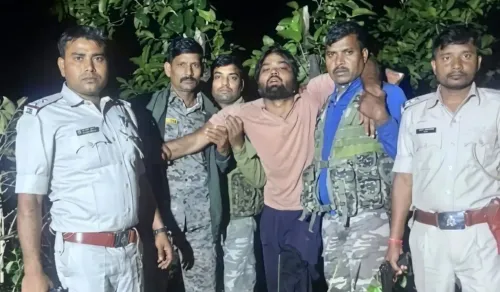
On the night of 26–27 October, firing was reported at the gate of Sainik outsourcing company in the Urimari colliery area. Security guard Vivek Kumar Ojha was seriously injured in the attack. Seven empty cartridges and a pamphlet reportedly bearing the name of the Rahul Dubey gang were recovered from the spot. In early November, Hazaribagh Police arrested accused Anshu Dubey following an encounter in connection with this case.
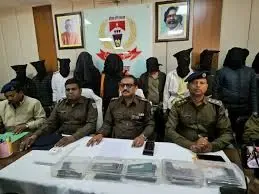
In the last week of October, motorcycle-borne assailants fired at the residence of coal trader Sanjay Karmali in Prem Nagar under Kanke police station limits in Ranchi. A night earlier, firing was reported outside AK International Hotel in Hazaribagh, run by coal trader Abhay. Police subsequently arrested five people allegedly involved in the Ranchi and Hazaribagh incidents, with one accused injured in retaliatory firing.
On 24 October, five people were arrested with weapons in Hazaribagh's Keredari coal belt for allegedly plotting firing incidents to extort money from companies in the area. The pattern stretches back to 23 August, when four masked assailants allegedly fired around eight rounds at the office of Susi Infra — a company working at the Chandragupta coal project in Urdusu village under Tandwa in Chatra. The Rahul Dubey gang reportedly claimed that attack as well.
The Pattern and the Extortion Angle
A common thread has emerged across these incidents: company offices, entry gates, security personnel, and the homes of coal traders are being selectively targeted. Threatening letters and social media messages allegedly seek to pressure businesses into making contact with criminal groups, paying extortion money, or allowing operations to continue under criminal diktat. Notably, the Rahul Dubey gang has claimed responsibility for multiple incidents, though police caution that the gang's involvement and the extortion motive have not been officially established in every case.
Security Concerns and What Lies Ahead
The repeated incidents have created a palpable atmosphere of insecurity among employees, contractors, and business owners tied to coal mining and transportation in the region. Critics argue the attacks raise serious questions about security arrangements around coal projects, particularly given that some sites are in proximity to CISF camps and police stations. Law enforcement agencies across Chatra, Hazaribagh, and Ranchi say investigations are actively continuing to establish the full chain of responsibility. Whether the police presence can be meaningfully reinforced — and whether extortion networks can be dismantled before they deepen their hold — will determine the security climate in Jharkhand's coal belt in the weeks ahead.
Point of View
Not isolated criminal opportunism. What is striking is that multiple attacks occurred in areas with an active CISF presence, exposing a gap between security on paper and security on the ground. Jharkhand's coal belt has historically been contested terrain, but the brazenness of midnight raids on company offices and the public circulation of threat letters on social media signals a criminal emboldening that law enforcement has yet to convincingly reverse. The state government and the Centre, as the custodian of coal policy, cannot treat this as a routine law-and-order matter.
NationPress
12 Nov 2026
Frequently Asked Questions
What is happening to coal companies in Jharkhand's coal belt?
Coal mining and transportation companies across Jharkhand's Chatra, Hazaribagh, Ramgarh, and Ranchi districts have faced at least a dozen firing incidents in four months, allegedly driven by criminal gangs seeking extortion. Company offices, security posts, and traders' residences have all been targeted.
Who is the Rahul Dubey gang and what is their alleged role?
The Rahul Dubey gang is a criminal group that has reportedly claimed responsibility for several of the firing incidents via letters circulated on social media. Police are verifying the authenticity of these claims, and the gang's involvement has not been officially established in every case.
What was the latest attack in Chatra about?
Three motorcycle-borne assailants fired at the office of AVS Coal Transporting Company in Honhe village, Chatra, around midnight on Wednesday. The company claimed 10 to 12 rounds were fired; police said preliminary evidence pointed to two to three rounds, with empty cartridges recovered from the scene.
Have police made any arrests in connection with these incidents?
Yes. Police have made multiple arrests across the affected districts. Five people were arrested in connection with the Ranchi and Hazaribagh incidents, another five were held with weapons in Hazaribagh's Keredari coal belt on 24 October, and accused Anshu Dubey was arrested in early November following a police encounter linked to the Urimari attack.
Why do these attacks raise concerns about security arrangements?
Several incidents occurred near CISF camps and police stations, suggesting that the visible presence of security forces has not deterred the attackers. Critics argue this points to systemic gaps in intelligence-sharing and on-ground patrolling around coal project sites in the region.