CR Paatil Hosts Gheriya Nritya at Surat Residence
Synopsis
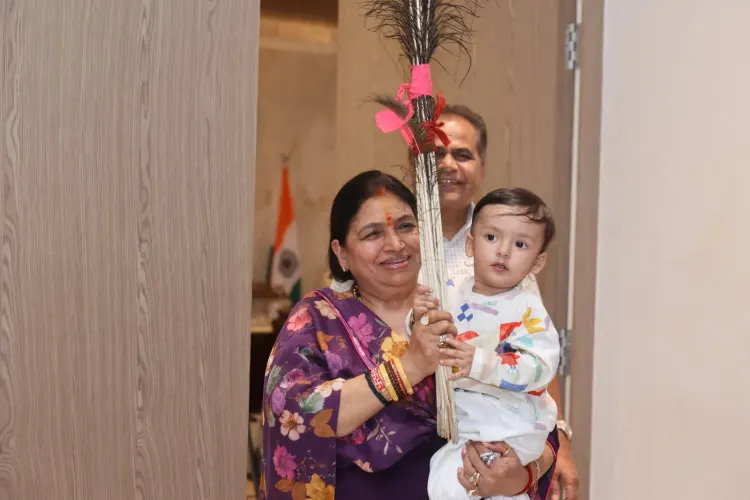
At his Surat home on 18 October 2026, Union Minister C. R. Paatil celebrated the Gheriya Nritya — an ancient folk dance of South Gujarat's Halpati and Dhodia tribal communities performed during Navratri and Diwali — honouring its performers and the living heritage they preserve.
Key Takeaways
Gheriya Nritya is an ancient folk dance of the Halpati and Dhodia tribal communities of South Gujarat.
It is primarily performed during Navratri and Diwali in Surat, Navsari, Tapi, and Valsad districts.
Male performers dress as women, carrying a dandiya stick and a peacock-feather cluster, with ghunghroo on their ankles.
Performers observe a strict one-month preparatory discipline including celibacy, dietary restrictions, and daily worship of Mataji.
Folk tradition holds that households where Gheriyas dance receive Mataji's blessings and a prosperous year ahead.
The dance's origins are linked to local legends including the fall of Pavagadh and the history of ancient Gujarat rulers.
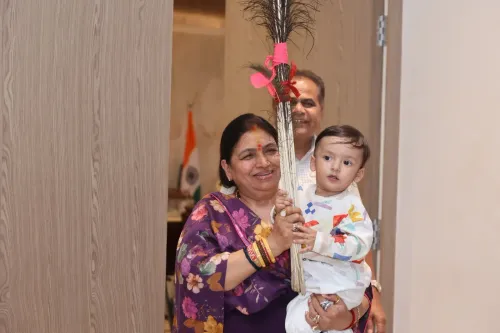
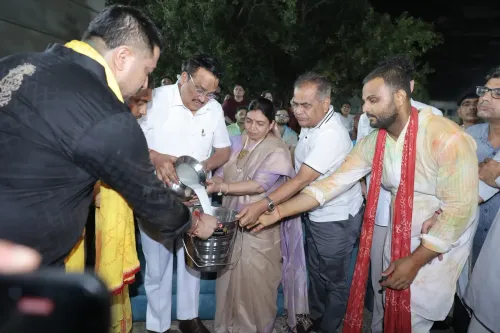
A vivid burst of South Gujarat's tribal soul lit up Union Jal Shakti Minister C. R. Paatil's residence in Surat on Sunday, 18 October 2026, as performers of the ancient Gheriya Nritya brought the folk tradition of the Halpati and Dhodia communities to his doorstep — a reminder that India's cultural inheritance lives not in museums but in the ring of ankle bells and the collective cry of 'Haan re haan bhai.'
Minister Paatil shared the moment on X, offering a detailed tribute to the dance form in Gujarati. He wrote that the performance revealed 'the richness of our folk culture and love for our traditions,' noting that Gheriya Nritya is 'a popular, ancient, and traditional folk dance of the tribal and local communities of South Gujarat, especially the Halpati and Dhodia societies.'
What makes Gheriya Nritya unlike any other
The dance's most striking feature is deliberate gender inversion. Male performers dress as women — wearing a saree draped dhoti-style below the waist, a kabjo (blouse) on top, and a phento (turban) on the head. In one hand they carry a dandiya stick; in the other, a cluster of peacock feathers. The percussion of ghunghroo (ankle bells) and the rhythmic chorus of 'Haan re haan bhai' fill the performance with what Paatil describes as 'vigour and enthusiasm.'
The tradition runs deepest in Surat, Navsari, Tapi, and Valsad districts, and is performed most prominently during Navratri and Diwali. But reaching the stage takes months of rigorous preparation. Traditionally, performers observe a strict one-month discipline before the festival — celibacy, abstinence from meat and alcohol, and daily worship, prayer, and meditation dedicated to Mataji (the mother goddess).
Belief, legend, and the blessing of Mataji
Folk belief holds that any household at whose threshold the Gheriyas dance receives Mataji's grace and 'a year filled with happiness and prosperity.' The dance's origins are woven into multiple local legends, including stories connecting it to the fall of Pavagadh — the storied hilltop fortress in Gujarat — and to the histories of ancient regional rulers.
Paatil closed his post with warm recognition: 'Heartfelt congratulations and best wishes to all the artists who preserve this priceless heritage. May Mataji's blessings remain on all.' The message reflects a recurring pattern among BJP leaders from Gujarat of publicly amplifying indigenous art forms tied to the festival calendar — weaving cultural pride into political visibility during Navratri season.
Gheriya Nritya is more than spectacle. It is a living covenant between generations — and as long as the ghunghroo ring out in the courtyards of South Gujarat, that covenant holds.
Point of View
Celebrating the art forms of the Halpati and Dhodia communities carries tangible outreach value. It also reflects a central government interest in documenting and elevating intangible cultural heritage ahead of potential state-level artist-recognition programmes. The post is ceremonial in tone but not trivial in subtext: culture, in Indian politics, is rarely just culture.
NationPress
18 Oct 2026
Frequently Asked Questions
What is Gheriya Nritya?
Gheriya Nritya is an ancient folk dance tradition of the Halpati and Dhodia tribal communities of South Gujarat, performed mainly during Navratri and Diwali. Its most distinctive feature is that male artists dress as women to perform the dance.
Which districts of Gujarat is Gheriya Nritya famous in?
The tradition is most prominent in Surat, Navsari, Tapi, and Valsad districts of South Gujarat.
What are the rules Gheriya dancers follow before performing?
Traditionally, performers observe a strict one-month discipline before the festival — including celibacy, abstinence from meat and alcohol, and daily worship, prayer, and meditation dedicated to Mataji.
What is the folk belief associated with Gheriya Nritya?
Folk belief holds that any household at whose threshold the Gheriyas dance receives the blessings of Mataji and enjoys a year filled with happiness and prosperity.
Why did CR Paatil post about Gheriya Nritya?
Union Jal Shakti Minister C. R. Paatil shared details of a Gheriya Nritya performance held at his Surat residence, using the occasion to honour the tribal artists who preserve this cultural heritage and to celebrate South Gujarat's folk traditions during the festive season.