Crisis Strikes Dharmapuri's Palmarosa Industry Amid Declining Cultivation and Market Demand
Synopsis
The Palmarosa cottage industry in Dharmapuri faces a critical challenge as declining cultivation, erratic weather, and weak market demand threaten its future. Farmers are calling for government intervention to revitalize this essential sector.
Key Takeaways
Palmarosa cultivation is rapidly declining in Dharmapuri due to market and environmental challenges.
Farmers face rising costs and stagnant prices, making production unviable.
Government support is crucial for the sustainability of the Palmarosa industry.
Modernization of distillation units is necessary to improve efficiency.
Exploring value-added products could open new market opportunities for farmers.
Dharmapuri, March 9 (NationPress) The cottage industry centered around Palmarosa in Dharmapuri district is currently grappling with a profound crisis as the cultivation of this aromatic crop sees a drastic decline due to diminished market demand, inconsistent rainfall, and low profitability for farmers.
Producers indicate that this predicament has impacted numerous small distillation units and poses a threat to a previously prosperous rural economy.
Palmarosa grass (Cymbopogon martinii) has been traditionally grown in the rain-fed areas of Dharmapuri and its surrounding regions.
The grass is processed to derive Palmarosa oil, an essential oil that enjoys widespread use in the fragrance and cosmetics sectors.
However, farmers express concern that the drop in demand and the lack of a structured market have deterred them from cultivating the crop in recent years. Industry insiders report a significant reduction in the land dedicated to Palmarosa cultivation in the district over the last few years, leading to a steep decline in the availability of raw materials for oil producers.
This downturn has been exacerbated by weak monsoons, adversely affecting the growth of this rain-fed crop.
Farmers are appealing to the Agriculture Marketing Department for intervention, advocating for fair pricing and direct procurement of Palmarosa oil to sustain the industry.
Without governmental assistance, they worry that more farmers may abandon this crop in the near future.
R. Murugan, a Palmarosa farmer and oil producer from Papparapatti, highlighted that erratic rainfall has critically impacted production.
“Last year, the rainfall was exceedingly poor, which hindered the proper growth of the grass. Palmarosa thrives solely in rain-fed conditions, so without sufficient rainfall, the crop cannot endure. Five years ago, cultivation spanned approximately 1,450 acres, but it has now plummeted to nearly 410 acres,” he stated.
Murugan also mentioned that escalating raw material costs have rendered oil production unfeasible. “The price of Palmarosa grass has surged from about ₹2,000 to ₹3,000 per tonne. We require nearly 1.5 tonnes of grass to produce one kilogram of oil. When local supplies were insufficient, I traveled to Tiruvannamalai to source it, but when factoring in transport, labor, and production costs, the total came to nearly ₹9,000. There are no profits left, leading me to cease oil production,” he elaborated.
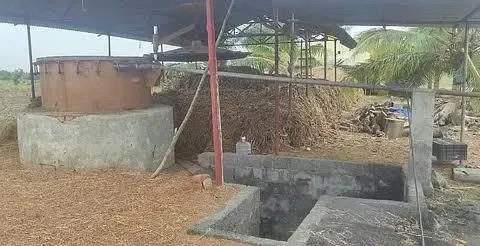
S. Ramesh, another oil producer, noted that roughly 350 to 400 small distillation units operate within Dharmapuri and nearby Harur, most of which rely on Palmarosa oil extraction.
“The majority of our sales occur through private buyers and intermediaries. Although the price recently rose to about ₹4,000 per kilogram, the same oil fetches nearly double in other markets. Due to the absence of an organized market in Tamil Nadu, farmers possess minimal bargaining power,” he commented.
Ramesh emphasized that many distillation units in the district are over 40 to 50 years old and require government assistance for modernization.
Officials from the Horticulture Department indicated that numerous farmers are progressively moving away from Palmarosa cultivation due to unpredictable returns and fluctuating demand.
Deputy Director of Horticulture A.G. Fathima mentioned that the combined effects of weak monsoons and decreasing demand have dissuaded many cultivators.
Meanwhile, officials from the Agriculture Marketing Department suggested that farmers could enhance their returns by forming Farmers Producer Groups and exploring value-added products such as incense sticks, therapeutic oils, and cosmetics.
They noted that the oil currently produced by farmers is typically sold as raw material and necessitates further refinement before being utilized in the fragrance and cosmetics industries.
Point of View
It's clear that the Palmarosa industry in Dharmapuri is at a crossroads. The interplay of environmental factors and market dynamics poses a significant threat to farmers' livelihoods. A coordinated effort involving government intervention and market restructuring is essential to sustain this vital industry.
NationPress
17 Sept 2026
Frequently Asked Questions
What is Palmarosa grass?
Palmarosa grass (Cymbopogon martinii) is an aromatic plant traditionally cultivated for its essential oil, widely used in the fragrance and cosmetics industries.
Why is the Palmarosa industry in crisis?
The crisis stems from declining cultivation, weak market demand, erratic rainfall, and low profitability for farmers.
How has the area for Palmarosa cultivation changed?
The area under Palmarosa cultivation in Dharmapuri has significantly decreased from about 1,450 acres five years ago to nearly 410 acres today.
What can be done to support Palmarosa farmers?
Farmers are advocating for government intervention to ensure fair pricing and direct procurement of Palmarosa oil, as well as support for modernization of distillation units.
What are the potential value-added products for Palmarosa?
Farmers could explore producing incense sticks, therapeutic oils, and cosmetics to enhance their returns.