Culture Minister Shekhawat: Live the Constitution, not exams
Synopsis
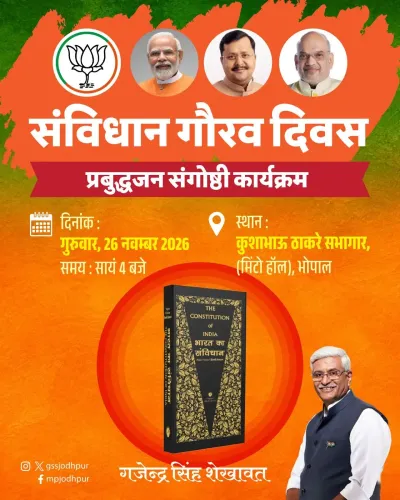
A day after Constitution Day, Union Culture and Tourism Minister Gajendra Singh Shekhawat said India's Constitution is not an exam textbook but a granth citizens must absorb into daily life. The remark echoes official efforts since 2015 to treat 26 November as a civic reminder.
Key Takeaways
Union Culture and Tourism Minister Gajendra Singh Shekhawat said the Constitution is a granth to internalise, not a book only for exams.
He posted the message on 27 November 2026, a day after Constitution Day.
Constitution Day falls on 26 November, marking the 1949 adoption of the Constitution.
The Union government designated the date in 2015 to spread awareness of constitutional values.
The remark aligns with official efforts to link constitutional literacy with everyday civic conduct.
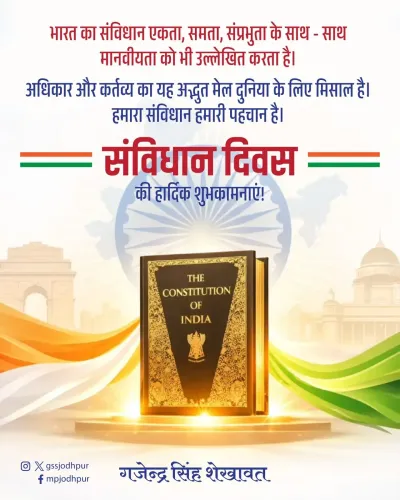
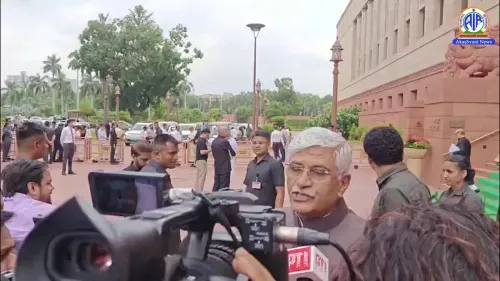
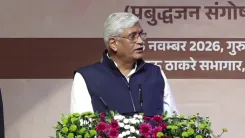
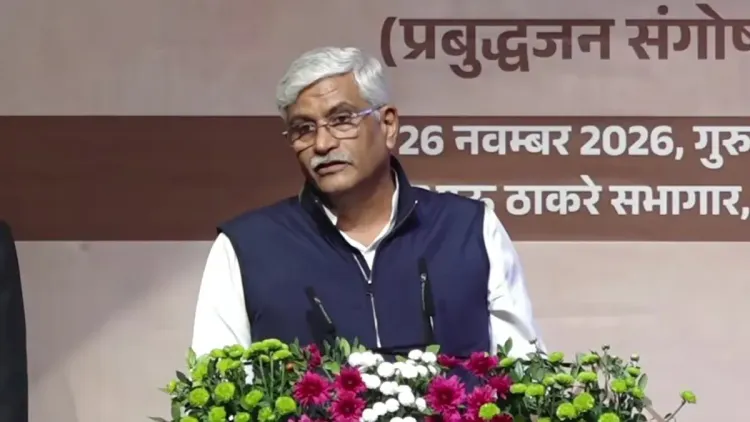
Union Culture and Tourism Minister Gajendra Singh Shekhawat used the morning after Constitution Day to recast India's founding document as a way of life rather than a syllabus. On Friday, 27 November 2026, the senior BJP leader and Lok Sabha MP from Jodhpur said the Constitution is not a book meant only to pass examinations, but a granth — a foundational text — that citizens must absorb into daily conduct.
In a post on X, he wrote: संविधान केवल परीक्षा पास करने के लिए किताब नहीं है, अपितु संविधान वो ग्रंथ है जिसे हमको अपने जीवन में आत्मसात करना चाहिए ('The Constitution is not merely a book for passing exams, rather the Constitution is a scripture that we should internalise in our lives'). The line is brief. The claim is not.
A civic pitch the morning after Constitution Day
India observed Constitution Day on 26 November, the anniversary of the Constituent Assembly's adoption of the document in 1949. In 2015, the Union government formally designated the date to spread awareness of constitutional values among citizens, with students a core audience.
Shekhawat's post lands in that afterglow. Official India has long argued that the Constitution should be treated as a living document. The minister's contrast — exam book versus life text — restates that argument in plain language.
From exam halls to everyday civic habit
The target is familiar: citizens who meet the Constitution as a chapter to memorise, then set aside. By calling it a granth, Shekhawat places the text closer to a civic scripture than to a statute book. The implication is practical. Equality, dignity and the rule of law are meant to show up in conduct, not only in answer sheets.
That framing matches a broader pattern of government messaging that links constitutional literacy with everyday civic behaviour. The Ministry of Culture, which Shekhawat heads, is a natural home for such awareness drives. Follow-up programmes in the coming months would test whether the exhortation travels beyond a social-media post.
If the Constitution is to be lived rather than crammed, the next test is not in a classroom. It is in ordinary public life.
Point of View
Constitution Day has given ministers a yearly platform to recast the 1950 document as a social contract rather than a legal artefact. Shekhawat's culture portfolio makes the framing notable: values, not only statutes. The test of the message will be whether the Culture Ministry follows with programmes that take it into schools and public spaces.
NationPress
27 Nov 2026
Frequently Asked Questions
What did Gajendra Singh Shekhawat say about the Constitution?
Union Culture and Tourism Minister Gajendra Singh Shekhawat said the Constitution is not merely a book for passing exams but a granth that citizens should internalise in their lives. He posted the remark on X on 27 November 2026, a day after Constitution Day.
When is Constitution Day observed in India?
Constitution Day is observed every year on 26 November. The date marks the Constituent Assembly's adoption of the Constitution in 1949, and the Union government designated it as Constitution Day in 2015.
Who is Gajendra Singh Shekhawat?
Gajendra Singh Shekhawat is the Union Minister of Culture and Tourism. He is a senior BJP leader and the Lok Sabha MP from Jodhpur, Rajasthan.
Why did the government create Constitution Day?
In 2015 the Government of India declared 26 November as Constitution Day to promote awareness of constitutional values among citizens. The observance is meant to take the document beyond classrooms into public life.
What does treating the Constitution as a living document mean?
It means applying constitutional values such as equality, dignity and the rule of law in everyday conduct rather than treating the text as material only for examinations. Indian governments have periodically repeated this civic message, especially around Constitution Day.