Shekhawat accuses Opposition of flouting Constitution in Parliament
Synopsis
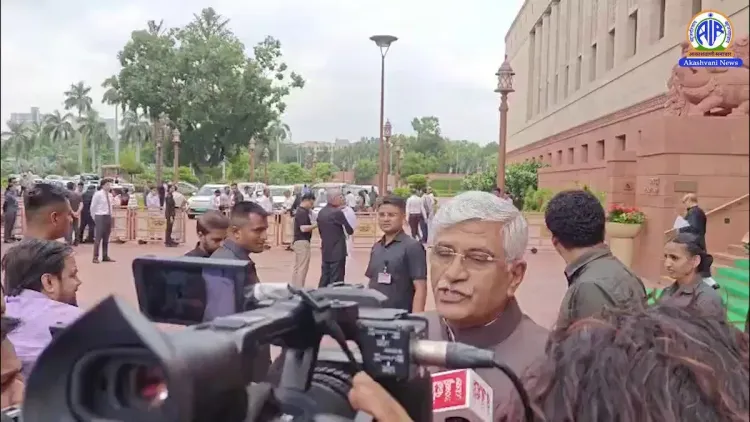
Union Minister Gajendra Singh Shekhawat on 22 July 2026 accused opposition parties of hypocrisy, saying they demanded parliamentary debate until the previous day but refused to participate when given the chance, calling their conduct contempt of the Constitution.
Key Takeaways
Gajendra Singh Shekhawat , Union Culture and Tourism Minister, publicly accused opposition parties of violating constitutional rules inside Parliament on 22 July 2026 .
He stated that the House 'is not a place to satisfy the hunger for power,' targeting what he described as politically motivated disruptions.
Shekhawat alleged the opposition demanded discussions 'until yesterday' but refused to participate when the opportunity arose.
He called the conduct 'contempt of the Constitution,' directly linking procedural violations to constitutional disrespect.
The remarks follow a recurring pattern in Indian parliamentary sessions where opposition protests and government counter-accusations have intensified in recent years.
Proceedings in the ongoing session, including any fresh notices under Rule 184 or Rule 193 , will be closely watched.
Union Culture and Tourism Minister Gajendra Singh Shekhawat launched a sharp attack on opposition parties on Wednesday, 22 July 2026, accusing them of violating constitutional norms inside Parliament even as they publicly invoke the Constitution. The minister, who is a senior BJP leader and Lok Sabha MP from Jodhpur, Rajasthan, posted his remarks on X amid what appeared to be fresh disruptions during an ongoing parliamentary session.
Context
In his post, Shekhawat wrote in Hindi: 'सदन सत्ता पाने की भूख शांत करने की जगह नहीं है' ('The House is not a place to satisfy the hunger for power'). He accused opposition parties of demanding discussions in the House 'until yesterday' and then refusing to participate when the opportunity arose. 'Those who swear by the Constitution are violating constitutional rules. This is contempt of the Constitution,' he stated.
The remarks reflect a familiar flashpoint in Indian parliamentary politics — the tension between the ruling coalition's desire to conduct listed business and the opposition's use of procedural tools to register dissent or force debates on issues of their choosing.
Policy Backdrop
Indian parliamentary sessions have repeatedly seen cycles in which opposition parties file notices demanding urgent discussions — under rules such as Rule 184 or Rule 193 of Lok Sabha procedure — and then stage walkouts or disruptions when those notices are not admitted or their conditions are not met. The government, in turn, accuses the opposition of obstructing legislative business.
Similar standoffs were visible during the 2023 monsoon and winter sessions, when opposition blocs demanded debates on issues including the Manipur violence and moved to suspend normal business until their notices were accepted. The pattern has intensified in recent years as both sides contest the boundary between the majority's right to govern and the minority's right to be heard.
Shekhawat's framing — that demanding debate and then refusing to participate amounts to 'contempt of the Constitution' — is a pointed escalation of the government's rhetorical position, directly linking procedural conduct to constitutional fidelity.
Stakeholders and Impact
The immediate stakeholders are opposition MPs across parties in the Lok Sabha, whose procedural choices during the session are now being publicly characterised by a Union minister as unconstitutional. Such public statements by cabinet members can harden positions on both sides and complicate behind-the-scenes negotiations between the Speaker's office and floor leaders.
For the ruling BJP and its allies, Shekhawat's post serves a dual purpose: it defends the government's legislative agenda and frames the opposition as hypocritical on constitutional values — a charge that carries weight given the opposition's own frequent invocation of constitutional principles. For opposition parties, the accusation is likely to draw a counter-charge that the government is suppressing legitimate parliamentary debate.
What's Next
Attention will now focus on the proceedings in the Lok Sabha over the coming days — specifically whether listed business resumes smoothly, whether any fresh notices under procedural rules are admitted, and whether parliamentary committee action is initiated on conduct during the session. The exchange also sets up a broader political contest over which side can credibly claim to be the defender of constitutional norms ahead of future electoral cycles.
Point of View
' the BJP is attempting to turn the opposition's own favourite rhetorical weapon — constitutional sanctity — against them. This fits a broader government strategy of contesting the moral high ground on institutional respect rather than engaging purely on the substance of whatever triggered the disruption. The timing of a cabinet minister's public post during an active session signals that the ruling side sees political value in escalating the confrontation publicly rather than resolving it quietly through the Speaker's office. Whether this hardens the standoff or accelerates a negotiated resumption of business will define the session's legacy.
NationPress
21 Oct 2026
Frequently Asked Questions
What did Gajendra Singh Shekhawat say about the opposition in Parliament?
On 22 July 2026 , Shekhawat accused opposition parties of demanding parliamentary discussions one day and refusing to participate the next, calling this behaviour 'contempt of the Constitution' and saying the House is not a place to satisfy the hunger for power.
Why is the opposition being accused of violating constitutional rules?
Shekhawat argued that opposition parties who publicly invoke the Constitution are simultaneously violating constitutional procedural rules inside Parliament, creating what he called a contradiction between their stated principles and their conduct.
What are Rule 184 and Rule 193 in the Lok Sabha?
Rule 184 and Rule 193 are procedural mechanisms in the Lok Sabha that allow members to move motions or raise discussions on matters of public importance. Opposition parties frequently use these rules to demand urgent debates, and disputes over their admission often trigger disruptions.
Has this kind of Parliament standoff happened before in India?
Yes. Indian parliamentary sessions, including the 2023 monsoon and winter sessions , have seen repeated cycles of opposition demands for debate, walkouts when those demands are not met, and government accusations that the opposition is obstructing legislative business.
What happens next after Shekhawat's statement?
Focus will shift to whether normal business resumes in the Lok Sabha , whether fresh procedural notices are admitted by the Speaker, and whether any parliamentary committee takes up the question of conduct during the session.