Shekhawat invokes Emergency anniversary, targets Congress
Synopsis
On the 51st anniversary of the 1975 Emergency, Union Minister Gajendra Singh Shekhawat posted a pointed attack on X, saying those who carry the Constitution today have hands stained with the blood of democracy's murder — an implicit broadside at the Congress party.
Key Takeaways
Union Minister Gajendra Singh Shekhawat posted on X on 25 June 2026 , the 51st anniversary of the Emergency proclamation.
He accused those who invoke the Constitution today of bearing responsibility for 'the murder of democracy' during the Emergency.
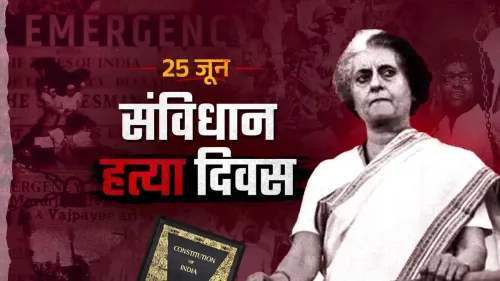
The national Emergency was proclaimed on 25 June 1975 under Article 352 and lasted 21 months until 21 March 1977 .
The Shah Commission (1977) documented Emergency-era excesses including forced sterilisations and press censorship.
The BJP has marked 25 June as an annual reminder of Congress-era authoritarianism, a pattern intensified since 2014 .
Opposition responses and parliamentary references in the upcoming monsoon session are expected to follow.
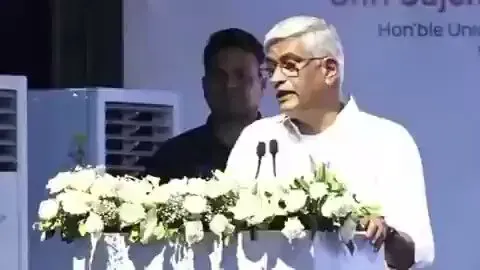
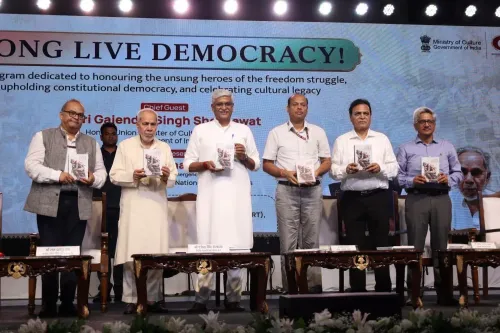
Union Culture and Tourism Minister Gajendra Singh Shekhawat on Thursday, 25 June 2026 marked the 51st anniversary of the Emergency with a sharp political post on X, accusing those who today brandish the Constitution of bearing responsibility for what he called the murder of democracy.
Posting under the hashtag #DarkDaysOfEmergency, Shekhawat wrote in Hindi: 'yaad isliye bhi rakhna hai kyunki jo aaj satta ke liye Samvidhan ki kitaab lekar ghoom rahe hain unke haath loktantra ki hatya ke khoon se sane hain' — 'We must remember because those who today walk around with the book of the Constitution in pursuit of power have hands stained with the blood of democracy's murder.'
Context
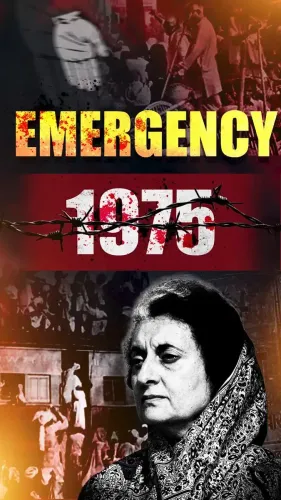
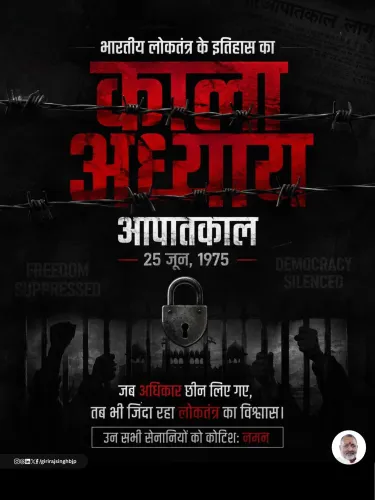
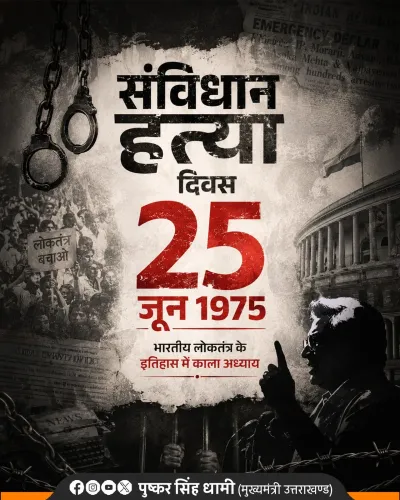
The post was published on 25 June, the precise date in 1975 when then Prime Minister Indira Gandhi recommended the proclamation of a national Emergency under Article 352 of the Constitution, citing internal disturbance. The Emergency lasted 21 months, ending on 21 March 1977. During that period, fundamental rights were suspended, the press was censored, and political opponents were detained without trial.
Shekhawat's post does not name any individual or party explicitly, but the reference to people 'carrying the Constitution book' in pursuit of power is widely read as directed at the Indian National Congress, whose leaders have frequently invoked constitutional values in recent political discourse.
Policy Backdrop
The Shah Commission, constituted in 1977 after the Emergency was lifted, documented a wide range of excesses committed during the period, including forced sterilisations and systematic suppression of the press. These findings have since formed the evidentiary backbone of BJP's political narrative around the Emergency anniversary.
The BJP has consistently observed 25 June as a day to highlight what it describes as Congress-era authoritarianism. Since 2014, this rhetorical pattern has intensified around anniversaries and election cycles, with senior ministers, the Prime Minister's Office, and party platforms all participating in coordinated commemorations.
Stakeholders and Impact
The post places the Emergency squarely in contemporary political contestation. By juxtaposing the Constitution — a document that opposition parties have prominently displayed at rallies and in Parliament — with the Emergency's suspension of constitutional rights, Shekhawat frames present-day constitutional invocations as hypocritical.
Congress and allied opposition parties are the implied target. The broader public discourse around democratic institutions, press freedom, and civil liberties gives the post resonance beyond a purely historical commemoration.
What's Next
With Parliament's monsoon session approaching, the Emergency anniversary is likely to reverberate in parliamentary debates, with both the ruling coalition and the opposition seeking to define the historical record on their own terms. Opposition responses to posts like Shekhawat's — and any formal parliamentary references to the anniversary — will signal how central this historical flashpoint remains to 2026's political calendar.
Point of View
The Constitution, into evidence of its own guilt, the BJP is attempting to neutralise a rhetorical tool that has been effective against the ruling party. The Emergency anniversary has become a fixed node in BJP's annual political calendar, but its salience in 2026 is amplified by ongoing debates about institutional autonomy and civil liberties. How the Congress responds — whether it engages the historical argument or deflects — will partly determine whether this frame gains traction heading into the monsoon session.
NationPress
23 Sept 2026
Frequently Asked Questions
Why is 25 June significant in Indian political history?
25 June 1975 is the date when Prime Minister Indira Gandhi recommended the proclamation of a national Emergency under Article 352 , suspending fundamental rights and censoring the press for 21 months .
What did Gajendra Singh Shekhawat post about the Emergency?
Shekhawat posted in Hindi that 'those who today walk around with the book of the Constitution in pursuit of power have hands stained with the blood of democracy's murder,' using the hashtag #DarkDaysOfEmergency .
Who is Gajendra Singh Shekhawat?
Gajendra Singh Shekhawat is the Union Minister of Culture and Tourism, a senior BJP leader, and a Lok Sabha MP from Jodhpur, Rajasthan .
What was the Shah Commission?
The Shah Commission was constituted in 1977 after the Emergency ended to investigate excesses committed during the period, including forced sterilisations and systematic suppression of press freedom.
Why does the BJP mark 25 June every year?
The BJP observes 25 June annually to highlight what it calls Congress-era authoritarianism during the 1975 Emergency, using the anniversary to frame contemporary political debates about democracy and constitutional values.