Shekhawat attends CCRT Emergency series closing event in Delhi
Synopsis
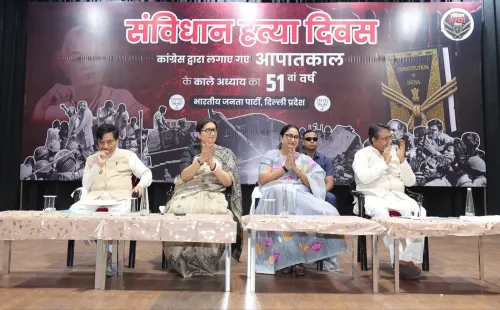
Union Culture Minister Gajendra Singh Shekhawat attended CCRT's closing ceremony for its Emergency-themed series in New Delhi on June 25, 2026, viewing exhibitions on democracy and constitutional history as the BJP marked Samvidhan Hatya Diwas.
Key Takeaways
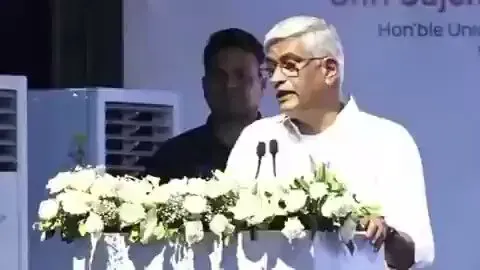
Gajendra Singh Shekhawat attended the CCRT Emergency series closing ceremony in New Delhi on June 25, 2026 .
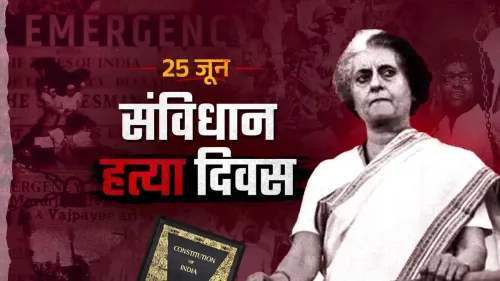
The event marks Samvidhan Hatya Diwas , the BJP's annual commemoration of the 1975 Emergency declared by the Indira Gandhi government.
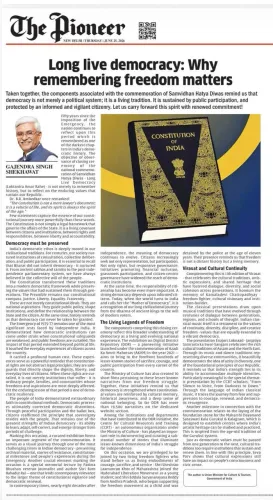
Four exhibitions were on display: 'Loktantra Amar Rahe' , a District Digital Repository , a Live Painting Zone , and the 'Seva Parv' art exhibition.
Freedom fighters, scholars, artists, researchers and students participated in the closing ceremony.
The minister credited PM Modi with embedding democratic values into India's living culture, contrasting this with what he called dynastic parties with authoritarian tendencies.
The Ministry of Culture is expanding its use of CCRT to institutionalise digital and artistic documentation of the Emergency period.
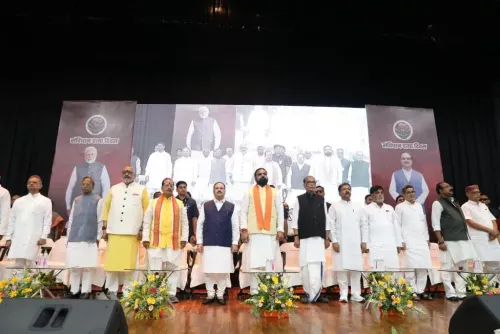
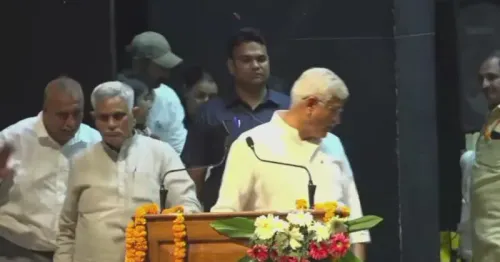
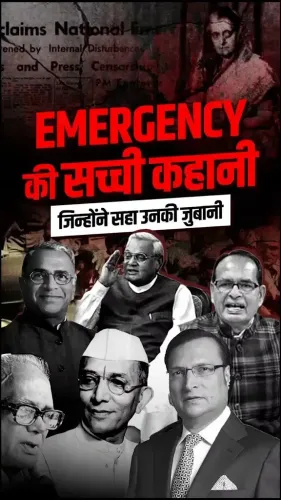
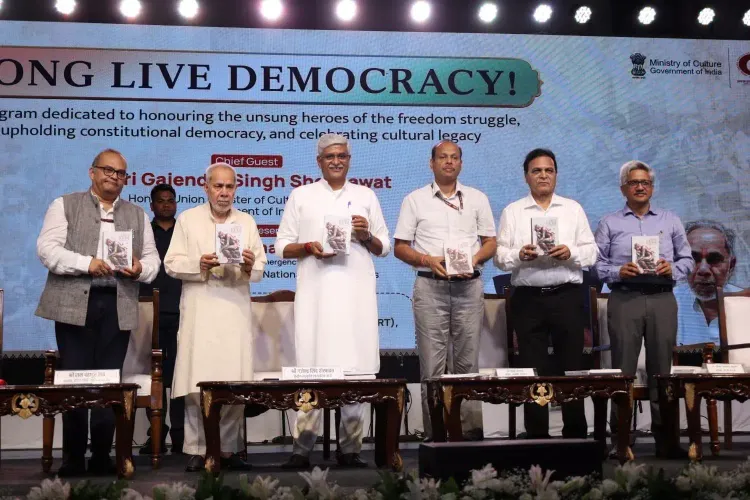
Union Culture and Tourism Minister Gajendra Singh Shekhawat attended the closing ceremony of a Centre for Cultural Resources and Training (CCRT) series on the 1975 Emergency in New Delhi on Thursday, June 25, 2026, marking the 51st anniversary of the declaration that suspended civil liberties across India. The event, observed by the BJP as Samvidhan Hatya Diwas (Constitution Murder Day), brought together freedom fighters, scholars, artists, researchers and students.
Context
Posting on X, Shekhawat said that Prime Minister Narendra Modi had made democratic values 'loktantrik mulyon ko Bharat ki jeevan sanskriti ka abhinn hissa' (an inseparable part of India's living culture). He added that every Indian citizen today feels democratically empowered, and attributed the declining electoral fortunes of what he called 'dynastic parties with authoritarian tendencies' to this shift. The closing ceremony on June 25 is part of an annual calendar of BJP-aligned cultural events that frame the Emergency as an assault on the Constitution.
Policy Backdrop
The Emergency of June 25, 1975, declared by the Indira Gandhi government, suspended fundamental rights, imposed press censorship and led to mass arrests of political opponents. It remained in force until March 1977. CCRT, an autonomous body under the Ministry of Culture, has increasingly been deployed to run educational and cultural programmes that document this period. The Ministry has combined digital archiving, live art and student outreach to widen the reach of this institutional memory exercise.
Exhibitions and Participation
At the closing ceremony, Shekhawat viewed four distinct showcases: the 'Loktantra Amar Rahe' ('Long Live Democracy') exhibition, a District Digital Repository exhibition, a Live Painting Zone, and the 'Seva Parv' (Service Festival) art exhibition. The minister noted that the participation of freedom fighters, scholars, artists, researchers and students lent the event particular significance. The presence of multiple categories of civil society participants signals the Ministry's intent to anchor the Emergency narrative across generational and professional lines.
What's Next
The BJP has institutionalised June 25 as an annual occasion to revisit the Emergency through parliamentary references, cultural programmes and public outreach. Subsequent observances are likely to expand the District Digital Repository model, potentially linking archival material from across states into a centralised constitutional memory project. Any parliamentary session falling near this date may also see references to the constitutional amendments enacted during the Emergency period, keeping the issue alive in legislative discourse.
Point of View
With CCRT now serving as the programmatic backbone. By combining digital repositories, live art and student engagement under a single ministerial visit, the Ministry of Culture is embedding a constitutional-memory narrative into India's formal cultural infrastructure. Shekhawat's explicit contrast between a 'democratically empowered' citizenry and 'dynastic parties' signals that the June 25 anniversary will remain a calibrated electoral and ideological instrument ahead of future election cycles. The expansion of district-level digital archives suggests this effort is being scaled beyond Delhi into the states.
NationPress
24 Sept 2026
Frequently Asked Questions
What is Samvidhan Hatya Diwas?
Samvidhan Hatya Diwas, or Constitution Murder Day, is the BJP's annual commemoration of June 25, 1975, when the Indira Gandhi government declared a National Emergency, suspending civil liberties and press freedom across India.
What is CCRT and what does it do?
The Centre for Cultural Resources and Training (CCRT) is an autonomous body under India's Ministry of Culture that conducts educational and cultural programmes, including exhibitions, workshops and training for artists and students.
What exhibitions were shown at the CCRT Emergency closing ceremony on June 25, 2026?
The closing ceremony featured four showcases: the 'Loktantra Amar Rahe' (Long Live Democracy) exhibition, a District Digital Repository exhibition, a Live Painting Zone, and the 'Seva Parv' art exhibition.
Who is Gajendra Singh Shekhawat?
Gajendra Singh Shekhawat is India's Union Minister of Culture and Tourism, a senior BJP leader and Lok Sabha MP representing the Jodhpur constituency in Rajasthan.
Why does the BJP mark June 25 every year?
June 25 marks the anniversary of the 1975 Emergency declaration. The BJP observes it as Samvidhan Hatya Diwas to highlight what it describes as an authoritarian assault on the Constitution, and uses the occasion to contrast its own democratic record with that of rival parties.