Shekhawat pens op-ed on Samvidhan Hatya Diwas and Emergency
Synopsis
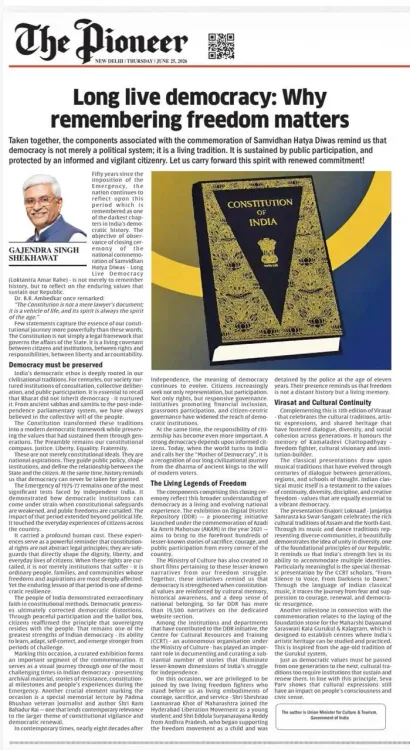
Union Culture and Tourism Minister Gajendra Singh Shekhawat marked the 51st anniversary of the 1975 Emergency on 25 June 2026 by publishing an op-ed on Samvidhan Hatya Diwas, urging citizens to reflect on India's democratic commitment and inviting public engagement with the piece.
Key Takeaways
Gajendra Singh Shekhawat published an op-ed on 25 June 2026 to mark the anniversary of the 1975 Emergency .
The piece is titled 'Long Live Democracy: Why Remembering Freedom Matters' and centres on the concept of Samvidhan Hatya Diwas .
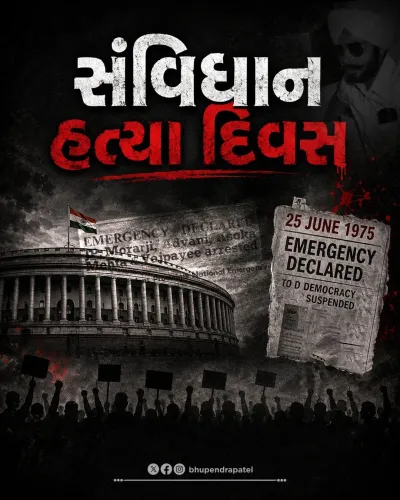
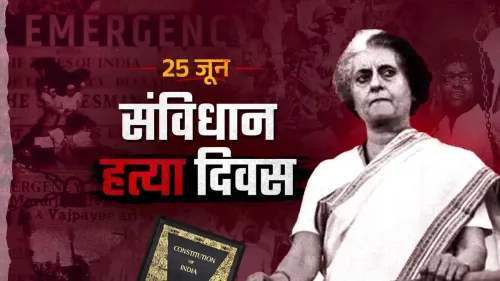
The Emergency was proclaimed on 25 June 1975 under Article 352 by Prime Minister Indira Gandhi and lasted 21 months .
The 44th Constitutional Amendment (1978) narrowed grounds for future emergencies following the period's abuses.
As Union Culture Minister , Shekhawat's intervention carries institutional weight over India's commemorative frameworks.
Watchers will monitor whether the Ministry of Culture formalises 25 June as an officially gazetted observance.
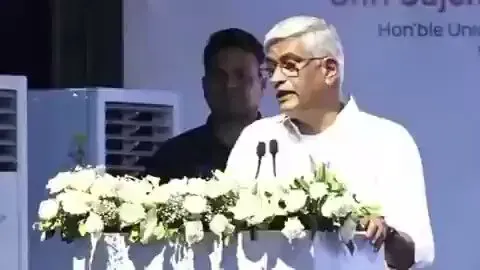
Union Culture and Tourism Minister Gajendra Singh Shekhawat on Thursday, 25 June 2026 shared an op-ed he authored on Samvidhan Hatya Diwas, calling on readers to reflect on the 1975 Emergency and renew India's democratic commitment on the anniversary of one of the republic's most contested chapters.
Context
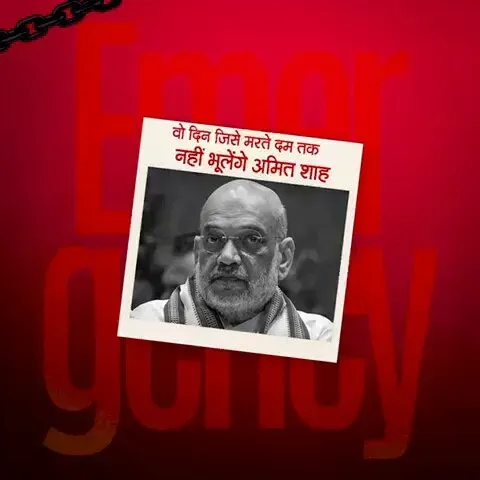
The op-ed, titled 'Long Live Democracy: Why Remembering Freedom Matters', was published to coincide with the 51st anniversary of the proclamation of the Emergency on 25 June 1975. In his post on X, Shekhawat wrote: 'Please read my latest Op Ed on Samvidhan Hatya Diwas: Remembering the Emergency and Renewing India's Democratic Commitment. I look forward to your thoughts.' The minister invited public engagement, signalling that the piece is intended as a contribution to broader civic discourse rather than a purely partisan statement.
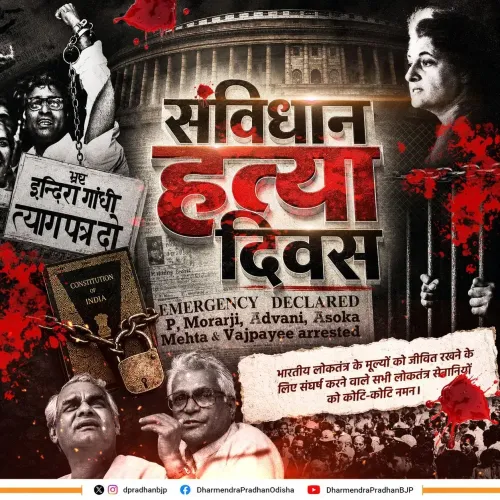
The Emergency was proclaimed by then Prime Minister Indira Gandhi on 25 June 1975 under Article 352 of the Constitution, citing internal disturbance. It lasted 21 months, during which civil liberties were suspended, the press was censored, and governance was conducted by executive decree. The Emergency was lifted in March 1977 after general elections.
Policy Backdrop
The term Samvidhan Hatya Diwas — broadly translated as 'Constitution Murder Day' — reflects the BJP's long-standing framing of the Emergency as the gravest assault on democratic institutions in independent India's history. The party has consistently used annual commemorations around 25 June to contrast the Congress party's record during that period with its own narrative of constitutional fidelity since 2014.
The 44th Constitutional Amendment of 1978, enacted after the Emergency ended, narrowed the grounds for future proclamations and restored judicial review, representing the legislature's direct legislative response to the abuses of that period. Shekhawat's role as Union Culture Minister gives his intervention added institutional weight, as his ministry oversees the country's historical memory and commemorative frameworks.
Stakeholders and Impact
The op-ed speaks primarily to citizens and political observers who engage with questions of constitutional history and democratic accountability. For the Congress party, annual Emergency commemorations remain a politically sensitive flashpoint, as the party has historically sought to contextualise rather than repudiate the period. For civil society and legal scholars, the anniversary is an occasion to assess the durability of the safeguards introduced after 1977.
As a senior Lok Sabha MP from Jodhpur, Rajasthan, Shekhawat commands a substantial public platform, and his decision to author a full-length op-ed — rather than a routine social-media post — suggests an intent to shape the terms of the anniversary's public debate in a more substantive way.
What's Next
Observers will watch whether the Ministry of Culture organises formal events or parliamentary references around 25 June, and whether the government moves toward an official gazette notification formally designating the date as Samvidhan Hatya Diwas. Shekhawat's public invitation for reader responses also opens the possibility of a follow-up engagement, keeping the Emergency's legacy at the centre of political conversation ahead of future legislative sessions.
Point of View
He signals a potential move toward giving the commemoration greater official standing. The piece arrives as the ruling party continues to frame constitutional stewardship as a defining contrast with the Opposition's historical record. How the Congress and civil society respond to this anniversary's framing will be worth tracking in the days ahead.
NationPress
24 Sept 2026
Frequently Asked Questions
What is Samvidhan Hatya Diwas?
Samvidhan Hatya Diwas, meaning 'Constitution Murder Day', is a designation promoted by the BJP to mark 25 June as the anniversary of the proclamation of the 1975 Emergency by Prime Minister Indira Gandhi, which suspended civil liberties and press freedom for 21 months .
Why did Gajendra Singh Shekhawat write an op-ed on 25 June 2026?
Shekhawat published the op-ed to coincide with the 51st anniversary of the Emergency , calling on citizens to reflect on democratic values and the constitutional safeguards that were undermined during that period.
What was the 1975 Emergency in India?
The Emergency was proclaimed by Prime Minister Indira Gandhi on 25 June 1975 under Article 352 of the Constitution. It lasted 21 months , during which civil liberties were suspended, the press was censored, and governance was conducted by executive decree, ending in March 1977 .
What constitutional change followed the Emergency?
The 44th Constitutional Amendment of 1978 was enacted after the Emergency, narrowing the grounds for future proclamations and restoring judicial review to prevent a repeat of the period's abuses.
Who is Gajendra Singh Shekhawat?
Gajendra Singh Shekhawat is India's Union Minister of Culture and Tourism, a senior BJP leader, and a Lok Sabha MP representing Jodhpur, Rajasthan .