Shekhawat hits back at Opposition over paper leak debate
Synopsis
Union Minister Gajendra Singh Shekhawat on 23 July 2026 rebuked the Leader of the Opposition over paper leak criticism, citing Congress failures in Rajasthan and defending the Modi government's legislative reforms, including the 2024 anti-leak law and proposed fast-track courts.
Key Takeaways
Gajendra Singh Shekhawat publicly challenged the Leader of the Opposition on 23 July 2026 , accusing him of distorting facts on the paper leak issue.
He cited Rajasthan under former Chief Minister Ashok Gehlot as a prime example of paper leaks flourishing under Congress rule between 2018 and 2023 .
The Public Examinations (Prevention of Unfair Means) Act, 2024 was highlighted as a key legislative reform by the Modi government .
Shekhawat announced that the government has decided to establish fast-track courts to ensure swift and strict punishment in paper leak cases.
He criticised the Opposition for choosing 'disruption and street theatrics' over parliamentary debate when the government was prepared for discussion.
The minister framed the issue as one of student welfare, saying youth need 'fair examinations and justice, not empty slogans.'
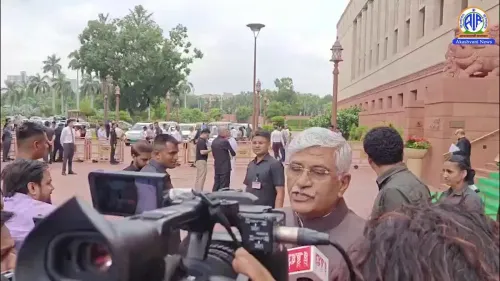
Union Culture and Tourism Minister Gajendra Singh Shekhawat on Thursday, 23 July 2026, sharply rebuked the Leader of the Opposition, accusing him of 'misleading the nation' on the paper leak issue and defending the Modi government's record of legislative and judicial reform on examination integrity.
Context
Shekhawat's post, written in both English and Hindi, was a direct counter to Opposition criticism over recurring paper leaks in national and state recruitment examinations. He argued that 'being in the Opposition does not give anyone the licence to ignore facts and mislead the nation,' and pointed to the Congress-ruled Rajasthan government under Ashok Gehlot as a 'recent reminder of how deeply this menace had taken root.'
In Hindi, he stated: 'विपक्ष में बैठने से तथ्यों को तोड़-मरोड़कर देश को गुमराह करने का लाइसेंस नहीं मिल जाता' — ['Being in the Opposition does not give one the licence to distort facts and mislead the country.'] He specifically cited repeated paper leak incidents in Rajasthan between 2018 and 2023 as evidence of Congress's failure to protect students.
Policy Backdrop
The exchange takes place against the backdrop of the Public Examinations (Prevention of Unfair Means) Act, 2024, passed by Parliament to criminalise paper leaks and other malpractices in national-level examinations. The legislation was a central government response to a series of high-profile leak incidents that triggered widespread protests among students and exam aspirants across the country.
Shekhawat credited the Modi government with choosing 'reform over rhetoric' — strengthening laws, introducing systemic safeguards, and announcing fast-track courts to ensure swift punishment for the guilty. He said: 'कड़े कानून बनाए, व्यवस्था को मजबूत किया और अब फास्ट-ट्रैक अदालतों के माध्यम से दोषियों को शीघ्र और कठोर सजा सुनिश्चित करने का भी निर्णय लिया है' — ['Stringent laws have been enacted, the system has been strengthened, and now a decision has been taken to ensure swift and strict punishment for the guilty through fast-track courts.']
Stakeholders and Impact
At the centre of the political dispute are millions of students and competitive exam aspirants who have faced disrupted recruitment cycles due to paper leak incidents. Shekhawat stressed that 'students deserve solutions, not political grandstanding,' framing the Opposition's conduct as a disservice to young people seeking fair examinations and justice.
He also criticised the Opposition's decision to opt for disruption over parliamentary debate, stating that when the government was ready for a discussion in Parliament, the Opposition 'chose disruption and street theatrics over debate.' In Hindi, he added: 'सरकार चर्चा के लिए तैयार थी, लेकिन विपक्ष ने बहस से भागकर उपद्रव की राजनीति को चुना' — ['The government was ready for discussion, but the Opposition chose the politics of disruption over debate.']
What's Next
The political focus will now shift to whether fast-track courts for paper-leak cases are operationalised ahead of the next parliamentary session, and whether the Opposition mounts a structured response inside Parliament rather than outside it. Shekhawat's closing line — 'युवाओं को कोरे नारे नहीं, निष्पक्ष परीक्षाएं और न्याय चाहिए' ['Youth need not empty slogans, but fair examinations and justice'] — signals that the BJP intends to keep the reform narrative front and centre as examination integrity remains a live electoral and governance concern.
Point of View
Using Rajasthan as a concrete, recent case study. By invoking the 2024 anti-leak legislation and fast-track courts, the ruling party is attempting to own the reform narrative before the issue can be weaponised in upcoming state or national electoral cycles. The accusation that the Opposition chose 'street theatrics over debate' is a recurring BJP framing designed to delegitimise protest as parliamentary obstruction. The dual-language post — English for national discourse, Hindi for the mass base — reflects a deliberate outreach strategy that goes beyond a single X post.
NationPress
21 Oct 2026
Frequently Asked Questions
What did Gajendra Singh Shekhawat say about the paper leak issue?
Shekhawat accused the Leader of the Opposition of misleading the nation on paper leaks, arguing that the problem was allowed to grow under Congress governments, particularly in Rajasthan under Ashok Gehlot, and that the Modi government has responded with legal reforms and fast-track courts.
What is the Public Examinations (Prevention of Unfair Means) Act, 2024?
It is a central law passed by Parliament to criminalise paper leaks and other malpractices in national-level public examinations, introduced by the Modi government as a systemic safeguard for students and exam aspirants.
What are fast-track courts for paper leak cases in India?
Fast-track courts are dedicated judicial bodies set up to hear specific categories of cases quickly. Shekhawat stated that the Modi government has decided to use such courts to ensure swift and strict punishment for those responsible for paper leaks.
Were there paper leaks in Rajasthan under the Congress government?
Multiple paper leak incidents in state recruitment examinations were reported in Rajasthan during the Congress government led by Ashok Gehlot between 2018 and 2023, and these cases have been cited by BJP leaders as evidence of systemic failure under Congress rule.
Why did Shekhawat criticise the Opposition's conduct in Parliament?
He argued that when the government was prepared to hold a discussion on paper leaks in Parliament, the Opposition chose disruption and protests outside the House instead of engaging in debate, which he said was a disservice to students seeking solutions.