Cyclone Arnab: 48,000 evacuated in Odisha, 466 shelters ready before Oct 28 landfall

Synopsis
Cyclone Arnab is hours from landfall near Yanam on the Andhra Pradesh coast, packing gusts of 150 kmph — and Odisha is already in emergency mode. Nearly 48,000 people have been moved out of harm's way, 466 shelters activated, and ₹19 crore disbursed, with 3,000 pregnant women flagged for urgent evacuation. Malkangiri is bracing for the worst as the storm tracks inland.
Key Takeaways
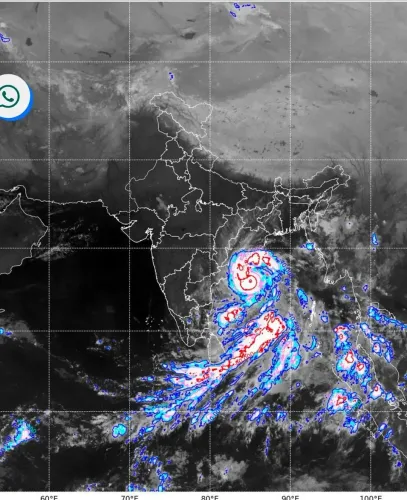
Cyclone Arnab is set to make landfall near Yanam , between Bapatla and Visakhapatnam , by the forenoon of 28 October 2026 .
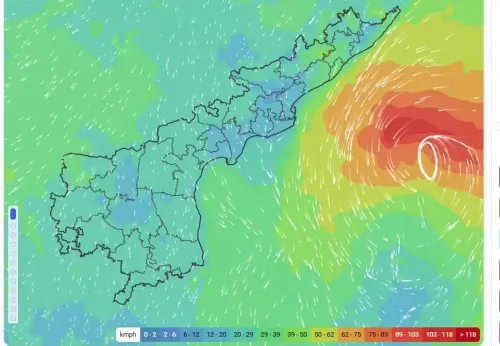
The storm will bring sustained winds of 125–135 kmph , gusting up to 150 kmph , according to IMD .
47,830 people have been evacuated across eight Odisha districts as of 27 October , with operations ongoing.
466 flood and cyclone shelters are operational; 48 ODRAF , 8 NDRF , and 225 Fire Services teams deployed.
The Odisha government has disbursed ₹19 crore to vulnerable districts for emergency response.
Around 3,000 pregnant women may need evacuation; 1,614 moved so far, with over 20 safe deliveries at health centres.
The Odisha government has evacuated nearly 48,000 people from high-risk coastal and inland zones as Cyclone Arnab — classified as a very severe cyclonic storm — bears down on the Andhra Pradesh coast, with landfall expected near Yanam between Bapatla and Visakhapatnam by the forenoon of 28 October 2026. The state has activated 466 flood and cyclone shelters across eight vulnerable districts in preparation for the storm's secondary impact on Odisha.
Storm Track and Projected Impact
According to the Indian Meteorological Department (IMD), Cyclone Arnab is currently positioned over the west-central Bay of Bengal, moving at 20 kmph on a northwestward trajectory. The storm is expected to make landfall as a very severe cyclonic storm with maximum sustained wind speeds of 125–135 kmph, gusting up to 150 kmph.
After crossing the Andhra Pradesh coast, the system is forecast to move inland through Malkangiri district in Odisha before heading roughly northward towards Chhattisgarh. Odisha Revenue and Disaster Management Minister Suresh Pujari told reporters on Tuesday that Malkangiri will bear the maximum impact within the state. Heavy to very heavy rainfall is expected across Odisha, with extremely heavy downpours forecast in isolated areas.
Evacuation Numbers District by District
As of the morning of 27 October 2026, a total of 47,830 people had been evacuated, with operations still ongoing. District-wise, Ganjam accounts for 6,500 evacuees, Gajapati for 11,000, Malkangiri for 9,850, Koraput for 5,000, Nabarangpur for 11,090, Kalahandi for 2,415, Nuapada for 1,675, and Rayagada for 300.
State Transport Department buses have been deployed across these districts to shift residents from their homes to designated relief centres. Of the 466 operational shelters, 175 are in Gajapati, 134 in Nabarangpur, 47 in Koraput, 35 in Malkangiri, 27 in Ganjam, 17 in Nuapada, 14 in Kalahandi, and 7 in Rayagada.
Vulnerable Groups and Medical Preparedness
Authorities have flagged the evacuation of expectant mothers as a priority concern. Minister Pujari noted that around 3,000 pregnant women may require evacuation — a figure that could rise — and that 1,614 had already been moved to safety as of Tuesday. More than 20 women have safely delivered babies at Community Health Centres (CHCs) and Primary Health Centres (PHCs) since evacuations began.
Disaster Response Forces Deployed
The state has deployed 48 ODRAF teams, 8 NDRF teams, and 225 Fire Services teams across vulnerable zones. Additional teams are being held in reserve at Koraput, Chhatrapur, and Mundali, ready for deployment based on requests from district collectors. The state government has also disbursed ₹19 crore to the eight most at-risk districts to fund evacuation logistics, food provision, and emergency preparedness.
'We are monitoring the cyclone's speed, direction, trajectory and intensity at every moment. We are also in constant touch with the IMD. Experts and scientists in the department, under the leadership of the SRC, are continuously analysing the situation and sharing their assessments with the districts. Therefore, we are keeping a close watch on the situation and are fully prepared to deal with it,' Pujari said.
This comes amid a pattern of increasingly early and organised cyclone responses in Odisha — a state that has significantly overhauled its disaster management framework following the devastating 1999 Super Cyclone. With landfall hours away, the focus shifts to last-mile evacuation, shelter management, and post-landfall relief coordination.
Point of View
000 evacuated before landfall, 466 shelters live, and a rare public accounting of pregnant women at risk. What this coverage risks underselling is the secondary threat: the storm's inland track through Malkangiri into Chhattisgarh, which means states less rehearsed in cyclone logistics will face the degraded but still dangerous remnant system. The ₹19 crore pre-disbursement to districts is a structural improvement over post-disaster reimbursement models, but the test is whether Malkangiri — a district with infrastructural deficits — can absorb the storm's peak inland intensity. Odisha has earned its reputation as India's disaster-management model; the question now is whether the handover to inland states is as seamless.
NationPress
27 Oct 2026
Frequently Asked Questions
When and where will Cyclone Arnab make landfall?
Cyclone Arnab is very likely to make landfall near Yanam, between Bapatla and Visakhapatnam on the Andhra Pradesh coast, by the forenoon of 28 October 2026. The IMD has classified it as a very severe cyclonic storm with wind gusts up to 150 kmph at landfall.
How many people have been evacuated in Odisha ahead of Cyclone Arnab?
As of the morning of 27 October 2026, 47,830 people had been evacuated from high-risk zones across eight districts in Odisha, with evacuation still ongoing. Gajapati and Nabarangpur account for the largest shares, with 11,000 and 11,090 evacuees respectively.
Which districts in Odisha will be most affected by Cyclone Arnab?
Malkangiri is expected to bear the maximum impact in Odisha, as the storm is forecast to enter the state through that district after crossing the Andhra Pradesh coast. Other significantly affected districts include Gajapati, Ganjam, Nabarangpur, Koraput, Rayagada, Kalahandi, and Nuapada.
What relief and rescue forces has Odisha deployed for Cyclone Arnab?
Odisha has deployed 48 ODRAF teams, 8 NDRF teams, and 225 Fire Services teams, with reserve teams stationed at Koraput, Chhatrapur, and Mundali. The state government has also disbursed ₹19 crore to eight vulnerable districts for evacuation, food, and emergency preparedness.
How is the Odisha government managing the evacuation of pregnant women during the cyclone?
Authorities have identified around 3,000 expectant mothers who may require evacuation, of whom 1,614 had been moved to safety as of 27 October 2026. More than 20 women have already safely delivered babies at Community Health Centres and Primary Health Centres during the evacuation.