Dalai Lama's 91st birthday marked in Washington as Trump official hails legacy
Synopsis
The Trump administration sent its top Tibet diplomat to Washington's Dalai Lama birthday event — a pointed signal of US policy continuity on Tibet. With the Dalai Lama at 91 and the question of his succession looming, Washington's visible engagement carries weight well beyond a birthday tribute.
Key Takeaways
Riley Barnes , US Special Coordinator for Tibetan Issues, attended the Dalai Lama's 91st birthday celebration in Washington on 10 July .
The event was organised by the Office of Tibet with support from the International Campaign for Tibet .
A moment of silence was observed for Tibetan activist Lobga Rangzen , who died on 2 July after self-immolating outside the UN headquarters in New York .
The US Congress and multiple states and cities have proclaimed the Dalai Lama's birthday a Day of Compassion .
The Dalai Lama has lived in exile in Dharamsala, India since 1959 and received the Nobel Peace Prize in 1989 .
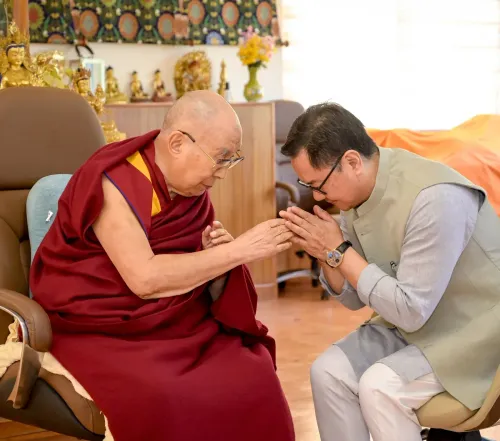
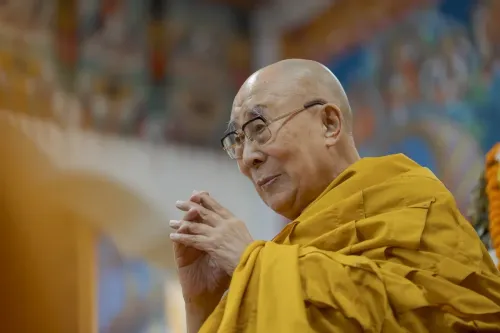
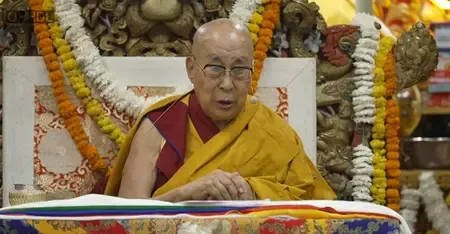
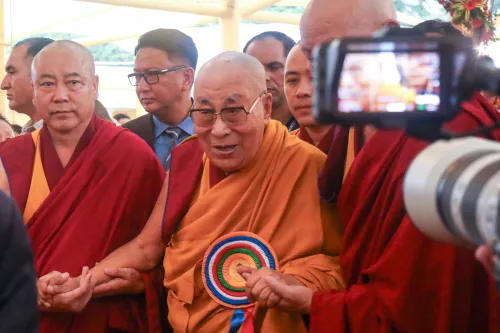
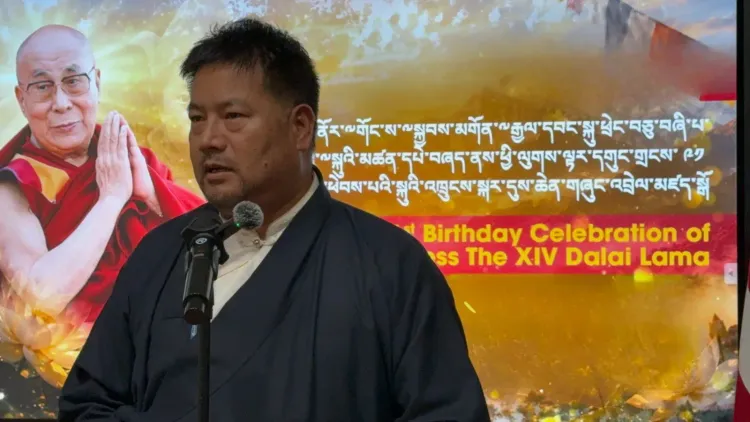
A senior Trump administration official joined Tibetan community members, diplomats, and civil society representatives in Washington on 10 July to mark the 91st birthday of the Dalai Lama, the exiled Tibetan spiritual leader who has lived in Dharamsala, India since fleeing Tibet in 1959.
Senior US Official Attends Celebration
Riley Barnes, the US Special Coordinator for Tibetan Issues and Assistant Secretary of State for Democracy, Human Rights and Labour, attended the event organised by the Office of Tibet with support from the International Campaign for Tibet. 'It's an honour to be here celebrating him and his life,' Barnes said. 'I hope and pray that we have many more years to have gatherings like this.'
Barnes recalled a personal encounter with the Dalai Lama in Dharamsala in 2019, during his tenure at the State Department's Office of International Religious Freedom, describing the Tibetan leader's 'compassion, generosity, sense of humour and hospitality.' He also attended the Dalai Lama's 90th birthday celebrations the previous year, and noted that his five-year-old daughter later used a traditional Tibetan scarf he had brought home to welcome a house guest — having remembered that it symbolised honour and hospitality.
Moment of Silence for Tibetan Activist
The gathering observed a moment of silence for Tibetan activist Lobga Rangzen, who, according to organisers, died after setting himself on fire outside the United Nations headquarters in New York on 2 July. The ceremony opened with prayers led by Tibetan Buddhist leaders.
What Tibetan Representatives Said
Namgyal Choedup, the Dalai Lama's representative for North America, said the occasion carried significance beyond a birthday observance. 'The celebration matters not because it is about His Holiness Dalai Lama, but it is about sharing with the rest of the world his messages of universal values and compassion, something that is direly needed in our world today, in which we continue to witness never-ending man-made human conflicts in addition to natural calamities and the resultant humanitarian crisis,' Choedup said.
Choedup noted that the US Congress and several states and cities had proclaimed the Dalai Lama's birthday a Day of Compassion, recognising his message of non-violence, interfaith harmony, and human values. 'The Tibetan people lost their country in 1959, but the world gained the Dalai Lama,' he said.
Tencho Gyatso, president of the International Campaign for Tibet, credited the Dalai Lama with demonstrating over seven decades 'that compassion is a source of strength, that dialogue is the path to lasting peace, and that true leadership is rooted in humility, wisdom, and service to others.'
Background and Policy Context
The Dalai Lama received the Nobel Peace Prize in 1989 for his advocacy of a non-violent resolution to the Tibetan issue. The Tibetan Policy Act of 2002 formally established the position of US Special Coordinator for Tibetan Issues, mandating coordination of US policies and programmes related to Tibet — including efforts to promote dialogue and safeguard its cultural and religious heritage. Washington's continued engagement on Tibet remains a point of diplomatic friction with Beijing, which regards the Dalai Lama as a separatist figure.
Point of View
Not a courtesy call. It keeps Tibet as a live pressure point on Beijing at a moment when US-China relations are already strained on multiple fronts. What mainstream coverage underplays is the succession dimension: at 91, the Dalai Lama's continued presence is the anchor of the entire Tibetan movement, and Washington's visible solidarity now shapes the leverage available when the succession question becomes unavoidable. The moment of silence for Lobga Rangzen also deserves more than a footnote — self-immolations outside the UN are rare and extreme acts of protest that reflect the desperation of a movement running out of conventional options.
NationPress
8 Oct 2026
Frequently Asked Questions
Why was the Dalai Lama's 91st birthday celebrated in Washington?
The Office of Tibet, with support from the International Campaign for Tibet, organised the Washington event on 10 July to mark the Dalai Lama's 91st birthday and share his messages of compassion and non-violence with a broader audience. The celebration also reflected ongoing US political support for the Tibetan cause.
Who is Riley Barnes and why did he attend?
Riley Barnes is the US Special Coordinator for Tibetan Issues and Assistant Secretary of State for Democracy, Human Rights and Labour — the senior-most US official dedicated to Tibet policy. His attendance signalled continued Trump administration engagement on Tibetan rights and heritage.
Who is Lobga Rangzen and why was a moment of silence observed?
Lobga Rangzen was a Tibetan activist who, according to event organisers, died after setting himself on fire outside the United Nations headquarters in New York on 2 July. The Washington gathering paused to honour his memory during the birthday celebration.
What is the US Special Coordinator for Tibetan Issues?
The position was established under the Tibetan Policy Act of 2002 to coordinate US policies and programmes related to Tibet, including promoting dialogue between Beijing and Tibetan representatives and safeguarding Tibet's cultural and religious heritage.
What has the US government formally recognised about the Dalai Lama?
The US Congress and several states and cities have proclaimed the Dalai Lama's birthday a Day of Compassion, recognising his decades-long advocacy of non-violence, interfaith harmony, and universal human values. He received the Nobel Peace Prize in 1989 for his non-violent approach to resolving the Tibetan issue.