Delhi BJP Leader Virendra Sachdeva Applauds New EV Policy

Synopsis
Delhi BJP President Virendra Sachdeva has commended the Delhi government's draft Electric Vehicle policy, projecting a significant reduction in pollution levels. With incentives for private and commercial EV adoption, the plan aims to transform the city's transportation landscape.
Key Takeaways
Delhi's new EV policy aims to drastically reduce pollution.
Significant tax exemptions for electric vehicles are proposed.
Public transport will transition to electric vehicles starting in 2027.
Incentives will be provided for purchasing electric vehicles based on battery capacity.
An EV fund will support the initiatives outlined in the policy.
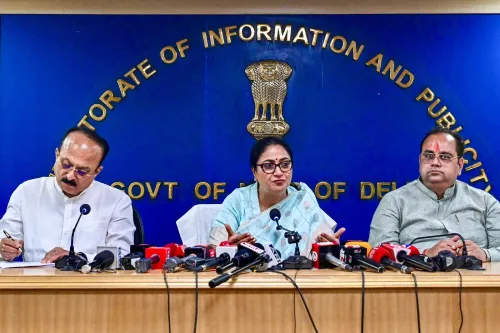
New Delhi, April 11 (NationPress) The President of Delhi BJP, Virendra Sachdeva, expressed his approval for the newly proposed Electric Vehicle (EV) policy by the Delhi government on Saturday, asserting that this initiative could diminish road pollution to almost zero within a span of three to seven years.
Sachdeva highlighted that the upcoming policy will offer significant exemptions from registration fees and road tax for both private two-wheelers and four-wheelers, thereby incentivizing residents to adopt EVs for personal transportation. Furthermore, the policy aims to facilitate the transition of commercial vehicles from traditional fossil fuels to electric mobility.
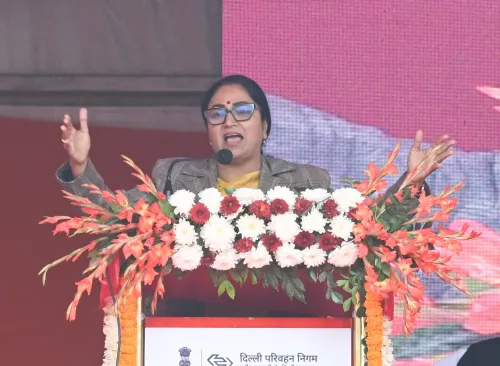
He commended the Rekha Gupta administration for suggesting generous tax exemptions and registration fee waivers for electric goods transport vehicles.
Notably, auto-rickshaws, which play a crucial role in Delhi's public transport system, will only be permitted to register electric models with complete exemptions starting January 1, 2027, which will contribute to a cleaner public transport network.
In addition, promoting electric vehicles for three- and four-wheeler goods transport is anticipated to further mitigate road pollution, he remarked.
Sachdeva pointed out that a significant aspect of the new EV policy involves the Delhi government committing to using only electric vehicles for its operational needs.
Moreover, public transport buses and N1 category trucks will transition to electric, projected to lead to over a 10% reduction in vehicular pollution within two years, according to his statements.
Previously, the Delhi government made its draft Electric Vehicle (EV) Policy 2026 available for public feedback, aiming to enhance electric mobility through various financial incentives and infrastructure development.
The proposed policy stipulates that from 2027, only electric three-wheelers will be allowed for registration, followed by two-wheelers in 2028, and includes a range of financial incentives, tax exemptions, mandatory regulations, and infrastructure improvements to encourage EV adoption.
Incentives for purchasing electric two-wheelers will be introduced gradually based on battery capacity, with vehicles priced under Rs 2.25 lakh (ex-factory) being eligible for incentives of up to Rs 30,000 in the first year, Rs 20,000 in the second year, and Rs 10,000 in the third year, as per an official announcement.
Electric three-wheelers (L5M category) will qualify for incentives of Rs 50,000, Rs 40,000, and Rs 30,000 over a three-year period, while electric four-wheeler goods vehicles (N1 category) will be entitled to incentives of Rs 1 lakh, Rs 75,000, and Rs 50,000 respectively during the same timeframe.
The policy also includes scrapping incentives aimed at phasing out older, more polluting vehicles, with benefits of Rs 10,000 for electric two-wheelers, Rs 25,000 for three-wheelers, Rs 1 lakh for non-transport electric cars, and Rs 50,000 for goods vehicles. These incentives will apply to vehicles that meet BS-IV standards, contingent upon conditions like scrapping certification and timeliness.
An EV fund will be established to support this policy, drawing from budget allocations, central and state schemes, environmental funds, and other resources.
Point of View
The new draft EV policy in Delhi is a notable step towards sustainable transportation. It reflects a growing commitment to combat vehicular pollution and enhance the adoption of electric mobility. The incentives proposed could lead to significant shifts in consumer behavior and operational practices among commercial fleets.
NationPress
19 Sept 2026
Frequently Asked Questions
What is the main goal of the new EV policy in Delhi?
The primary objective of the new EV policy is to reduce vehicular pollution on Delhi's roads to negligible levels within three to seven years by promoting electric vehicle adoption.
What incentives are provided under the EV policy?
The policy includes exemptions on registration fees and road tax for private and commercial electric vehicles, along with financial incentives for purchasing electric two-wheelers, three-wheelers, and four-wheeler goods vehicles.
When will electric three-wheelers and two-wheelers be mandated for registration?
Electric three-wheelers will be required for registration starting in 2027, followed by electric two-wheelers in 2028.
How will the policy impact public transport in Delhi?
The policy mandates that the Delhi government will use only electric vehicles for its operations, including public transport buses and N1 category trucks, enhancing the cleanliness of the transport system.
What is the EV fund mentioned in the policy?
The EV fund will finance the policy by utilizing budget allocations, central and state schemes, environmental funds, and other financial resources.