Delhi CM Rekha Gupta pledges modern judicial infrastructure for national capital
Synopsis
Delhi CM Rekha Gupta used the closing ceremony of NLU Delhi's first National Trial Advocacy Competition to stake out a clear governance position: the capital's judicial infrastructure must evolve to match the ambition of its next generation of lawyers. The statement pairs institutional intent with a public platform, signalling that legal reform is now part of the Delhi government's visible agenda.
Key Takeaways
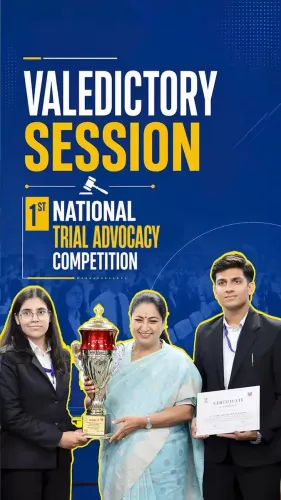
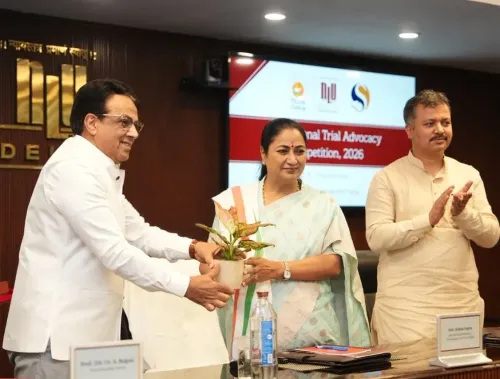
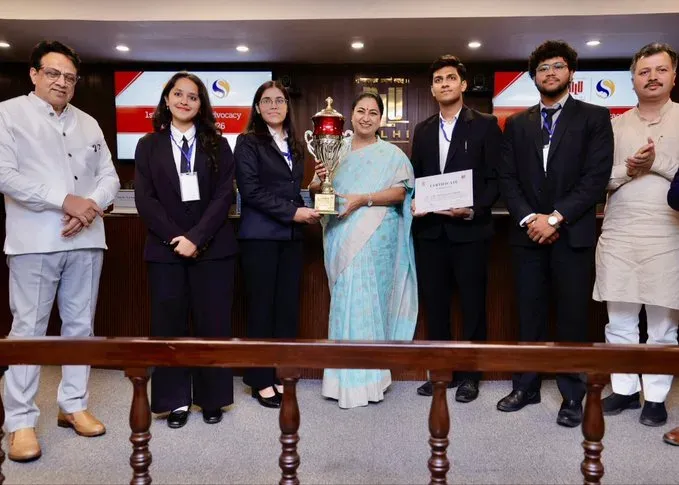
Delhi CM Rekha Gupta attended the closing ceremony of the first National Trial Advocacy Competition at National Law University, Delhi on 9 August .
The competition was organised with support from Think India at NLU Delhi.
Gupta posted on social media platform X that the Delhi government is preparing the capital’s judicial system for the future by combining new-generation talent with modern infrastructure.
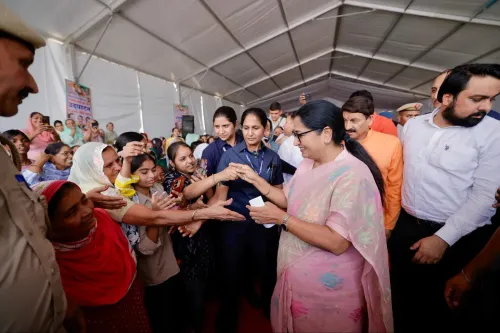
She also participated in Hariyali Teej celebrations at Delhi Haat, Pitampura , organised by the Delhi Tourism Department on 8–9 August .
The Teej event featured competitions including mehendi, rangoli, and Teej Queen–Miss Teej 2026 .
Delhi Chief Minister Rekha Gupta on Sunday, 9 August said the Delhi government is actively working to modernise the national capital's judicial infrastructure, combining next-generation legal talent with contemporary court systems to future-proof the city's justice delivery framework.
What the Chief Minister Said
Gupta made the remarks after interacting with young participants at the closing ceremony of the first National Trial Advocacy Competition, organised at the National Law University (NLU), Delhi with support from Think India. In a post on social media platform X, she said, “India’s tradition of justice has always accorded primacy to reason, sanctity to the Constitution, and the highest place to justice.”
She added, “This legacy will be further strengthened by the talent of the new generation combined with modern judicial infrastructure. The Delhi government is preparing the national capital’s judicial system for the future with this very vision. Heartiest congratulations to all participants and winners, and best wishes for a bright future.”
Significance for Delhi's Legal Ecosystem
The National Trial Advocacy Competition, held at one of India's premier law institutions, brought together young legal minds to sharpen courtroom advocacy skills. Chief Minister Gupta's direct engagement with participants signals the Delhi government's intent to position the capital as a hub for legal excellence. Notably, trial advocacy training has long been considered a gap in India's law school curriculum, making such competitions a meaningful intervention.
Teej Celebrations at Delhi Haat
Earlier on the same day, Chief Minister Gupta joined Hariyali Teej celebrations at Delhi Haat in Pitampura, sharing the festive occasion with women gathered for the event. She described Hariyali Teej as “not merely a festival, but a celebration of faith, love, nature and women’s power.”
The two-day event, organised by the Delhi Tourism Department on 8 and 9 August at Delhi Haat in Pitampura, featured competitions including mehendi, bindi, rangoli, Teej Queen–Miss Teej 2026, and Best Dress Female. Gupta noted that such cultural platforms help preserve folk traditions and provide artists and craftspeople an opportunity to showcase their work to younger audiences.
Broader Cultural Push by Delhi Government
The Chief Minister said the Delhi government is making sustained efforts to promote cultural platforms across the national capital where traditional art forms and folk practices can be passed on to the next generation. This comes amid a broader push by the administration to integrate cultural programming into public spaces, with Delhi Haat serving as a recurring venue for such initiatives.
With both judicial modernisation and cultural preservation on its agenda, the Delhi government under Chief Minister Gupta appears to be signalling a twin focus on institutional reform and civic identity heading into the second half of 2026.
Point of View
And while a social media post does not constitute a policy, it does set an expectation. The real question is whether the Delhi government will follow the rhetoric with budgetary commitments to court infrastructure and legal aid in its next budget cycle. Symbolic presence at advocacy competitions is easy; institutional reform is harder.
NationPress
24 Sept 2026
Frequently Asked Questions
What did Delhi CM Rekha Gupta say about the judicial system?
Chief Minister Rekha Gupta said the Delhi government is preparing the national capital's judicial system for the future by combining new-generation legal talent with modern judicial infrastructure. She made the remarks after attending the first National Trial Advocacy Competition at National Law University, Delhi on 9 August.
What is the National Trial Advocacy Competition at NLU Delhi?
It is a competition organised at the National Law University, Delhi with support from Think India, aimed at sharpening courtroom advocacy skills among young law students. The first edition concluded on 9 August 2026 with Chief Minister Rekha Gupta attending the closing ceremony.
What is the Delhi government's plan for judicial infrastructure?
Chief Minister Gupta has stated that the government's vision is to combine next-generation legal talent with modern court infrastructure to future-proof Delhi's justice delivery system. Specific budgetary or implementation details have not yet been announced.
What happened at the Hariyali Teej celebrations in Delhi?
Chief Minister Rekha Gupta joined Hariyali Teej celebrations at Delhi Haat in Pitampura on 9 August, organised by the Delhi Tourism Department over two days — 8 and 9 August. The event featured competitions including mehendi, bindi, rangoli, and Teej Queen–Miss Teej 2026.
Who organised the Teej festival at Delhi Haat in 2026?
The two-day Hariyali Teej festival was organised by the Delhi Tourism Department at Delhi Haat in Pitampura on 8 and 9 August 2026, featuring cultural competitions for women.