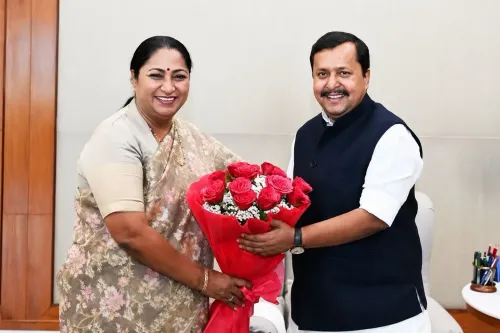
Delhi CM Rekha Gupta Wishes MoS S.P. Singh Baghel on Birthday
Synopsis
Delhi Chief Minister Rekha Gupta on 21 June 2026 publicly wished Union Minister of State S.P. Singh Baghel a happy birthday on X, praising his dedication to public service and the upliftment of the marginalised, and praying for his health and longevity.
Key Takeaways
Delhi CM Rekha Gupta posted birthday greetings for Union MoS S.P.
Singh Baghel on 21 June 2026 .
Gupta praised Baghel's commitment to public service and dedication to uplifting the last person in society.
The message invoked blessings from Lord Shri Ram for Baghel's health and long life.
Both leaders belong to the Bharatiya Janata Party (BJP) , and the exchange reflects standard intra-party solidarity communication.
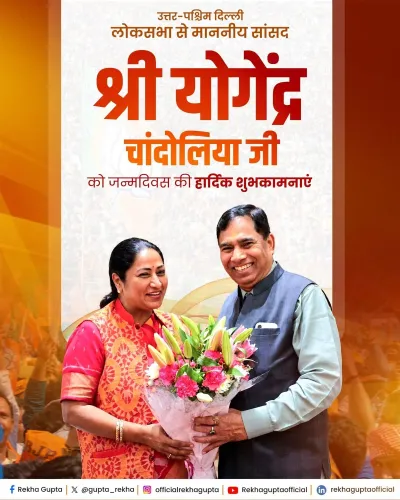
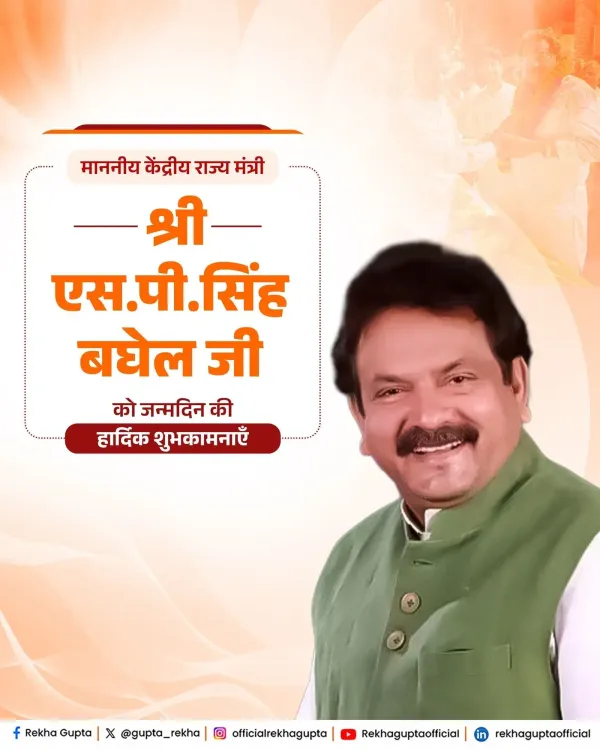
The post was made in Hindi on the platform X and included an image.
Delhi Chief Minister Rekha Gupta on Sunday, 21 June 2026 extended warm birthday greetings to Union Minister of State S.P. Singh Baghel via a post on X, invoking a prayer for his good health and long life.
What the CM Said
Writing in Hindi, Gupta addressed Baghel as 'Mananiya Kendriya Rajya Mantri' (Honourable Union Minister of State) and offered 'janmadin ki hardik badhai evam shubhkamnayein' — heartfelt birthday congratulations and best wishes. She praised his 'janaseva ke prati pratibadhdata' (commitment to public service) and his dedication to the upliftment of the last person in society. Gupta concluded by seeking blessings from Lord Shri Ram for Baghel's excellent health and a long life.
Context
S.P. Singh Baghel is a senior Bharatiya Janata Party (BJP) leader serving as a Union Minister of State at the Centre. Rekha Gupta, who leads the BJP government in Delhi, and Baghel are both affiliated with the party, making such public exchanges a visible marker of intra-party solidarity. Public birthday messages on social media have become a standard feature of BJP communication, used by leaders at state and central levels to reinforce personal rapport and organisational cohesion.
Policy Backdrop
The emphasis in Gupta's message on service to 'samaj ke antim vyakti' — the last person in society — echoes a governance theme frequently invoked by BJP leaders, tracing its lineage to Mahatma Gandhi's concept of Antyodaya (upliftment of the poorest). The BJP has institutionalised this language across welfare schemes and party communications at both the state and central levels. Such messaging simultaneously celebrates the individual and underscores shared ideological commitments within the party.
What to Watch
Beyond the ceremonial exchange, observers will note whether the public acknowledgement leads to any visible coordination between the Delhi government and the Union ministry headed by Baghel on shared administrative matters affecting the capital. Delhi's unique position — governed by a state government while hosting central institutions — often creates overlapping jurisdictions where state-centre alignment carries practical significance.
Point of View
Anchoring a ceremonial post within the party's Antyodaya narrative. For a Delhi Chief Minister whose government operates in constant interface with central ministries, maintaining visible warmth with Union ministers also carries practical administrative subtext. The post is routine in form but consistent with a broader BJP strategy of using social media to project organisational unity.
NationPress
21 Jun 2026
Frequently Asked Questions
Why did Delhi CM Rekha Gupta wish S.P. Singh Baghel on his birthday?
Rekha Gupta extended birthday greetings to Union Minister of State S.P. Singh Baghel on 21 June 2026 via X, citing his dedication to public service and the upliftment of the marginalised. Both leaders are senior figures in the BJP.
Who is S.P. Singh Baghel?
S.P. Singh Baghel is a senior Bharatiya Janata Party leader serving as a Union Minister of State in the central government of India.
What did Rekha Gupta say in her birthday message to Baghel?
Gupta praised Baghel's commitment to public service and his dedication to the upliftment of the last person in society, and prayed to Lord Shri Ram for his good health and a long life.
Is it common for BJP leaders to exchange birthday greetings on social media?
Yes, public birthday messages on platforms like X are a recurring feature of BJP communication strategy, used to highlight personal rapport and reinforce party cohesion between state and central leaders.
What is the significance of Rekha Gupta's reference to the 'last person in society'?
The phrase echoes the Antyodaya concept — the upliftment of the poorest — which is a core ideological theme in BJP governance messaging, connecting individual tributes to the party's broader welfare narrative.