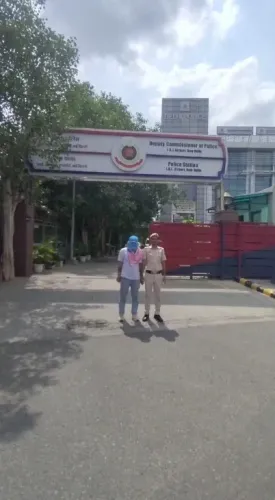
Delhi Police cyber cell arrests immigration consultant in ₹1.83 crore Canada visa fraud

Synopsis
A Delhi Police cyber cell arrest has exposed a calculated immigration fraud: an MBA-qualified consultant from Punjab allegedly pocketed CAD 2,95,000 from a woman seeking Canadian residency, fabricated company documents to fake her directorship, and kept stringing her along through three visa rejections — all while quietly routing the money out through multiple accounts.
Key Takeaways
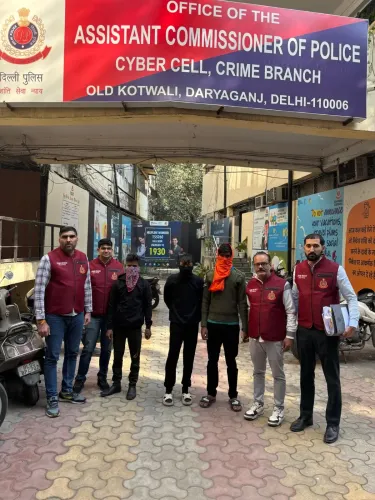
Delhi Police Crime Branch cyber cell arrested Dharminder Sharma , an immigration consultant from Dera Bassi, Punjab , on 17 May .
The accused allegedly defrauded a woman of approximately ₹1.83 crore ( CAD 2,95,000 ) on the false promise of Canadian immigration through a business investment scheme.
Sharma allegedly fabricated documents showing the complainant as a Director or shareholder in a Canadian hospitality firm — a claim contradicted by the company's actual incorporation records.
Despite three visa rejections by Canadian authorities, the accused continued to mislead the complainant and withheld refunds.
One laptop has been recovered; police believe it holds emails, financial records, and social media evidence linked to the fraud.
The cyber cell of the Delhi Police Crime Branch has arrested an immigration consultant for allegedly defrauding a woman of approximately ₹1.83 crore on the false promise of securing Canadian immigration through a business investment programme, officials said on Sunday, 17 May. The accused, identified as Dharminder Sharma, a resident of Dera Bassi, Punjab, had projected himself as a specialist in Canadian immigration and overseas investment schemes.
How the Fraud Unfolded
According to officials, the complainant sought to migrate to Canada for employment opportunities following the first Covid-19 wave and came into contact with Sharma, who introduced himself as Director (Operations) of an immigration consultancy firm. Leveraging his self-projected expertise, Sharma persuaded the woman to invest CAD 2,50,000 in a purported business investment scheme and collected an additional CAD 45,000 as professional fees — a combined total of CAD 2,95,000.
Sharma allegedly assured the complainant that the investment would guarantee Canadian immigration, work permits, and business ownership rights. To reinforce her confidence, he reportedly created documents suggesting she would be inducted as a Director or shareholder in a hospitality firm in Canada. Investigation revealed, however, that her name never appeared in the company's incorporation documents and ownership remained with other individuals.
Money Siphoned Through Multiple Accounts
After receiving the funds in foreign bank accounts, Sharma allegedly siphoned off the money through cash withdrawals, debit transactions, and routing through multiple accounts, rather than directing it toward any legitimate business purpose. Police said the accused played an active role in structuring the entire transaction to obscure its trail.
Despite three successive rejections of visa applications by Canadian authorities, Sharma allegedly continued to mislead the complainant with false assurances, filing reconsideration requests and prolonging the process to avoid refunding the invested amount.
Accused's Background and Evidence Recovered
Sharma, an MBA by qualification, had positioned himself as a highly credentialed immigration and overseas investment consultant dealing in Canada-based programmes. He is a resident of Dera Bassi in Punjab. One laptop has been recovered from him in connection with the offence.
Police suspect the device contains crucial digital evidence including emails, financial transaction records, immigration-related documents, social media communications, and other incriminating material relevant to the case.
Wider Context and What Comes Next
This arrest is part of a broader pattern of immigration fraud targeting aspirants seeking overseas opportunities — a segment that surged significantly in the post-pandemic period as demand for Canadian permanent residency and work permits climbed sharply among Indians. Cases involving fraudulent investment immigration schemes have been flagged repeatedly by enforcement agencies across multiple states.
Further investigation is ongoing, and authorities are expected to examine the recovered digital evidence to determine whether additional victims or co-accused are involved in the alleged fraud network.
Point of View
But the sophistication here — fabricated directorship documents, foreign bank account routing, and a sustained three-rejection cover-up — points to a well-rehearsed playbook. What is notable is how long the scheme ran despite repeated visa denials; the accused's ability to reframe each rejection as a procedural setback rather than evidence of fraud is a warning for regulators. India still lacks a centralised, publicly searchable registry of licensed immigration consultants, which makes it trivially easy for unqualified operators to claim credentials. Until that gap is closed, post-pandemic emigration demand will continue to feed this pipeline.
NationPress
25 Sept 2026
Frequently Asked Questions
Who was arrested in the Delhi Canada visa fraud case?
Dharminder Sharma , a resident of Dera Bassi, Punjab , was arrested by the cyber cell of the Delhi Police Crime Branch. He had allegedly posed as Director (Operations) of an immigration consultancy firm and presented himself as an expert in Canadian immigration and overseas investment programmes.
How much money did the accused allegedly defraud?
The accused allegedly defrauded the complainant of approximately ₹1.83 crore , equivalent to CAD 2,95,000 — comprising CAD 2,50,000 as a business investment and CAD 45,000 as professional fees.
What was the nature of the fraud?
Sharma allegedly induced the complainant to invest in a purported Canadian business investment immigration scheme, fabricated documents to suggest she would become a company director or shareholder, and then siphoned the funds through multiple accounts. Despite three visa rejections by Canadian authorities, he continued to mislead her and refused to refund the money.
What evidence has been recovered so far?
Police have recovered one laptop from the accused. Investigators believe the device contains emails, financial transaction records, immigration documents, and social media communications relevant to the case.
Why are Canada immigration fraud cases rising in India?
Demand for Canadian permanent residency and work permits surged in the post-pandemic period, creating fertile ground for fraudulent consultants. Enforcement agencies across multiple states have flagged investment-immigration scams as a growing category of cyber crime targeting aspirants unfamiliar with the official immigration process.