Delhi HC: PoSH Act Bars Parallel Committees in Harassment Cases
Synopsis
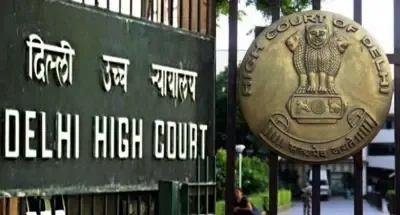
The Delhi High Court has ruled that the PoSH Act is a complete statutory code, barring universities from forming parallel fact-finding committees outside the ICC mechanism. The court also quashed a 'stigmatic' suspension order against Ramanujan College's Principal while affirming employers' inherent power to suspend during PoSH inquiries.
Key Takeaways
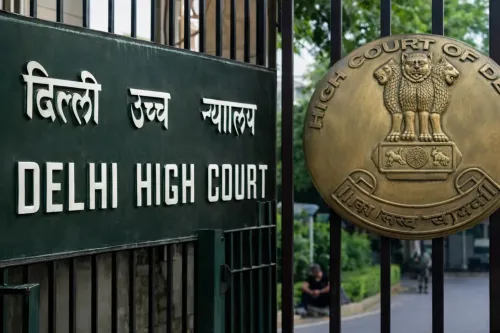
The Delhi High Court , on April 26, 2025 , ruled that the PoSH Act, 2013 is a complete statutory code that bars parallel fact-finding committees in sexual harassment cases.
Justice Purushaindra Kumar Kaurav declared that constituting ad hoc committees to pre-screen complaints before referring them to the ICC is impermissible in law and contrary to the PoSH Act's legislative intent.
The suspension order against Prof.
Rasal Singh , Principal of Ramanujan College, Delhi University , was quashed for being "stigmatic" in nature, as it described allegations as "serious misconduct and harassment" before inquiry completion.
The court affirmed that employers retain inherent powers to suspend employees under PoSH inquiry, provided the suspension order does not prejudge the outcome with stigmatic language.
Ramanujan College's Governing Body was granted liberty to issue a fresh, legally compliant suspension order against the petitioner.
The ruling has broad implications for hundreds of universities and colleges across India that may be using informal pre-inquiry panels, which must now be disbanded to ensure PoSH compliance.
The Delhi High Court has delivered a landmark ruling clarifying that the Sexual Harassment of Women at Workplace (Prevention, Prohibition and Redressal) Act, 2013 — commonly known as the PoSH Act — constitutes a self-contained legal framework, and that universities or colleges cannot constitute parallel fact-finding committees outside the statutory mechanism prescribed under the law. The judgment was pronounced on April 26, 2025, by a single-judge Bench of Justice Purushaindra Kumar Kaurav of the Delhi High Court.
Background: The Ramanujan College Case
The ruling arose from a petition filed by Prof. Rasal Singh, Principal of Ramanujan College, a constituent college of Delhi University. Prof. Singh challenged both his suspension order and the formation of an ad hoc fact-finding committee constituted by Delhi University's Deputy Registrar (Colleges) following complaints of sexual harassment levelled against him by faculty members.
The petitioner argued that both the suspension and the parallel committee were legally untenable under the existing statutory framework. The court agreed — in part — setting aside the suspension order while upholding the employer's inherent authority to suspend in appropriate circumstances.
Court's Ruling on Suspension Powers
The Delhi High Court set aside the specific suspension order issued against Prof. Rasal Singh, holding that the language used in the order was "stigmatic" and therefore legally unsustainable. The court found that describing the allegations as involving "serious misconduct and harassment" — before any inquiry had been completed — unfairly prejudiced the petitioner.
Justice Kaurav observed: "A colleague, or prospective employer, before whose eyes pass the words 'serious misconduct and harassment', shall cause only an unfavourable and prejudicial impression."
However, the court was careful to clarify that the power of suspension itself is not extinguished. "Despite the PoSH Act not providing for the interim measure of suspension, an employer in exercise of its inherent rights can suspend a person who is the subject-matter of an inquiry under the PoSH Act," the court stated. The Governing Body of Ramanujan College was granted liberty to issue a fresh suspension order in legally compliant, non-stigmatic terms.
Parallel Committees Outside PoSH Framework Declared Impermissible
The more significant aspect of the ruling pertains to the court's categorical rejection of the ad hoc fact-finding committee set up by Delhi University to determine whether complaints should be forwarded to the Internal Complaints Committee (ICC). Justice Kaurav held that such a pre-filter mechanism has no statutory basis under the PoSH Act.
"The creation of a fact-finding committee in order to determine whether a given complaint is to be sent to the ICC/Local Committee is de hors the provisions of the PoSH Act, and impermissible in law," the judge declared.
The court further observed: "The constitution of such an ad hoc committee would in fact be in express derogation of the object and purpose of the PoSH Act, and also frustrate the intention of the legislature." The ruling reinforces that all complaints of sexual harassment must be routed exclusively through the ICC or Local Committee as mandated by the statute.
Why This Ruling Matters: Procedural Safeguards at Stake
The Delhi High Court underscored that extra-statutory inquiries — conducted outside the PoSH framework — risk compromising critical procedural safeguards including confidentiality, natural justice, and the time-bound redressal mechanism enshrined in the law. Parallel committees can expose complainants to unnecessary scrutiny and delay justice.
This ruling has wide implications for Indian universities, colleges, and other institutions that may have informally constituted pre-inquiry panels as gatekeeping mechanisms before referring complaints to the ICC. Such practices are now explicitly barred by judicial precedent.
This comes amid growing concerns about institutional compliance with the PoSH Act across India's higher education sector. Multiple reports and government audits have previously flagged that a significant number of colleges and universities either lack functional ICCs or have constituted them improperly, leaving complainants without adequate redress.
Broader Implications for PoSH Compliance in India
The judgment reinforces a line of judicial thinking that treats the PoSH Act as a complete code — meaning institutions cannot supplement, replace, or bypass its mechanisms through internal administrative arrangements. Legal experts note that this ruling could prompt a review of internal policies across hundreds of educational institutions affiliated with central and state universities.
Notably, the Supreme Court of India has previously emphasized the importance of strict PoSH compliance, and the University Grants Commission (UGC) has issued guidelines mandating functional ICCs in all higher education institutions. Today's ruling from the Delhi High Court adds judicial weight to those administrative directives.
Going forward, institutions that have relied on ad hoc committees or informal pre-inquiry panels as a first filter for sexual harassment complaints may face legal challenges to their processes. The ruling is expected to prompt universities across Delhi and potentially other jurisdictions to revisit and restructure their internal complaint-handling mechanisms to ensure full statutory compliance.
Point of View
Ad hoc committees as gatekeepers to quietly filter sexual harassment complaints before they ever reach the statutory ICC, effectively diluting the very protections Parliament enacted. The PoSH Act was designed precisely to prevent such institutional capture of the complaint process. What's equally significant is the court's nuanced treatment of suspension orders: stigmatic language in administrative orders can cause irreversible reputational damage even before guilt is established — a reminder that procedural fairness must accompany institutional authority. With UGC compliance data already revealing widespread ICC dysfunction across Indian campuses, this ruling is less a legal footnote and more an urgent institutional wake-up call.
NationPress
19 Sept 2026
Frequently Asked Questions
What did the Delhi High Court rule about the PoSH Act and parallel committees?
The Delhi High Court ruled on April 26, 2025, that the PoSH Act is a complete statutory code and that universities and colleges cannot form parallel fact-finding committees outside the ICC mechanism to pre-screen sexual harassment complaints. Such committees were declared impermissible and contrary to the legislative intent of the PoSH Act.
Can an employer suspend an employee under the PoSH Act?
Yes. The Delhi High Court clarified that even though the PoSH Act does not explicitly provide for suspension as an interim measure, employers retain inherent powers under service rules to suspend an employee who is the subject of a PoSH inquiry. However, the suspension order must not use stigmatic language that prejudges the outcome.
Why was Prof. Rasal Singh's suspension order quashed by the Delhi HC?
The Delhi High Court quashed Prof. Rasal Singh's suspension order because it used the phrase 'serious misconduct and harassment' before the inquiry was completed, which the court found to be 'stigmatic' and legally unsustainable. The Governing Body of Ramanujan College was permitted to issue a fresh, legally compliant suspension order.
What is the Internal Complaints Committee (ICC) under the PoSH Act?
The Internal Complaints Committee (ICC) is a statutory body mandated under the Sexual Harassment of Women at Workplace (Prevention, Prohibition and Redressal) Act, 2013, to receive and inquire into sexual harassment complaints within an organization. All complaints must be directly referred to the ICC without any pre-screening by informal or ad hoc committees.
How does this Delhi HC ruling impact Indian universities and colleges?
The ruling sets a binding judicial precedent requiring all universities and colleges to route sexual harassment complaints exclusively through their statutory ICC, without constituting any parallel or ad hoc fact-finding panels. Institutions that currently use informal pre-inquiry committees may face legal challenges and must revise their internal complaint-handling policies immediately.