Why is a Thick Layer of Smog Covering Delhi-NCR?
Synopsis
On December 15, 2023, New Delhi woke to alarming levels of air pollution as a thick smog blanket settled over the region. The air quality remained in the 'severe' zone, posing serious health risks. With visibility at an all-time low and strict measures implemented, residents are left wondering about the future of their air quality.
Key Takeaways
Delhi's air quality is in the 'severe' category.
Visibility is significantly affected by thick smog.
Stringent measures have been implemented to combat pollution.
Health risks are rising for residents due to poor air quality.
Monitoring stations report alarming AQI levels across the region.
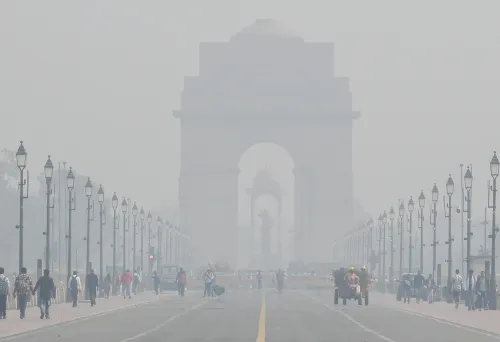
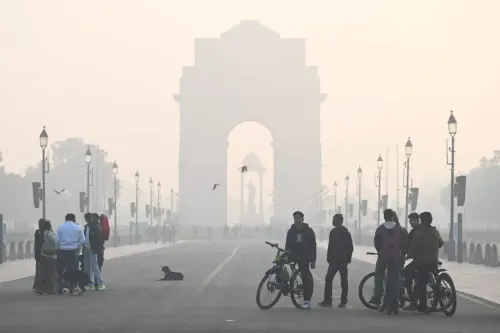
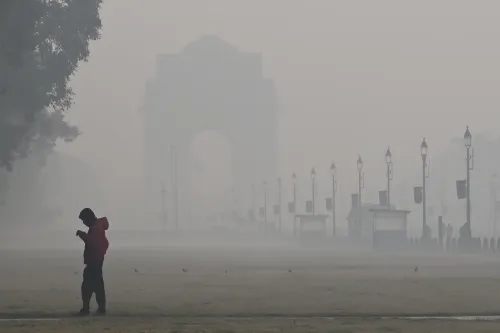
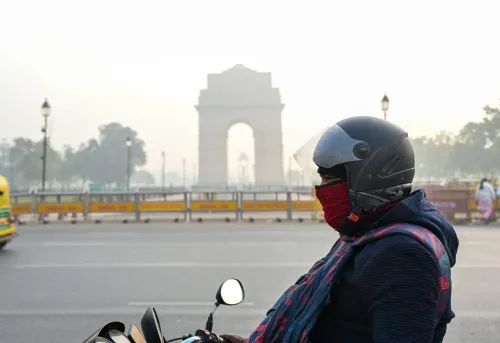
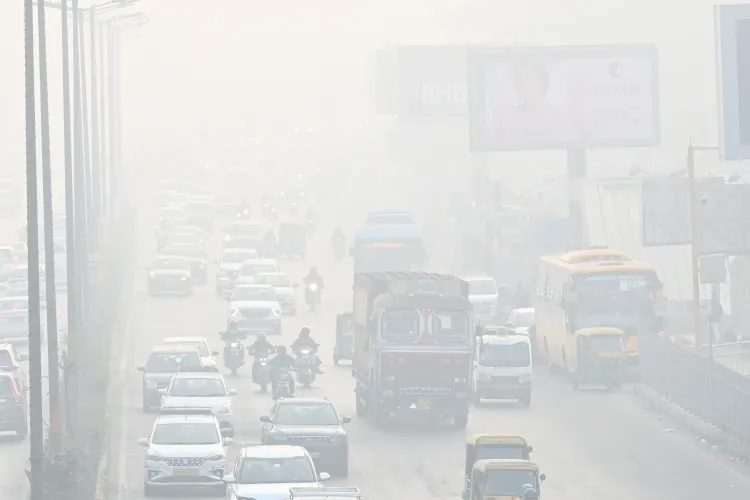
On December 15, 2023, New Delhi was enveloped in a thick layer of smog as the air quality in the National Capital Region (NCR) remained in the 'severe' category, raising alarming health concerns among its inhabitants.
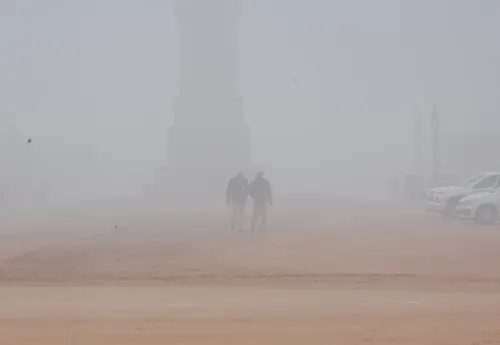
Visibility sharply decreased in various areas of the region.
The overall Air Quality Index (AQI) reached 457 at 6 a.m., as per the Air Quality Early Warning System for Delhi.
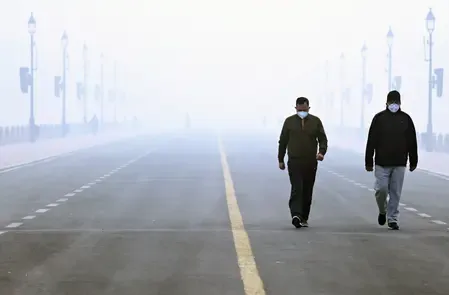
Images from across the national capital exhibited a dense haze hanging in the atmosphere, hindering visibility and complicating early morning commutes.
The India Meteorological Department (IMD) issued warnings of dense fog for the morning and forenoon hours, with such conditions confirmed at the Safdarjung observatory.
The city's maximum temperature was recorded at 23 degrees Celsius, while the minimum temperature was noted at 8 degrees Celsius.
Pollution levels remained critical at various monitoring stations. In the Akshardham area, the AQI peaked at 493, classified as 'severe' by the Central Pollution Control Board (CPCB).
Similar conditions were reported in Dwarka Sector-14, with the AQI at 469.
In Wazirpur, Rohini, and Ashok Vihar, the 24-hour average AQI soared to 500, marking the highest level recorded, highlighting the severity of the pollution crisis affecting the city.
According to the pollution board, air quality is deemed 'moderate' when the AQI ranges from 101 to 200, 'poor' from 201 to 300, and 'very poor' from 301 to 400. An AQI over 400 is categorized as 'severe'.
Values of 450 and above are classified as 'severe plus'; however, CPCB values do not exceed 500, a level already recognized as extremely hazardous by the agency.
With Delhi's air quality dropping significantly below critical levels, the Commission for Air Quality Management enacted Stage-IV of the Graded Response Action Plan across the entire National Capital Region.
The highest level of restrictions is implemented when the AQI surpasses 450, aimed at preventing further decline and minimizing public exposure to toxic air.
Under GRAP Stage-IV, strict measures are now enforced, including a total suspension of construction and demolition activities throughout the Delhi-NCR.
Operations of stone crushers, mining units, and related activities have also been ordered to cease, as they substantially contribute to dust and fine particulate matter.
Vehicle restrictions have been intensified, especially targeting polluting four-wheelers on major urban roads, as authorities strive to mitigate emissions amidst the deteriorating air quality.
Point of View
It is crucial to recognize the severe implications of the ongoing pollution crisis in Delhi. The health of millions hangs in the balance, and the need for immediate action is paramount. With stringent measures like the suspension of construction activities, it is a call to arms for both authorities and citizens to join forces in addressing this environmental emergency.
NationPress
20 Sept 2026
Frequently Asked Questions
What is the current air quality index in Delhi?
As of the latest reports, the Air Quality Index (AQI) in Delhi stands at 457, indicating severe pollution levels.
What measures are being taken to improve air quality?
Under the Graded Response Action Plan (GRAP) Stage-IV, construction activities have been halted, and vehicle restrictions are in place to curb emissions.
How does the air quality affect health?
Severe air quality can lead to adverse health effects, particularly respiratory issues, making it crucial for residents to limit outdoor activities.
What are the pollution levels in different areas of Delhi?
Pollution levels vary, with areas like Akshardham recording an AQI of 493 and others such as Wazirpur reaching 500.
Is there a forecast for improvement in air quality?
While current conditions are severe, meteorological forecasts and enforcement of pollution control measures aim to provide some relief in the near future.