How Did Delhi Police Uncover an Interstate Cyber Fraud Syndicate?
Click to start listening
Synopsis
In a significant development, Delhi Police has dismantled an interstate cyber fraud ring, arresting three individuals who preyed on job seekers with false overseas employment offers. This operation reveals the alarming tactics employed by fraudsters in the current job market, making it crucial for job seekers to exercise caution and verify opportunities thoroughly.
Key Takeaways
- Delhi Police successfully dismantled an interstate cyber fraud syndicate.
- Three individuals were arrested for defrauding job seekers.
- The fraud involved offering fake overseas employment opportunities.
- Authorities recovered mobile phones, laptops, and cash related to the crime.
- The investigation revealed the use of mule accounts to conceal illicit funds.
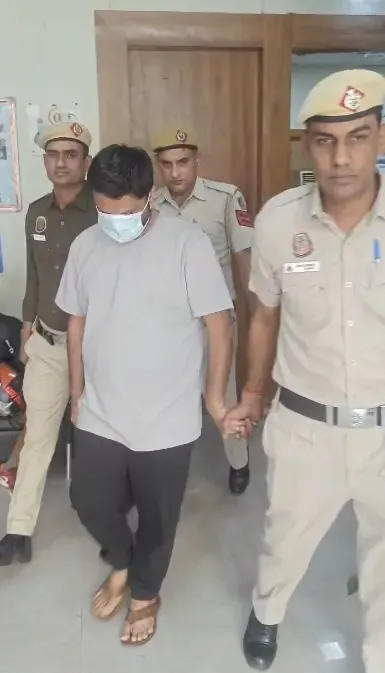
New Delhi, Dec 1 (NationPress) On Monday, the Delhi Police successfully dismantled an interstate cyber fraud syndicate and apprehended three individuals implicated in defrauding job seekers by promoting fictitious overseas employment opportunities.
In conjunction with the arrests, authorities seized mobile phones, laptops, and cash associated with the crimes.
As per a statement from the South-West District Police, a dedicated team from the Cyber Police Station managed to unveil the syndicate, arresting three suspects -- Ketan Deepak Kumar (24) from Gujarat; Sanjib Mondal (34) from West Bengal; and Ravi Kumar Mishra (29) from Gurugram.
The trio is accused of deceiving job seekers by presenting false overseas job opportunities. The police confiscated six mobile devices, including a calling device, two laptops, and Rs 50,000, believed to represent the illicit earnings.
The embezzled funds were funneled through mule bank accounts established by the syndicate with the help of a banker involved in the scheme, according to police reports.
The investigation commenced following a complaint from A.K. Sahai, who, after losing his job during the COVID-19 pandemic, was in search of overseas employment. He received a WhatsApp message from a group named 'FLYABROAD 6', where a person impersonating an Edutech Consultant and group admin, Aades Srivastava, guaranteed job placements abroad.
Sahai was offered a Chef/Cook visa for New Zealand at Rs 2.80 lakh. To lend credibility to the offer, the suspects provided counterfeit visa documents and company registration papers. Trusting these, the complainant transferred Rs 1.80 lakh, after which all communication ceased. Upon verification, the documents, including the offer letter and travel ticket, were found to be fraudulent, as confirmed by the police.
In response to the complaint, FIR No. 101/25 dated 07.10.25 was lodged under Sections 318(4)/319(2) and 61(2) BNS, PS Cyber/SW, prompting the initiation of an investigation.
A specialized team led by SI Amit Kumar, HC Sanjay, HC Sonu Kumar, and HC Sachin was established under the guidance of Inspector Pravesh Kaushik (SHO, Cyber SWD) and the overall supervision of ACP Vijay Pal Tomar.
The authorities indicated that the team undertook a comprehensive technical investigation, scrutinizing WhatsApp numbers and financial transactions. The defrauded funds were initially deposited into a mule account at Yes Bank and subsequently transferred to another Yes Bank account to obscure their origin. The investigation traced account holders to Gurugram and device locations to Anand district in Gujarat.
Following persistent surveillance, the first suspect, Ketan Deepak Kumar, was arrested in Rishikesh, Uttarakhand, on November 9, with the primary calling device. His questioning led to the capture of the second suspect, Sanjib Mondal, in Kolkata on November 13, as reported by officials.
The third suspect, banker Ravi Kumar Mishra, who assisted in establishing mule accounts, was apprehended in Gurugram on November 17. Police stated that all three collaborated to entice victims with deceitful job offers and laundered the funds through complex account transfers.
Ketan Deepak Kumar is a B.Tech (CS) dropout who holds a diploma in Computer Applications and works as a travel agent. He coordinated the mule accounts and managed the financial routing.
Sanjib Mondal, an MBA graduate from Doon Business School, impersonated Edutech Kiran KV, communicated with victims, and persuaded them to transfer funds.
Ravi Kumar Mishra, a B.Sc. graduate and Assistant Manager at Sarvodaya Bank, had previously worked with Yes Bank, opened accounts using forged documents, and provided access to the syndicate in exchange for a commission.
Point of View
I believe that such incidents highlight the pressing need for heightened awareness and vigilance among job seekers. The rise of cyber fraud in the employment sector underscores the importance of verifying job offers and being cautious of unsolicited communications. Our commitment to supporting the community means we must address these issues transparently.
NationPress
01/12/2025
Frequently Asked Questions
What was the nature of the cyber fraud?
The fraud involved deceiving job seekers by offering fake overseas employment opportunities, leading to significant financial losses.
How did the police identify the suspects?
The police identified the suspects through a detailed technical investigation that analyzed financial transactions and communication records.
What measures can job seekers take to avoid such scams?
Job seekers should verify the legitimacy of job offers, avoid sharing personal information with unverified sources, and report suspicious activities to authorities.
What are mule accounts?
Mule accounts are bank accounts used by fraudsters to transfer ill-gotten gains, often opened using false identities or documents.
What role did the banker play in the syndicate?
The banker facilitated the opening of mule accounts and provided access to the syndicate, receiving commissions in return.