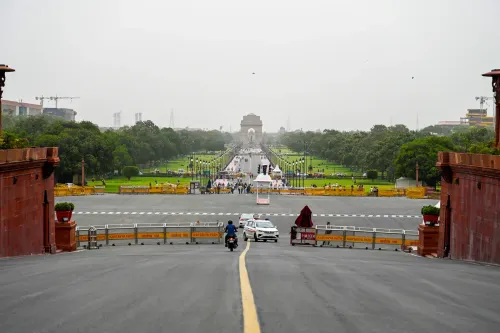
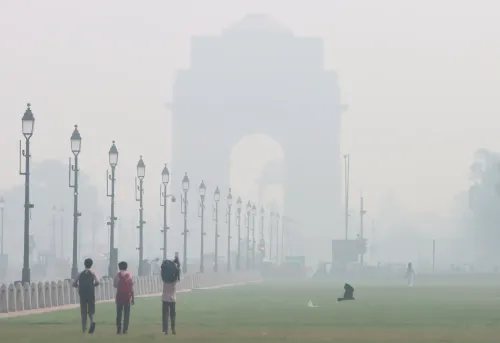
Delhi's coldest October night so far: 17.1°C at Safdarjung, Dussehra dry
Synopsis
Delhi shivered through its coldest October night at 17.1°C, but the bigger story is what follows: air quality is forecast to slide from moderate to poor by October 21, stubble-burning incidents are already mounting across six states, and unfavourable meteorological conditions could trap pollutants over the capital for days ahead.
Key Takeaways
Delhi recorded its lowest October minimum temperature of 17.1°C on 20 October , 1.3°C below the seasonal average, per the IMD .
Dussehra is forecast to remain dry with a maximum of 32°C and minimum of 18°C ; clear skies expected until October 23 .
Delhi's AQI stood at 139 (moderate) at 4 pm Monday ; forecast to deteriorate to poor by October 21–22 .
Pusa recorded the highest AQI at 281 ; two of 58 monitoring stations logged poor air quality.
98 stubble-burning incidents were recorded across six states on 19 October ; Uttar Pradesh (27), Punjab (25), and Rajasthan (24) led the count.
Cumulative stubble-burning incidents between 15 September and 19 October reached 1,171 , with Madhya Pradesh (370) and Punjab (368) topping the tally.
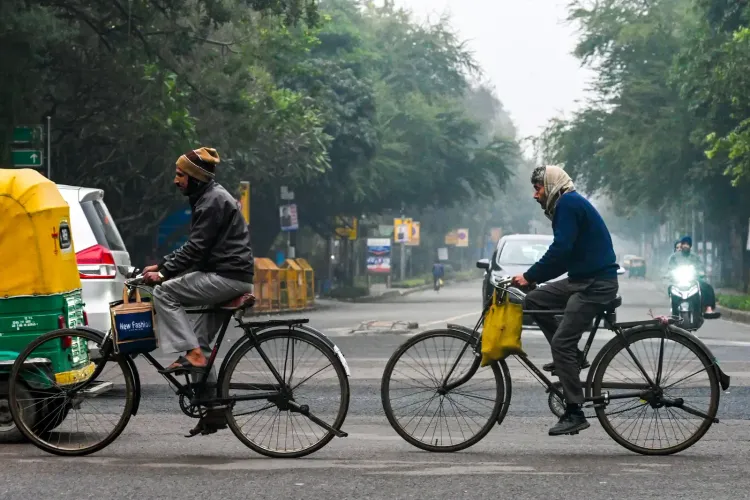
New Delhi recorded its lowest minimum temperature of October 2026 on Monday, 20 October, with the mercury at the Safdarjung Weather Station dipping to 17.1 degrees Celsius — 1.3 degrees below the seasonal average. The maximum temperature touched 31.7 degrees Celsius, according to the India Meteorological Department (IMD). The readings signal the onset of autumn chill across the national capital.
Dussehra Forecast: Clear Skies Ahead
Residents heading out for Dussehra festivities can expect dry, clear weather, as the IMD has ruled out any rain for the occasion. Temperatures on the festival day are projected to hover around a maximum of 32 degrees Celsius and a minimum of 18 degrees Celsius. Clear skies are forecast to persist through October 23, after which partly cloudy conditions may develop on October 24 and 25.
Seasonal Shift Across the Country
The weather pattern across India is showing sharp regional contrasts. While Delhi-NCR and other northern states are experiencing cooler mornings and evenings — prompting many residents to switch off air conditioners and coolers — several southern states are at the other extreme. Tamil Nadu, Kerala, and Karnataka are witnessing heavy rainfall, with activity likely to intensify further due to a low-pressure area over the Arabian Sea. Hilly states have also reported rain and snowfall in recent days.
Delhi Air Quality Slides Toward 'Poor'
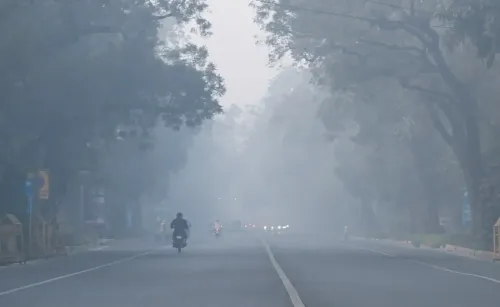
Even as temperatures cool, air pollution concerns are building. The Central Pollution Control Board (CPCB) recorded Delhi's 24-hour average Air Quality Index (AQI) at 139 at 4 pm on Monday, placing the city in the moderate category. Of the 58 monitoring stations that reported data, two logged poor air quality levels and six recorded satisfactory readings. Pusa registered the highest AQI at 281, firmly in the poor range.
According to the Air Quality Early Warning System, Delhi's air quality is expected to remain moderate on Tuesday before deteriorating to the poor category on October 21 and 22, with forecasts for the following six days also indicating the likelihood of poor air quality. Unfavourable meteorological conditions — particularly when the ventilation index falls below 6,000 square metres per second and wind speed stays under 10 kilometres per hour — hinder pollutant dispersal and could worsen conditions further.
Stubble Burning Adds to Pollution Load
Stubble burning, a recurring seasonal trigger for Delhi's air quality crisis, has already begun in multiple states. Satellite data from the CREAMS laboratory of the Indian Agricultural Research Institute recorded 98 stubble-burning incidents across six states on 19 October. Uttar Pradesh reported the highest count at 27, followed by Punjab with 25 and Rajasthan with 24. Uttarakhand recorded 18 incidents and Madhya Pradesh reported four. Notably, neither Haryana nor Delhi recorded any incidents on that date.
Cumulatively, between 15 September and 19 October, a total of 1,171 stubble-burning incidents have been recorded. Madhya Pradesh leads with 370 incidents, followed closely by Punjab with 368. Rajasthan accounts for 197, Uttar Pradesh for 175, and Uttarakhand for 51. Haryana has logged nine incidents and Delhi one during the period.
With pollution levels forecast to worsen through the week and the stubble-burning season only beginning, authorities face a familiar seasonal challenge — and Delhi residents are likely to feel the effects well before November arrives.
Point of View
Mounting stubble-burning incidents, and unfavourable wind conditions that together set up Delhi for its annual pollution crisis. The forecast shift to 'poor' AQI by October 21 — with six more days of poor air predicted thereafter — follows a pattern that repeats every post-monsoon cycle, yet the stubble-burning data shows little systemic improvement: 1,171 incidents in five weeks across six states. Dussehra may be dry, but the weeks after it rarely are — on air quality.
NationPress
20 Oct 2026
Frequently Asked Questions
What was Delhi's minimum temperature on 20 October 2026?
Delhi recorded a minimum temperature of 17.1 degrees Celsius at the Safdarjung Weather Station on 20 October 2026, which is 1.3 degrees below the seasonal average. This was the lowest minimum temperature the city had logged in October so far this year, according to the IMD.
Will it rain in Delhi during Dussehra 2026?
No, the IMD has forecast clear, rain-free weather for Delhi on Dussehra. Temperatures are expected to range between a maximum of 32°C and a minimum of 18°C, with clear skies persisting until October 23, after which partly cloudy conditions may develop.
What is Delhi's air quality forecast for October 21–22?
Delhi's AQI is expected to deteriorate from the moderate category to the poor category on October 21 and 22, according to the Air Quality Early Warning System. Forecasts for the following six days also indicate the possibility of continued poor air quality.
Which states recorded the most stubble-burning incidents in October 2026?
On 19 October, Uttar Pradesh reported the highest number of incidents at 27, followed by Punjab (25) and Rajasthan (24), based on satellite data from the CREAMS laboratory of the Indian Agricultural Research Institute. Cumulatively from 15 September to 19 October, Madhya Pradesh led with 370 incidents, closely followed by Punjab with 368.
What AQI level is considered poor, and why does it matter for Delhi?
According to the CPCB, an AQI between 201 and 300 is classified as poor, meaning the air can cause breathing discomfort for most people. Delhi is forecast to enter this range by October 21, driven by a combination of stubble burning in neighbouring states and unfavourable meteorological conditions that trap pollutants over the city.