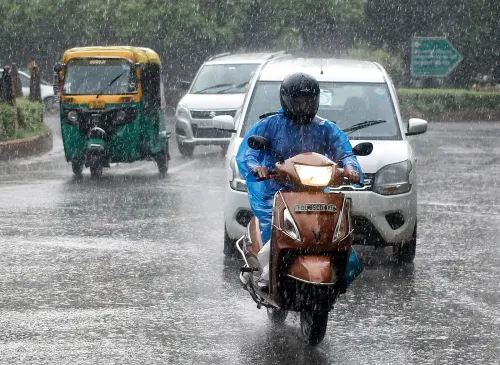
Delhi-NCR rain, thunderstorms likely today; AQI hits 3-year high in October

Synopsis
Delhi is bracing for brief rain and thunderstorms on 8 October, but the bigger story is its air: the city's seven-day average AQI of 171 is the worst start to October in three years, and with stubble-burning season around the corner, experts warn the numbers could climb sharply in the weeks ahead.
Key Takeaways
The IMD forecasts isolated rain and thunderstorms across Delhi-NCR , including Noida , Gurugram , and Faridabad , on 8 October 2026 .
Tamil Nadu and Kerala face heavy rainfall warnings; Odisha remains under watch.
Delhi's average AQI stood at 171 for the first seven days of October — highest since 2023 (176) , according to CREA analysis.
Stations like Dwarka Sector 8 (269) , Mundka (255) , and IIT Delhi (240) recorded the worst readings on Thursday.
The southwest monsoon is withdrawing from Maharashtra , Chhattisgarh , and Telangana , signalling a shift to post-monsoon conditions.
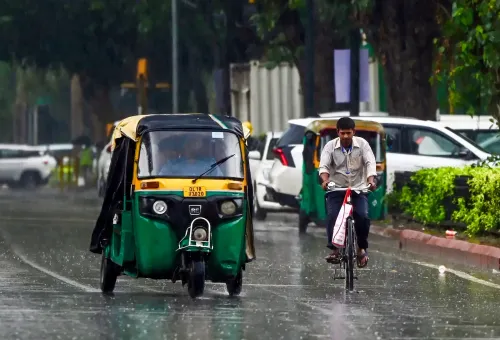
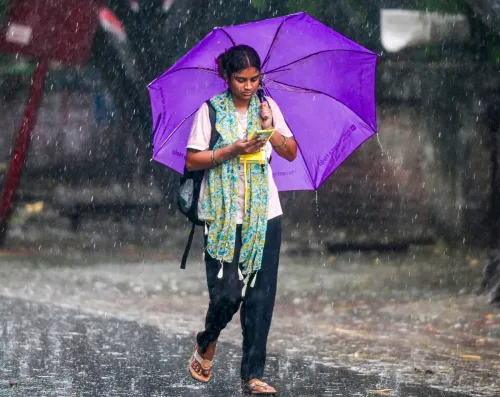
Delhi-NCR, including Noida, Gurugram, Faridabad, and Chandigarh, is likely to see isolated rain and thunderstorms on Thursday, 8 October 2026, according to the India Meteorological Department (IMD). The weather agency has not issued any heavy-rain warning for the national capital, indicating spells will be brief and accompanied by lightning rather than sustained downpours.
Rain Forecast Across the Country
The IMD has flagged Tamil Nadu and Kerala for heavy rainfall, while Delhi, Patna, and Lucknow are expected to receive lighter, scattered showers through the day. Odisha remains under watch through the week as rainfall activity persists.
This comes as the southwest monsoon continues its withdrawal from Maharashtra, Chhattisgarh, and Telangana, signalling a gradual transition to the post-monsoon phase across central India. Even so, several southern and eastern states continue to experience active rainfall.
Delhi's Air Quality Turns Worrying
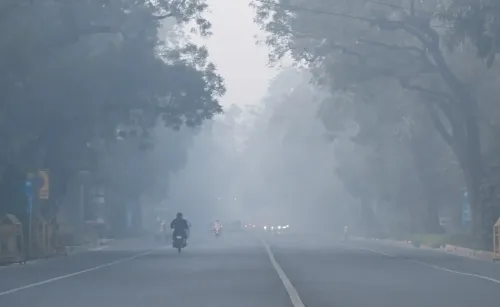
Despite the rain forecast, Delhi's air quality remained in the moderate category on Thursday. Several monitoring stations recorded elevated Air Quality Index (AQI) readings: Dwarka Sector 8 (269), Mundka (255), IIT Delhi (240), Narela (212), R K Puram (227), Rohini (195), Bawana (195), Punjabi Bagh (183), Pusa (162), Chandni Chowk (166), IGI Airport T3 (170), Sonia Vihar (157), Burari (150), and Badarpur (109).
Most Polluted First Week of October in Three Years
According to an analysis of official data by the Centre for Research on Energy and Clean Air (CREA), Delhi's average AQI for the first seven days of October 2026 stood at 171 — the highest since 2023, when the figure reached 176.
The day-by-day breakdown: 166 on 1 October, 174 on 2 October, 171 on 3 October, 187 on 4 October, 184 on 5 October, 179 on 6 October, and 136 on 7 October — yielding a seven-day average of 171.
Notably, this makes October 2026 the second-most polluted first week in six years. The six-year trend shows averages of 112 in 2021, 141 in 2022, 176 in 2023, 155 in 2024, 117 in 2025, and 171 in 2026. Air quality typically deteriorates once the monsoon withdraws, as lower wind speeds and stubble-burning season approach.
What Residents Should Know
While Thursday's rain may offer temporary relief by settling particulate matter, meteorologists caution that the improvement is unlikely to be sustained once dry, still post-monsoon conditions set in. With stubble-burning season approaching in neighbouring states, pollution levels could climb further in the coming weeks.
Residents in high-AQI zones — particularly Dwarka, Mundka, and Rohini — are advised to limit outdoor activity during peak pollution hours.
Point of View
Not incidental. What's missing from most coverage is the trajectory: with stubble-burning still weeks away from its peak and wind speeds about to drop, 171 could be the floor, not the ceiling. Delhi's air quality governance has repeatedly relied on emergency odd-even orders and temporary bans once the crisis peaks rather than upstream interventions during this exact window of early October — when action is still possible.
NationPress
8 Oct 2026
Frequently Asked Questions
Will it rain in Delhi today, 8 October 2026?
Yes, Delhi is likely to see isolated rain and thunderstorms on 8 October 2026, according to the IMD. The weather agency has not issued a heavy-rain warning, so spells are expected to be brief and localised.
What is Delhi's air quality index today?
Delhi's air quality remained in the moderate category on 8 October, with several stations recording elevated AQI levels. The highest readings were at Dwarka Sector 8 (269), Mundka (255), and IIT Delhi (240).
Why is Delhi's October 2026 air quality among the worst in recent years?
Delhi's average AQI for the first seven days of October 2026 is 171 — the highest since 2023, when it was 176, according to CREA's analysis of official data. Air quality typically worsens as the southwest monsoon withdraws, reducing rainfall that suppresses pollutants.
Which other cities face heavy rain warnings from the IMD today?
The IMD has issued heavy-rain warnings for Tamil Nadu and Kerala. Patna and Lucknow are expected to receive lighter, scattered showers, and Odisha remains under watch through the week.
What is the southwest monsoon withdrawal status in India?
The southwest monsoon is actively withdrawing from Maharashtra, Chhattisgarh, and Telangana as of 8 October 2026, signalling a gradual transition to post-monsoon conditions in central India, even as southern states continue to see heavy rainfall.