Delhi-NCR rain: IMD yellow alert issued, AQI hits 227 on 29 October
Synopsis
Rare late-October rain swept Delhi-NCR on Thursday, but the relief from pollution is likely to be short-lived. With the city's AQI already at 227 and Uttam Nagar touching 340, Delhi heads into its most critical pollution months — and forecasters warn the weather system clears by the weekend.
Key Takeaways
The IMD issued a yellow alert for Delhi-NCR on 29 October , forecasting rain, thunderstorms, and gusty winds through 30 October .
Wind speeds may touch 40–50 kmph in the morning; temperatures expected at max 27°C and min 17°C .
Isolated hailstorms are likely in Delhi , Haryana , and Chandigarh till 30 October .
Delhi's city-level AQI stood at 227 ('poor') at 8 am, with PM2.5 and PM10 as the dominant pollutants.
Uttam Nagar recorded the worst reading at 340 ('very poor'), followed by Dwarka Sector 8 (308) .
Air quality is expected to deteriorate further once the weather system clears, heading into Delhi's peak pollution season.
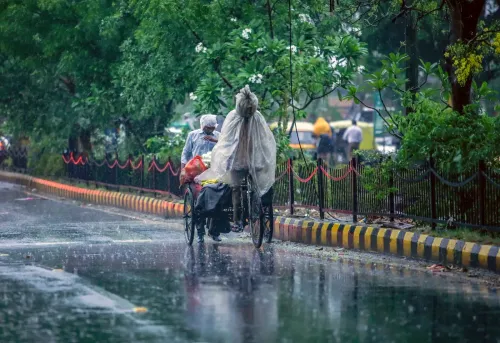
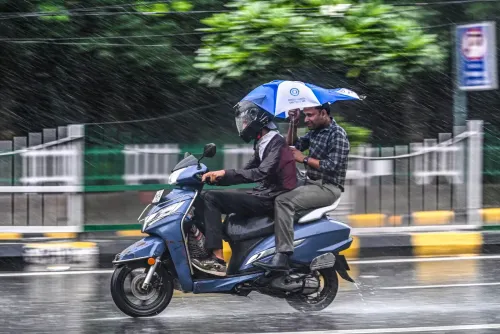
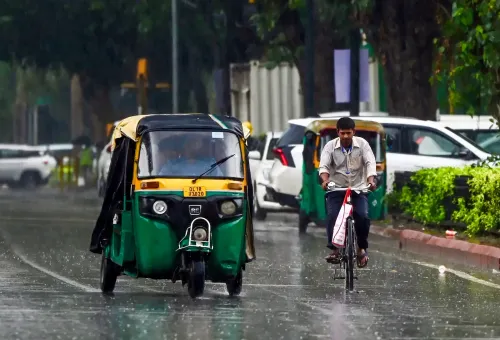
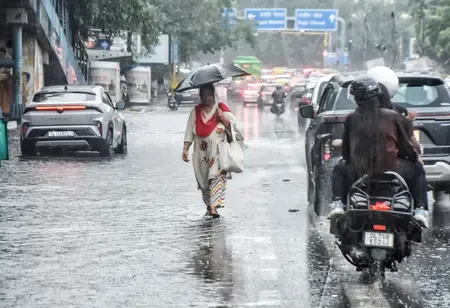
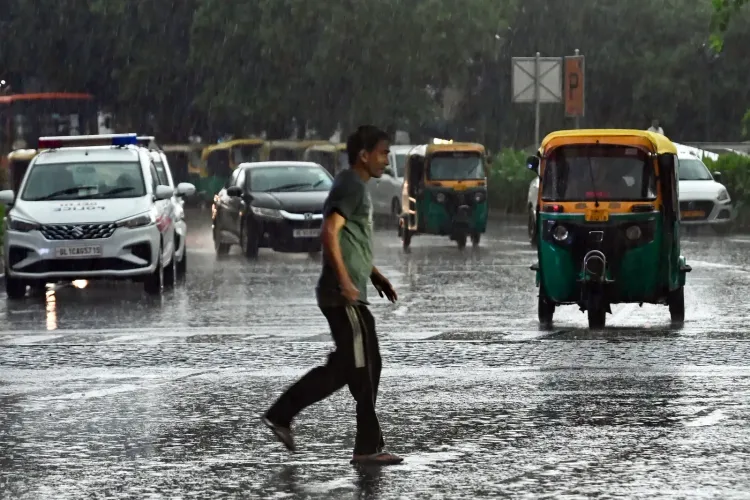
Moderate rainfall swept across Delhi-NCR on Thursday, 29 October, as the India Meteorological Department (IMD) issued a yellow alert forecasting a cloudy sky with spells of rain, thunderstorms, and gusty winds. The unsettled weather pattern is expected to persist through Friday, 30 October, with isolated hailstorms also likely across Delhi, Haryana, and Chandigarh.
Weather Forecast and Wind Conditions
The IMD has projected light to moderate rainfall at several locations, accompanied by lightning and strong surface winds. Wind speeds are expected to reach 40–50 kmph during morning hours, easing to gusts of 30–40 kmph for the rest of the day. The maximum temperature in the national capital is expected to settle at 27 degrees Celsius, with the minimum at 17 degrees Celsius on Thursday.
Cloudy conditions and thunderstorms are likely to continue into Friday as the weather system continues to influence Delhi and its neighbouring areas. Residents have been advised to exercise caution during periods of lightning, hailstorms, and strong winds.
Air Quality Remains in 'Poor' Category
Despite the rainfall — which typically provides temporary relief to pollution levels — Delhi's city-level Air Quality Index (AQI) stood at 227 at 8 am on Thursday morning, firmly within the 'poor' category, according to the Central Pollution Control Board's (CPCB) All India AQI portal. PM2.5 and PM10 were identified as the prominent pollutants driving the reading.
Under the CPCB's National AQI classification, readings between 101 and 200 are classified as 'moderate', 201–300 as 'poor', and 301–400 as 'very poor'. Prolonged exposure to poor air quality can cause breathing discomfort, while very poor air quality may lead to respiratory illnesses.
Station-Wise AQI Breakdown
Among individual monitoring stations, Uttam Nagar recorded the highest AQI at 340, placing it in the 'very poor' category, followed by Dwarka Sector 8 at 308. Several other stations logged readings in the 'poor' range: CRRI Mathura Road (299), Punjabi Bagh (285), Chandni Chowk (272), Pusa (271), NSIT Dwarka (270), Sirifort (268), IGI Airport Terminal 3 (266), Nangloi (260), NSUT Jaffarpur (253), Alipur (250), Najafgarh (243), Mandir Marg (230), Burari Crossing (226), and Anand Vihar (227).
Comparatively better readings in the 'moderate' range were observed at Burari (174), Badarpur (159), Chhawla (154), Jharoda Kalan (161), Vasundhara Enclave (171), Ghummanhera (197), and Karala (198).
Context and What Lies Ahead
October rainfall in Delhi is relatively rare and comes as the city transitions into its winter months — a period historically associated with a sharp deterioration in air quality driven by stubble burning in neighbouring states, vehicular emissions, and temperature inversions that trap pollutants close to the ground. This comes amid growing concern over Delhi's annual pollution crisis, which typically peaks between October and January.
With the weather system forecast to clear by the weekend, air quality levels could worsen again as the seasonal pollution buildup resumes. Authorities and residents will be closely monitoring the trajectory of both the AQI and weather conditions over the coming days.
Point of View
Which still registered 227 city-wide and 340 at Uttam Nagar. That tells you how loaded the baseline pollution is even before winter's full weight sets in. Late-October rainfall in Delhi is uncommon, but it is also a temporary mask: once the weather system clears, the familiar convergence of stubble smoke, cold inversions, and vehicle emissions will reassert itself. The deeper question the AQI numbers raise is structural — after years of emergency-response frameworks, graded response action plans, and court orders, Delhi enters yet another winter without a verified reduction in peak pollution. The yellow alert will pass; the air quality crisis will not.
NationPress
29 Oct 2026
Frequently Asked Questions
What is the IMD yellow alert for Delhi-NCR on 29 October?
The IMD has issued a yellow alert for Delhi-NCR on 29 October 2026, warning of moderate rainfall, thunderstorms, lightning, and gusty winds of 40–50 kmph. The alert extends through 30 October, with isolated hailstorms also possible in Delhi, Haryana, and Chandigarh.
What is Delhi's AQI today, 29 October?
Delhi's city-level AQI stood at 227 at 8 am on 29 October, placing it in the 'poor' category according to the CPCB's All India AQI portal. PM2.5 and PM10 were the primary pollutants, with Uttam Nagar recording the worst reading at 340 ('very poor').
Which areas in Delhi have the worst air quality today?
Uttam Nagar topped the list with an AQI of 340 ('very poor'), followed by Dwarka Sector 8 at 308. Other stations in the 'poor' range included CRRI Mathura Road (299), Punjabi Bagh (285), and Chandni Chowk (272), among several others.
What do the different AQI categories mean for health?
Under CPCB's classification, AQI between 101–200 is 'moderate', 201–300 is 'poor', and 301–400 is 'very poor'. Prolonged exposure to 'poor' air can cause breathing discomfort, while 'very poor' levels may trigger respiratory illnesses, especially in vulnerable groups.
Will Delhi's air quality improve after the rain?
The rain may provide brief and localised relief, but forecasters suggest that once the weather system clears by the weekend, pollution levels are likely to climb again. October and November mark the onset of Delhi's peak pollution season, driven by stubble burning, cold temperature inversions, and vehicular emissions.