Why Did Delhi's Pollution Levels Surge in December Without Farm Fires?
Synopsis
A recent CSE analysis reveals that Delhi's air quality worsens in December, despite the end of farm fires. This alarming trend underscores the need for comprehensive measures against local pollution sources. Discover how local emissions, stagnant weather, and regional influences contribute to the ongoing crisis.
Key Takeaways
Delhi's pollution levels rise significantly in December.
Farm fires are not the sole contributor to air quality issues.
Local emissions play a major role in the ongoing crisis.
Year-round action is essential for effective pollution control.
Stagnant weather contributes to the persistence of smog.
New Delhi, Dec 31 (NationPress) A recent evaluation conducted by the Centre for Science and Environment (CSE) on Wednesday has illuminated the changing trends of air quality in Delhi and the National Capital Region (NCR).
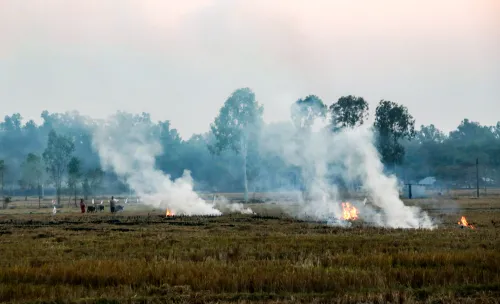
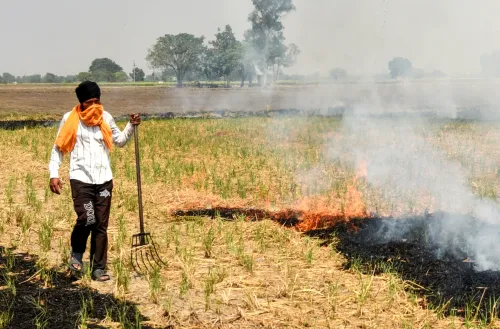
The report compares the "early winter" months of October and November, a time significantly impacted by agricultural fires, with the "post-farm fire" month of December, when the effects of stubble burning are minimal.
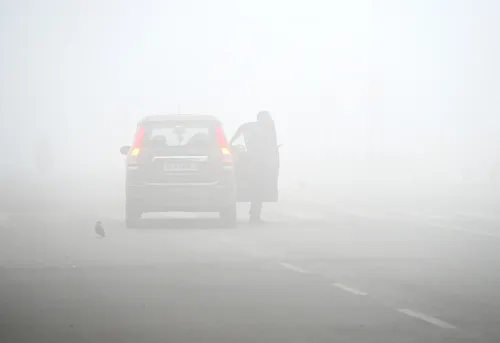
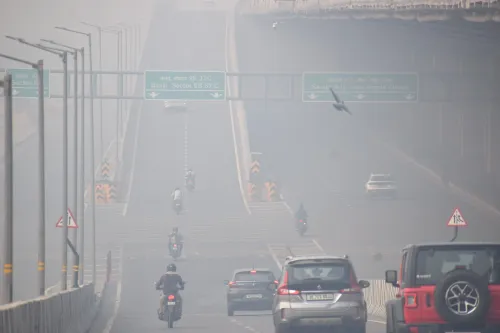
This phase after stubble burning has seen an alarming increase in widespread smog across the NCR—more severe than the stubble burning period itself. The analysis clearly indicates the ongoing pollution despite the cessation of farm fires.
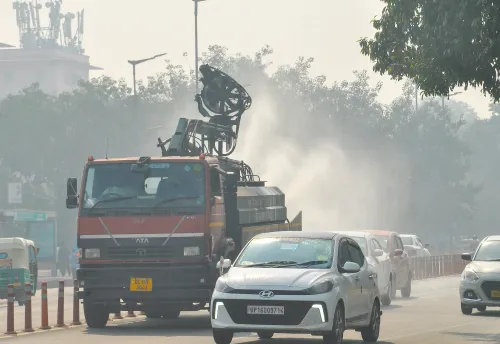
“The data reveals a troubling truth: Delhi's winter pollution does not diminish after stubble burning concludes; rather, it escalates. Even though the contribution of farm fires to PM2.5 levels drops dramatically in December, the average PM2.5 levels have actually risen. The stark difference between the diminishing impact of farm fires and increasing pollution levels underscores the prevalence of local and regional sources—such as vehicles, industrial activities, waste burning, and solid fuels used for domestic cooking and heating,” stated Anumita Roychowdhury, Executive Director of Research and Advocacy at CSE.
“While addressing farm fires is crucial, achieving air quality targets necessitates vigorous, year-round efforts against urban and regional emission sources for a zero-emission transition. The smog is sustained by a mix of local emissions, regional contributions, and secondary aerosol formation, demanding coordinated action at the airshed level alongside strict controls on local sources,” she added.
The buildup of pollution has been observed across various urban centers in the NCR. While a few towns experienced slight declines, the majority of cities reported significant increases in PM2.5 levels: Noida: 38% increase; Ballabhgarh: 32% increase; Baghpat: 31% increase; and Delhi: 29% increase. This regional surge is fueled by local emissions and worsened by stagnant winter weather, which hampers the dispersion of pollutants,” explained Sharanjeet Kaur, Deputy Programme Manager at Urban Lab, CSE.
“Furthermore, data from the Decision Support System (DSS) for the period of December 1-15 reveals the complexity of the issue. During this timeframe, local sources within Delhi contributed only about 35% of the total PM2.5. The remaining 65% originated from neighboring NCR districts and even farther away. Within Delhi's local contribution, vehicles emerged as the primary source, accounting for nearly half of all local emissions,” noted Shambhavi Shukla, Programme Manager of the Clean Air programme at CSE.
This analysis relies on real-time data from the operational air quality monitoring stations in the Delhi-NCR region.
The estimate regarding the contribution of farm stubble fire smoke to Delhi's air quality is sourced from the Ministry of Earth Sciences’ System of Air Quality and Weather Forecasting and Research (SAFAR).
Real-time source contribution and chemical composition data have been obtained from the Decision Support System (DSS) developed by IITM.
Point of View
It is crucial to emphasize that the air quality crisis in Delhi is not merely a seasonal issue tied to agricultural practices. This analysis calls for a holistic approach to combat pollution year-round, focusing on urban emissions and the collective responsibility of both citizens and authorities.
NationPress
1 Oct 2026
Frequently Asked Questions
What are the main sources of pollution in Delhi?
The primary sources of pollution in Delhi include vehicle emissions, industrial activities, waste burning, and the use of solid fuels for cooking and heating. Local and regional emissions significantly contribute to the city's air quality issues.
How does stubble burning impact Delhi's air quality?
Stubble burning has historically contributed to PM2.5 levels during the winter months. However, recent findings suggest that pollution levels continue to rise even after the stubble burning season ends, indicating the dominance of local and regional sources.
What measures can be taken to improve air quality in Delhi?
To enhance air quality, aggressive action against local emissions, such as stricter vehicle regulations, industrial controls, and waste management practices, is essential. A year-round commitment to reducing pollution sources is necessary for a sustainable solution.
Why is stagnant winter weather a problem for air quality?
Stagnant winter weather can trap pollutants close to the ground, preventing their dispersion. This leads to a buildup of harmful particles in the air, exacerbating pollution levels in urban areas.
What is the role of the CSE in monitoring air quality?
The Centre for Science and Environment (CSE) conducts research and analysis of air quality data, providing insights and recommendations for policy changes to combat pollution in Delhi and the surrounding regions.