Are Geopolitical Concerns Affecting Sensex and Nifty?

Synopsis
Indian equity markets are facing challenges as geopolitical tensions linger, leading to a decline in both Sensex and Nifty. Despite the downturn, optimism from global brokerage firms suggests potential recovery in the medium term. Investors remain cautious, with a focus on large-cap stocks amid uncertain global conditions.
Key Takeaways
Indian equity markets closed lower for the third consecutive session.
Geopolitical tensions are impacting investor sentiment.
Sensex closed at 84,961.14, down 102.20 points.
Nifty ended at 26,140.75, down 37.95 points.
Morgan Stanley predicts a Sensex target of 95,000 by December 2026.
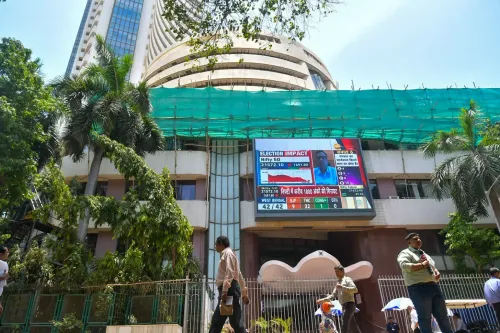
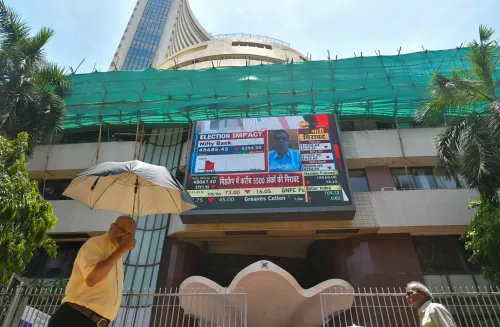
Mumbai, Jan 7 (NationPress) The Indian stock markets closed lower for the third day in a row on Wednesday as persistent geopolitical tensions left investors feeling uneasy. The ongoing selling pressure in automobile and oil marketing company stocks further dampened overall market sentiment.
At the end of the trading session, the Sensex decreased by 102.20 points, or 0.12 percent, concluding at 84,961.14. Similarly, the Nifty also ended in the negative territory, dropping 37.95 points, or 0.14 percent, to close at 26,140.75.
“A consistent move above 26,300 is necessary to rekindle upside momentum toward the 26,500 level, while a substantial break below 26,000 could initiate a short-term corrective phase targeting the 25,900–25,800 range,” noted a market analyst.
Despite the recent downturn, global brokerage firm Morgan Stanley maintains a positive outlook on the medium-term prospects for Indian equities.
In its base-case scenario, the brokerage has projected a Sensex target of 95,000 by December 2026, indicating an upside potential of approximately 13 percent from current levels.
In a more optimistic bull-case scenario, Morgan Stanley anticipates the Sensex could surge to 107,000, which would represent a gain of about 25 percent.
Among the major losers on the Sensex were shares of Maruti Suzuki, Tata Motors’ passenger vehicle arm, Power Grid, Hindustan Unilever, Asian Paints, and Tata Steel.
On a positive note, buying interest was observed in Titan Company, HCL Technologies, Infosys, Tech Mahindra, and Sun Pharma, which helped mitigate the overall decline.
The broader markets exhibited better performance than the main indices, with the Nifty Midcap 100 index rising by 0.45 percent, while the Nifty Smallcap 100 gained 0.39 percent.
Sector-wise, auto and oil and gas stocks faced significant pressure, with the Nifty Auto and Nifty Oil and Gas indices recording the largest losses.
Conversely, the Nifty Consumer Durables and Nifty IT indices led the gains, with the IT index climbing as much as 1.87 percent during the session.
Analysts pointed out that market participants remained cautious amid global uncertainties, even as long-term forecasts indicate potential upside for Indian equities.
“Given the current macro landscape, equities are likely to remain range-bound; a ‘buy-on-dips’ strategy focusing on large-cap themes seems wise,” remarked an analyst.
Point of View
The current market scenario reflects the complexities of external geopolitical factors impacting investor sentiment. It's crucial for stakeholders to remain informed and adopt a strategic approach to navigate these fluctuations, staying true to the nation's economic resilience.
NationPress
23 Sept 2026
Frequently Asked Questions
What caused the decline in the Indian equity markets?
The decline was primarily due to ongoing geopolitical tensions and selling pressure in the automobile and oil marketing sectors.
What are the projections for the Sensex?
Morgan Stanley projects a Sensex target of 95,000 by December 2026, indicating an upside potential of around 13%.
Which sectors performed poorly?
The auto and oil and gas sectors faced significant pressure, with the Nifty Auto and Nifty Oil and Gas indices showing the sharpest losses.
Is there any optimism for the Indian equities market?
Yes, despite recent declines, Morgan Stanley remains optimistic about the medium-term outlook for Indian equities.
What strategy should investors consider in this market?
A 'buy-on-dips' strategy focusing on large-cap stocks appears prudent in the current macro backdrop.