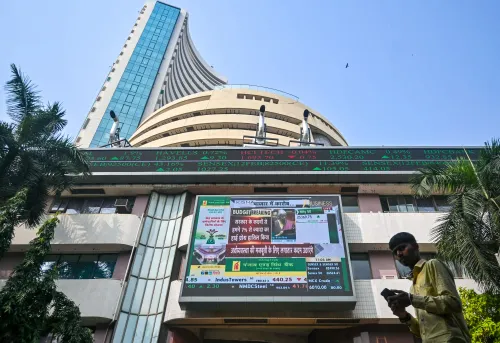
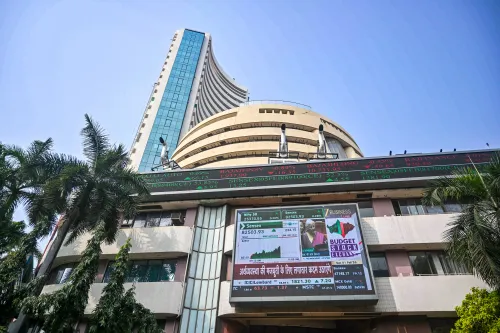
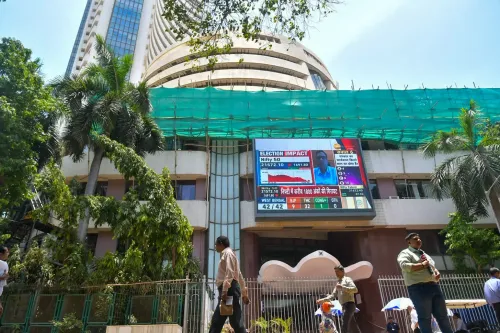
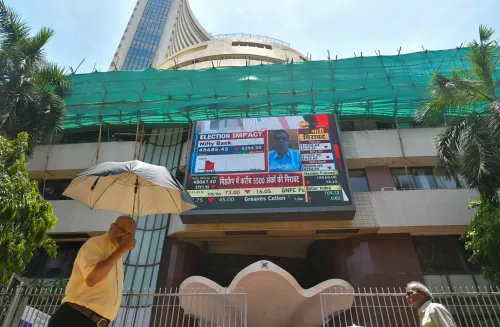
Why Did Sensex and Nifty Experience Losses as Metal Index Plunges Over 4%?
Synopsis
On January 30, the Indian equity markets faced significant declines driven by a sharp drop in metal stocks. The Sensex and Nifty both recorded losses, raising concerns over geopolitical tensions and rising crude oil prices. However, positive GDP growth projections may offer some resilience to the market amid these challenges.
Key Takeaways
Sensex fell by 525 points to 82,040 .
Nifty dropped by 159 points to 25,259 .
Metal stocks led the market decline, falling over 4% .
Geopolitical issues and rising crude oil prices are impacting market sentiment.
Positive GDP growth projections provide a glimmer of hope.
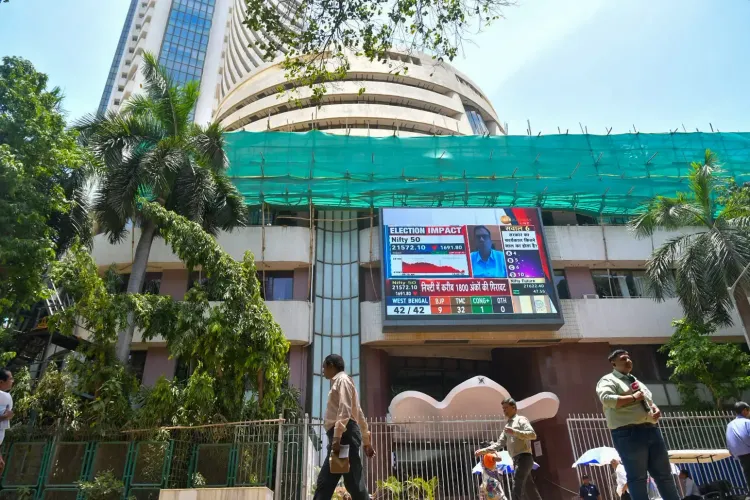
Mumbai, Jan 30 (NationPress) The Indian equity markets opened lower on Friday, experiencing significant declines in metal stocks.
At 9:30 AM, the Sensex fell by 525 points, translating to a 0.64 percent decrease, landing at 82,040. Meanwhile, the Nifty dropped by 159 points, or 0.63 percent, settling at 25,259.
The major broad-cap indices recorded more substantial losses compared to the benchmark indices, with the Nifty Midcap 100 down by 0.81 percent and the Nifty Smallcap 100 declining by 1.19 percent.
All sectoral indices showed negative performance, apart from FMCG, pharma, and consumer durables. The Nifty metal and IT indices fell by 4.28 percent and 1.41 percent, respectively.
Market analysts indicated that immediate support is found in the 25,250-25,300 range, while resistance is positioned between 25,550 and 25,600.
Geopolitical tensions continue to hinder global trade, with ongoing apprehensions regarding tariff actions by U.S. President Donald Trump. The rise in Brent crude prices nearing $70 poses a challenge for Indian economic conditions, particularly for industries reliant on oil.
However, these challenges are expected to be mitigated by positive projections from the Economic Survey, which anticipates a GDP growth of 6.8 percent to 7.2 percent for FY 27.
As India approaches approximately 10 percent nominal GDP growth in FY27, a 15 to 17 percent earnings growth is anticipated, providing stability to the market.
Starting in early 2027, India’s efforts to diversify its export markets away from the U.S. will gain traction with the implementation of the India-EU trade deal.
In the Asia-Pacific region, most markets traded lower during the morning session following Trump's announcement regarding his choice for the next head of the U.S. Federal Reserve.
In Asian markets, China's Shanghai index decreased by 1.19 percent, while Shenzhen fell by 0.96 percent. Japan's Nikkei was down 0.35 percent, and Hong Kong's Hang Seng Index dropped by 1.66 percent. South Korea's Kospi saw an increase of 0.59 percent.
In overnight trading, U.S. markets generally ended positively, with the Nasdaq down by 0.72 percent. The S&P 500 eased by 0.13 percent, while the Dow rose by 0.11 percent.
On January 29, foreign institutional investors (FIIs) net sold equities worth Rs 394 crore, whereas domestic institutional investors (DIIs) were net buyers, acquiring equities worth Rs 2,634 crore.
Point of View
My perspective aligns with the nation's economic wellbeing. The decline in major indices like Sensex and Nifty due to market pressures highlights the need for vigilance. While geopolitical tensions and rising oil prices pose challenges, the positive GDP projections signal potential resilience. We must navigate these fluctuations mindfully, ensuring the nation's financial health remains intact.
NationPress
25 Sept 2026
Frequently Asked Questions
What caused the decline in Sensex and Nifty?
The decline is attributed to a significant drop in metal stocks, coupled with geopolitical tensions and rising Brent crude oil prices.
What are the current support and resistance levels for Nifty?
Immediate support for Nifty is at the 25,250-25,300 zone, while resistance lies between 25,550 and 25,600.
How did international markets react?
Most Asia-Pacific markets traded lower, reflecting concerns over U.S. Federal Reserve leadership and geopolitical issues.
What are the GDP growth projections for India?
The Economic Survey projects a GDP growth of 6.8 percent to 7.2 percent for FY 27.
How did foreign institutional investors behave recently?
On January 29, FIIs net sold equities worth Rs 394 crore, while DIIs were net buyers of Rs 2,634 crore.