Why Are Sensex and Nifty Continuing to Drop Amid Geopolitical Tensions?

Synopsis
On January 21, Indian equity indices faced a downturn for the third consecutive session, driven by increasing geopolitical tensions. The Sensex and Nifty both closed lower, highlighting investor caution amid market volatility. This article delves into the contributing factors and the impact on various sectors, providing insights into current market conditions.
Key Takeaways
Sensex closed at 81,909.63 , down 270.84 points .
Nifty ended at 25,157.5 , down 75 points .
Geopolitical tensions are causing investor caution .
Selling pressure on heavyweight stocks like ICICI Bank and L&T .
Some resilience seen in metal and oil and gas stocks.
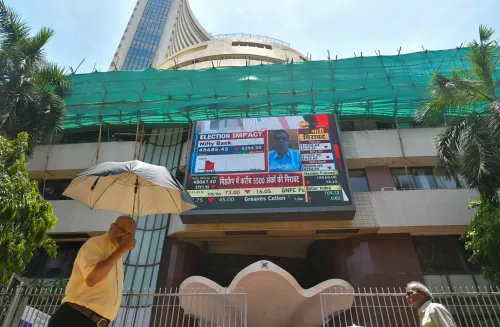
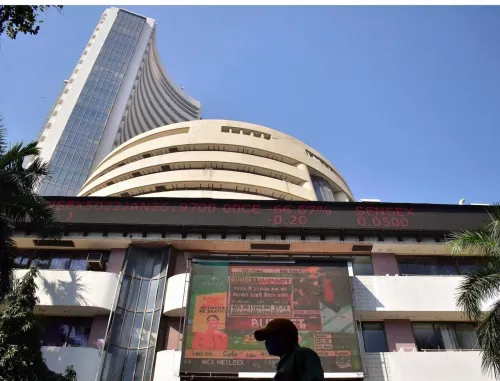
Mumbai, Jan 21 (NationPress) The Indian equity market benchmark indices experienced a decline on Wednesday, marking the third consecutive session of losses, primarily influenced by escalating geopolitical tensions that have made investors more cautious.
The Sensex concluded at 81,909.63, down by 270.84 points or 0.33 percent. Similarly, the Nifty finished at 25,157.5, decreasing by 75 points or 0.3 percent.
A market analyst stated, “A continuous drop below 25,130 could signal a potential decline towards 24,920–24,900.”
The current price movements indicate a phase of consolidation following previous exhaustion rather than a definitive trend reversal, as the index recorded its fourth consecutive weak close, the expert added.
Notable selling pressure was observed across several heavyweight stocks on the BSE, with ICICI Bank, Trent, BEL, Axis Bank, and L&T being the major contributors to the index's decline.
Conversely, stocks such as Eternal, UltraTech Cement, Adani Ports, and IndiGo attracted buying interest, which mitigated further declines.
Sector-wise, the chemical sector faced the most significant drop, with the Nifty Chemical index declining by 2.12 percent.
This was trailed by Nifty Consumer Durables, which fell by 1.66 percent, and Nifty Bank, which closed 1.02 percent lower.
In contrast, the metal and oil and gas sectors showed some resilience, with the Nifty Metal index rising 0.57 percent and the oil and gas index increasing by 0.27 percent.
The broader market remained under strain as well, with the Nifty MidCap 100 index decreasing by 1.14 percent and the Nifty SmallCap index finishing 0.9 percent lower.
Meanwhile, the rupee traded weakly below 91.60, down approximately 0.70 percent, as rising geopolitical tensions involving Europe and Greenland, coupled with fresh apprehensions regarding US tariff actions and the absence of a confirmed India–US trade deal, continued to cloud market sentiment.
An expert remarked, “The recent surge in bullion prices has further pressured the rupee by increasing the import bill. The currency is expected to remain volatile within a broad range of 90.90–92 in the near term.”
Point of View
It's crucial to acknowledge the ongoing volatility in the Indian stock market due to heightened geopolitical tensions. Investors must remain vigilant and informed about market dynamics while understanding that such fluctuations are part of broader economic trends.
NationPress
23 Sept 2026
Frequently Asked Questions
What caused the decline in Indian stock indices?
The decline in Indian stock indices is primarily attributed to rising geopolitical tensions, which have led to increased investor caution and selling pressure across major sectors.
How much did the Sensex and Nifty drop?
On January 21, the Sensex fell by 270.84 points or 0.33%, while the Nifty decreased by 75 points or 0.3%.
Which sectors faced the most significant losses?
The chemical sector experienced the sharpest decline, with the Nifty Chemical index falling by 2.12%. Other sectors, such as consumer durables and banking, also reported losses.