Will Delhi's Private Offices Face Action for Not Adopting WFH?
Synopsis
Delhi's Environment Minister Manjinder Singh Sirsa has issued a warning to private companies disregarding work-from-home mandates under GRAP-4, stating severe penalties will follow. This move aims to ensure compliance and protect air quality amidst ongoing pollution challenges in the capital.
Key Takeaways
GRAP-4 mandates work-from-home for companies when AQI exceeds 400.
Strict penalties await private firms violating these regulations.
Crackdown on illegal industries is underway in Delhi.
Over 10,000 vehicles found to exceed pollution standards.
Collaboration between MCD and DPCC to enforce compliance.
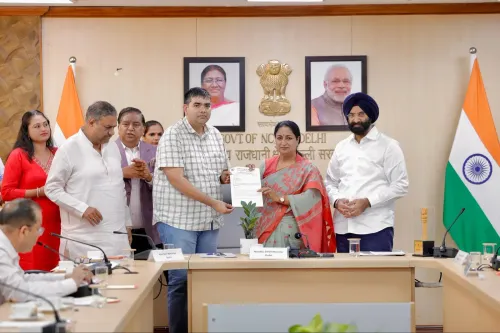
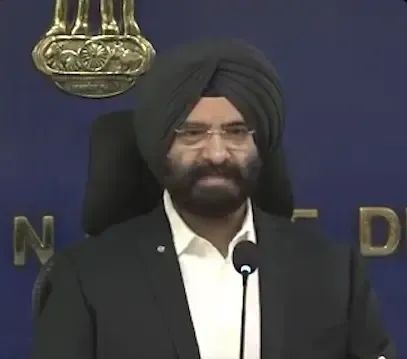
New Delhi, Dec 22 (NationPress) - In a stern measure against illegitimate industries, Delhi Environment and Industries Minister Manjinder Singh Sirsa announced on Monday that private firms failing to comply with the government mandate for work-from-home (WFH) under GRAP-4 regulations will face strict penalties.
During a press briefing, Sirsa expressed concern, stating, “It has come to our attention that several private entities are neglecting these guidelines. We urge all such companies to adhere to the GRAP-4 rules. Any complaints against non-compliant firms will lead to the most severe actions.”
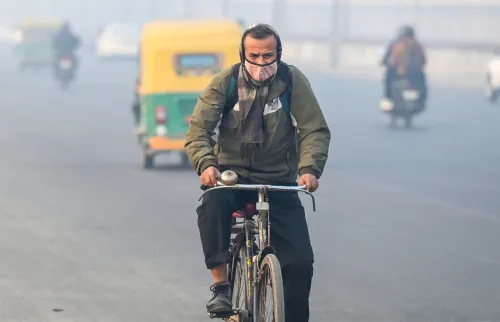
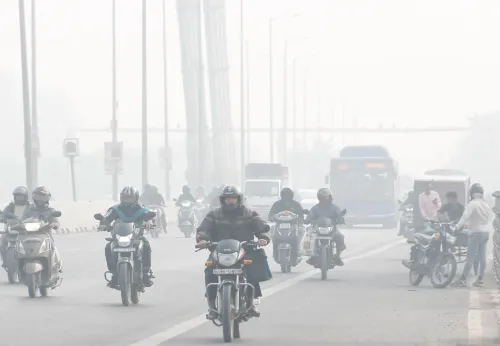
The Graded Response Action Plan (GRAP) is a proactive and emergency framework designed to combat pollution based on air quality index (AQI) levels. The GRAP-4 measures, which mandate WFH for employees in both private and government sectors, activate when the AQI reaches 400.
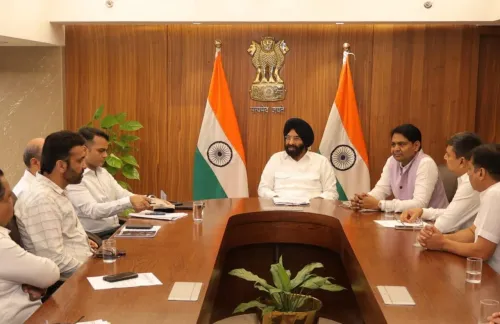
Sirsa also elaborated on the intended crackdown on illegal industries within the capital. “From today onwards, all Deputy Commissioners of MCD, in partnership with DPCC, will initiate sealing actions against non-compliant industries. Both polluting and non-polluting illegal establishments will be closed following the Supreme Court's directives,” he remarked.
“I want to make it clear that an extensive operation has commenced in Delhi. Factories identified as polluting will face stringent actions, including sealing of their properties. We have provided ample opportunities; no more notices will be issued,” he emphasized.
Additionally, action will be taken against industries that fail to register for Online Continuous Emission/Effluent Monitoring Stations (OCEMS) by December 31. “This is a crucial fight for clean air in Delhi, and actions against violators will persist,” he stated.
Sirsa noted that the impact of the Western Disturbance has been visible in Delhi since Sunday, leading to adverse weather conditions.
“Over the past four days, the positive effects of the rules under GRAP-4 have been observed. During this time, Pollution Under Check Certificate (PUCC) tests were conducted on 212,332 vehicles in Delhi,” he reported.
Out of these, approximately 10,000 vehicles failed the examination due to exceeding pollution standards, he added.
Point of View
It is imperative to highlight the urgency of adhering to pollution control measures. The government's actions reflect a necessary step toward ensuring public health and environmental sustainability, reinforcing the need for compliance among private industries.
NationPress
19 Sept 2026
Frequently Asked Questions
What consequences do companies face for non-compliance?
Companies failing to comply with GRAP-4 will face strict actions, including potential closures and penalties.
What is the purpose of the Online Continuous Emission Monitoring Stations?
OCEMS are intended to monitor emissions and effluents continuously to ensure compliance with environmental standards.
How many vehicles failed the pollution tests?
Approximately 10,000 vehicles failed the pollution tests conducted during the last four days.
What is the significance of the Western Disturbance?
The Western Disturbance has led to adverse weather in Delhi, impacting air quality and pollution levels.