CM Himanta's Demow Hospital: Zero Snakebite Deaths in 5 Years
Synopsis
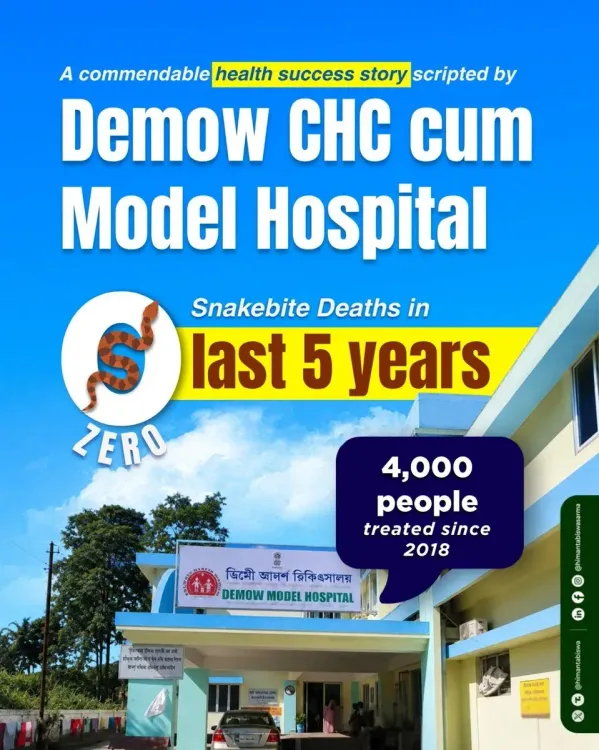
Assam CM Himanta Biswa Sarma has spotlighted Demow CHC and Model Hospital's record of zero snakebite deaths over five years, with over 4,000 patients treated since 2018 — a standout result in one of India's most snakebite-vulnerable states.
Key Takeaways
Demow CHC and Model Hospital in Assam has recorded zero snakebite deaths over the last five years .
The facility has treated over 4,000 snakebite patients since 2018 , according to CM Himanta Biswa Sarma's post.
Assam's flood-prone, agricultural districts face high seasonal snakebite risk, making CHC-level readiness especially critical.
The achievement underscores the role of timely antivenom intervention at the sub-district level in preventing fatalities.
CM Sarma highlighted the result under his #AssamCares umbrella, drawing attention to frontline rural health workers.
The model raises the question of whether similar protocols can be scaled to other CHCs across Northeast India .
In a flood-prone corner of Assam where snakebites have long been a lethal rural emergency, one community health centre has quietly rewritten the odds. Assam Chief Minister Himanta Biswa Sarma on Wednesday, August 12, 2026, highlighted a striking public health achievement at Demow Community Health Centre (CHC) and Model Hospital — zero snakebite deaths over the last five years.
The Chief Minister noted that the hospital's dedicated medical team has treated over 4,000 snakebite patients since 2018, with timely interventions credited for preventing every single fatality. 'ZERO snake bite deaths in last 5 years. Sounds surreal? It's the reality,' Sarma wrote, tagging the milestone under his #AssamCares initiative.
Why Demow's record matters in Assam's snakebite landscape
Snakebite is not a minor footnote in Assam's public health story. The state's low-lying, flood-prone districts — where agricultural workers wade through inundated fields — face among the highest snakebite exposure rates in the country. Delayed access to antivenom and overburdened district hospitals have historically made the difference between survival and death. Against that backdrop, a CHC-level facility achieving a clean slate across five years and thousands of cases is a genuine outlier.
Community health centres occupy the critical middle tier of India's rural health architecture — above primary health sub-centres but below district hospitals. Getting emergency envenomation care right at this level means patients do not lose the golden hours travelling further up the referral chain. Demow, a town in Sivasagar district, sits in upper Assam, a region with significant agricultural activity and seasonal flooding — conditions that elevate human-snake contact risk every monsoon.
A local model with state-wide implications
State governments across Northeast India have in recent years pushed to upgrade CHCs for emergency care, including envenomation protocols. The Demow result — if replicated at scale — points to what structured readiness at the sub-district level can deliver. The next question the health administration will face is straightforward: which other CHCs can adopt the same protocol, and how fast?
Sarma's public spotlight on the Demow team also serves a secondary purpose — recognising frontline doctors and paramedics whose work rarely surfaces in headline health data. In rural emergency medicine, institutional memory and staff consistency matter as much as equipment. Five years of zero deaths is as much a human achievement as a systemic one.
For Assam's rural patients, the message from Demow is simple and urgent: the right care, close to home, saves lives. Whether the state can extend that promise beyond one model hospital is the challenge that now sits on the health department's desk.
Point of View
While rarely a headline issue nationally, is a lived reality for rural communities in flood-prone Assam, giving this milestone genuine resonance on the ground. Spotlighting a CHC rather than a flagship urban hospital is also a deliberate signal: the administration wants credit for last-mile delivery, not just big-ticket infrastructure. The real policy test, however, is whether Demow becomes a replicable template or remains an isolated point of pride.
NationPress
27 Sept 2026
Frequently Asked Questions
How many snakebite patients has Demow CHC treated since 2018?
According to Assam Chief Minister Himanta Biswa Sarma, Demow CHC and Model Hospital has treated over 4,000 snakebite patients since 2018 .
Has there been any snakebite death at Demow hospital in recent years?
CM Sarma stated that Demow CHC has recorded zero snakebite deaths over the last five years, attributing this to timely medical interventions by the hospital's team.
Where is Demow CHC located?
Demow is a town in Sivasagar district in upper Assam, a region with significant agricultural activity and seasonal flooding that elevates snakebite risk.
Why is snakebite a major health concern in Assam?
Assam's low-lying, flood-prone districts see high human-snake contact, particularly during monsoon season when agricultural workers are exposed in inundated fields. Delayed access to antivenom has historically contributed to fatalities.
What is the #AssamCares initiative?
#AssamCares is a tag used by the Assam government and CM Himanta Biswa Sarma to highlight health, welfare, and public service achievements across the state.