Why is Dense Smog and Fog Covering Delhi as Air Quality Remains Poor?
Synopsis
On January 3, dense smog and fog blanketed Delhi, severely impacting visibility and daily life. The IMD issued a yellow alert as air quality worsens, urging vulnerable populations to limit outdoor activities. With temperatures dropping, the effects of cold wave conditions are expected to intensify. Stay informed as authorities monitor the situation closely.
Key Takeaways
Dense smog and fog have severely affected visibility in Delhi.
The Air Quality Index (AQI) is recorded at 235, indicating poor conditions.
The IMD has issued a yellow alert for dense fog and cold wave.
Authorities recommend limiting outdoor activities for vulnerable groups.
Weather conditions are being closely monitored for further updates.
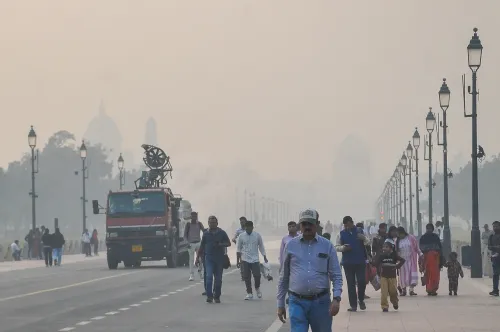
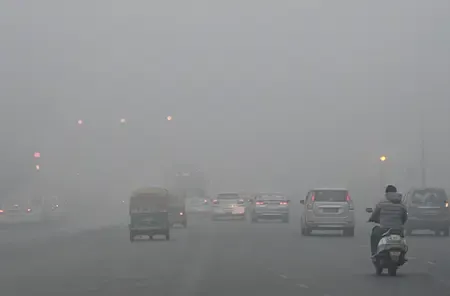
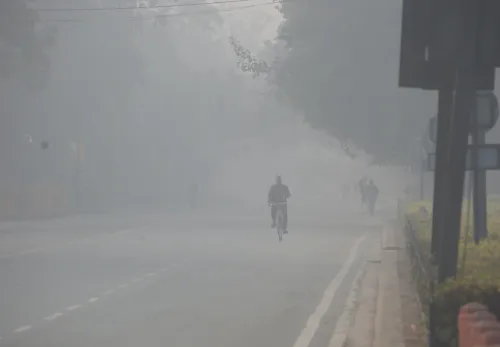
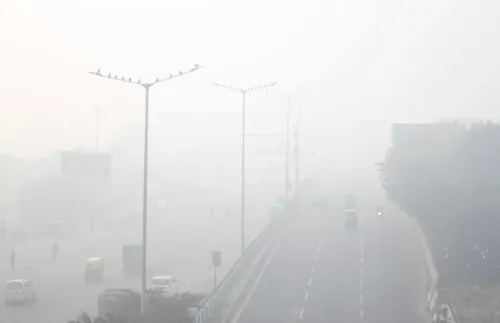
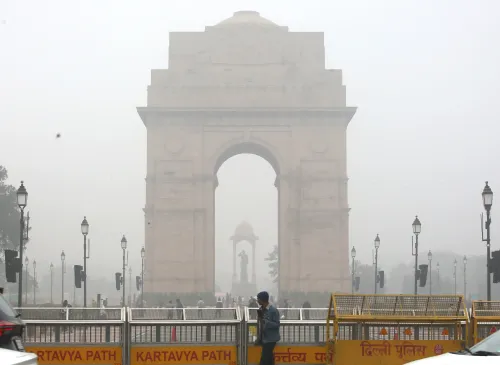
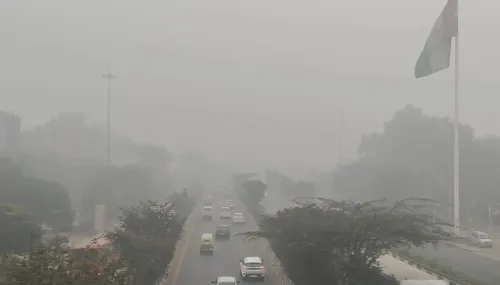
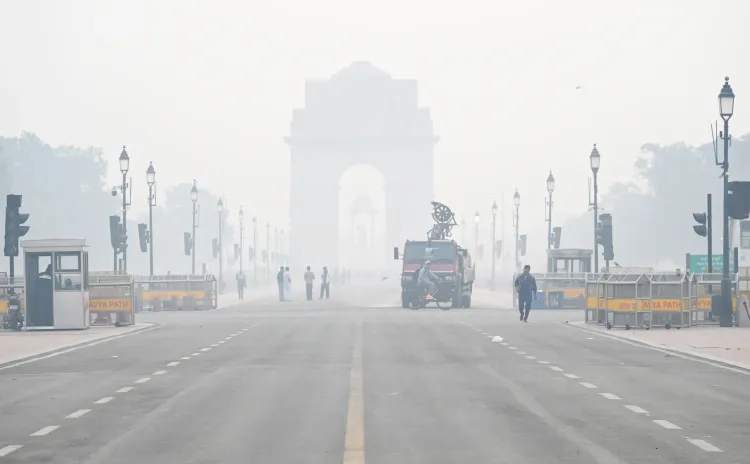
New Delhi, Jan 3 (NationPress) A thick layer of smog and fog blanketed many areas of the national capital on Saturday morning, drastically lowering visibility and impacting daily routines throughout the city.
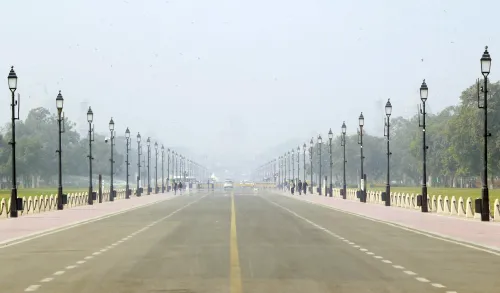
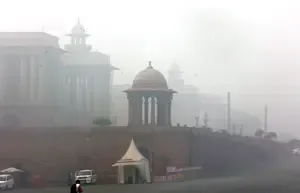
Iconic sites like Rashtrapati Bhawan and India Gate were obscured by heavy haze, while visibility along Kartavya Path decreased significantly, causing traffic slowdowns and travel interruptions.
As per data from the Central Pollution Control Board (CPCB), accessed via the SAMEER app, Delhi’s Air Quality Index (AQI) registered at 235 this morning, categorizing it as ‘poor’ to ‘very poor’. Authorities have urged residents, especially children, the elderly, and individuals with respiratory issues, to limit outdoor activities due to the worsening air quality.
The India Meteorological Department (IMD) has issued a yellow alert for Delhi-NCR, cautioning residents about dense fog during the early hours of Saturday.
The weather bureau predicts that the minimum temperature in the area will fluctuate between 6 and 8 degrees Celsius, which is a notable drop from Friday’s minimum of 9 degrees Celsius. The IMD also forecasts that the maximum temperature on Saturday may remain around 18 degrees Celsius, with foggy conditions expected to continue during the morning.
Additionally, the IMD has indicated a cold wave may affect isolated regions of Delhi from January 3 to January 6. A cold wave is triggered when the minimum temperature falls 4.5 to 6.5 degrees Celsius below the seasonal average. Similar conditions are anticipated in isolated areas of Haryana during this timeframe.
In spite of the persistent haze, there has been a slight improvement in air quality when compared to earlier this week.
On Friday, Delhi’s 24-hour average AQI was recorded at 236, a substantial improvement from the 380 noted a day prior, which had classified as ‘very poor’. Weather officials attributed the minor improvement to changes in wind patterns and temperature.
On Friday, the city’s maximum temperature was noted at 17.4 degrees Celsius, nearly 1.9 degrees below normal, while the minimum temperature was recorded at 9.1 degrees Celsius, approximately 2.2 degrees above the seasonal average, according to the IMD.
According to CPCB guidelines, an AQI reading between 201 and 300 falls under the ‘poor’ category, while those between 301 and 400 are considered ‘very poor’. The Air Quality Early Warning System has alerted that air quality is likely to remain in the ‘poor’ category on Saturday and may further decline to ‘very poor’ between January 4 and January 5, depending on prevailing weather conditions.
Authorities are closely monitoring the situation and urging citizens to exercise caution as winter conditions intensify across the region.
Point of View
It is imperative to observe the ongoing health crisis caused by poor air quality in Delhi. The persistent smog and fog not only disrupt daily life but also pose a significant risk to vulnerable populations. Authorities must take urgent measures to ensure public safety as winter conditions worsen.
NationPress
22 Sept 2026
Frequently Asked Questions
What is the current air quality index in Delhi?
The Air Quality Index (AQI) in Delhi was recorded at 235, placing it in the 'poor' to 'very poor' category.
What precautions should residents take during this weather?
Residents, especially those with respiratory issues, children, and the elderly, are advised to limit outdoor activities to protect their health.
What does the yellow alert from IMD signify?
The yellow alert signifies the forecast of dense fog and low visibility conditions, which could impact travel and daily activities.
How long will the cold wave conditions last?
Cold wave conditions are expected to affect isolated areas of Delhi from January 3 to January 6.
Is there any improvement in air quality compared to earlier this week?
Yes, there has been a slight improvement in air quality with the AQI dropping from 380 to 236 over a day.