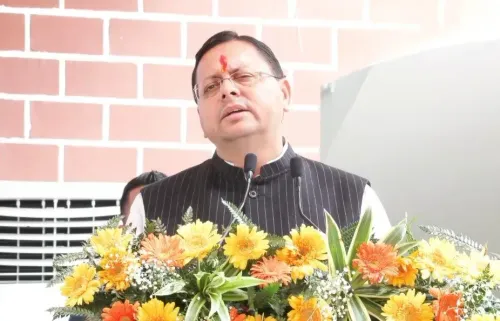
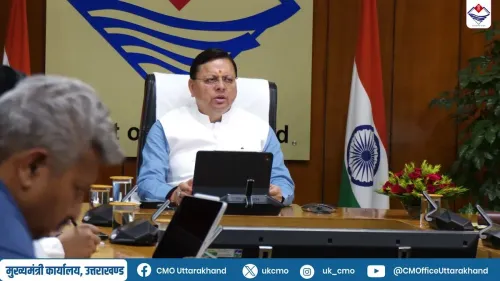
CM Dhami: 13 Heliports to Transform Uttarakhand Connectivity
Synopsis
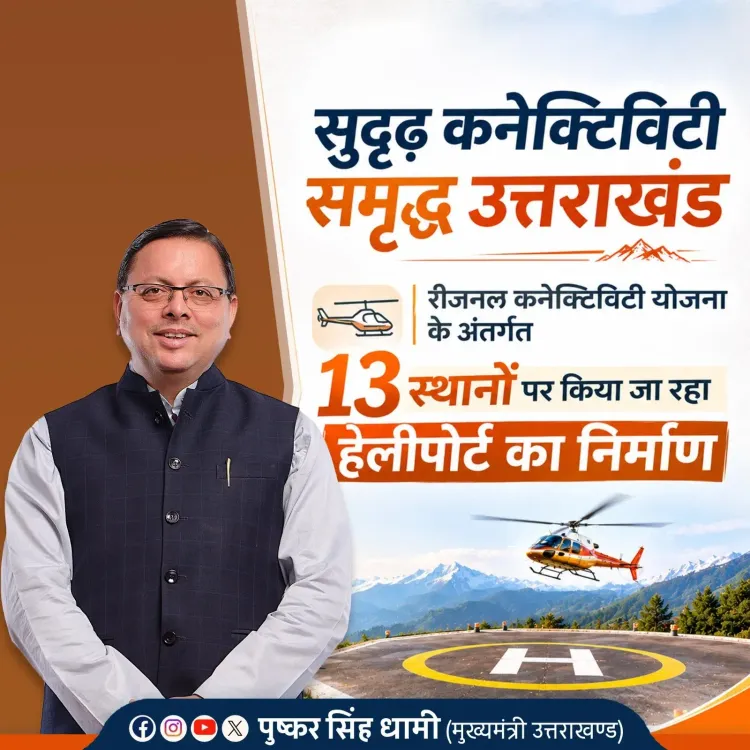
Uttarakhand CM Pushkar Singh Dhami announced on 19 November 2026 that 13 heliports are being built under the Regional Connectivity Scheme to improve access in mountain districts, boost tourism, and generate local employment.
Key Takeaways
13 heliports are under construction across Uttarakhand under the Regional Connectivity Scheme (UDAN).
The move aims to ease movement in hilly and remote districts where road access is severely limited.
CM Pushkar Singh Dhami linked the project to Uttarakhand's broader goal of becoming a prosperous state through strong connectivity.
The UDAN scheme was launched in 2016 by the Ministry of Civil Aviation to subsidise air and heli-routes in remote areas.
Tourism growth and local employment creation are cited as direct expected outcomes alongside improved mobility.
Exact site locations and construction timelines are yet to be officially disclosed.
Thirteen new heliports are set to reshape how the mountains of Uttarakhand are reached — and Chief Minister Pushkar Singh Dhami made clear on Thursday, 19 November 2026, that the state is treating aerial connectivity as the cornerstone of its development ambitions.
Posting on X, Dhami announced that heliport construction at 13 locations across the state is underway under the Regional Connectivity Scheme — the umbrella framework linked to the Centre's flagship UDAN (Ude Desh ka Aam Nagrik) programme. 'Mazboot connectivity se samridh Uttarakhand ke sankalp ko nayi gati mil rahi hai' ('Strong connectivity is giving new momentum to the resolve of a prosperous Uttarakhand'), he wrote, framing the infrastructure push squarely within the state's larger economic vision.
Why 13 Heliports Matter in a State Defined by Mountains
Uttarakhand's geography is both its greatest asset and its most stubborn constraint. Vast swathes of the state's hill districts remain accessible only by narrow mountain roads that become treacherous — or completely cut off — during the monsoon and winter months. For residents of these areas, a medical emergency, a school examination, or a supply shortage can quickly become a crisis simply because getting in or getting out takes hours that often don't exist.
Heliports directly break that bottleneck. They compress multi-hour road journeys into minutes of flight time and open corridors that no highway ever will. The UDAN scheme, launched in 2016 by the Ministry of Civil Aviation, was designed precisely for this problem — making air travel economically viable in remote, hilly terrain by subsidising operations on otherwise unviable routes. Himalayan states like Uttarakhand were among the earliest priority zones under the scheme's helicopter operations component.
Tourism Fuel and Jobs on the Ground
Beyond emergency access, the economic calculus is compelling. Uttarakhand's tourism sector — anchored by pilgrimage circuits like the Char Dham and adventure destinations across Garhwal and Kumaon — has long been constrained by the sheer difficulty of reaching remote sites. Better heli-connectivity can extend the tourism season, decongest road-dependent routes, and open entirely new itineraries for both domestic and international visitors.
Dhami's post explicitly names employment creation alongside tourism as a direct outcome, pointing to the downstream effect better connectivity has on local livelihoods — from hospitality workers to guides to small traders who depend on visitor footfall.
UDAN's Himalayan Track Record Sets the Stage
The Centre's progressive expansion of UDAN into helicopter operations across Himalayan states reflects a recognition that standard fixed-wing airports cannot solve the last-mile problem in high-altitude terrain. Uttarakhand has been an early and consistent focus of this push, with helipad infrastructure layered onto existing religious and trekking tourism demand.
Specific site-level details — which 13 locations have been selected, the construction timeline, and central versus state funding proportions — are yet to be formally published. Those disclosures, expected in the coming months, will determine how quickly the connectivity dividend translates from policy announcement to runway reality.
Thirteen heliports won't flatten the Himalayas, but they will make sure the mountains no longer wall off the people living inside them.
Point of View
Framing connectivity as the engine of prosperity reinforces a governance narrative focused on visible infrastructure delivery ahead of future electoral cycles. The project also reflects the Centre's deepening use of UDAN as a policy tool to integrate economically lagging hill districts into the mainstream growth story — a template other Himalayan states are closely watching. Whether the initiative delivers on its employment promise will depend on how swiftly operational details, funding structures, and airline or helicopter operator agreements are formalised.
NationPress
19 Nov 2026
Frequently Asked Questions
How many heliports are being built in Uttarakhand?
13 heliports are being constructed across Uttarakhand under the Regional Connectivity Scheme, as announced by CM Pushkar Singh Dhami on 19 November 2026.
What is the Regional Connectivity Scheme for heliports in Uttarakhand?
The Regional Connectivity Scheme is linked to the Centre's UDAN (Ude Desh ka Aam Nagrik) programme, launched in 2016 , which subsidises air and helicopter services on remote and hilly routes to make them economically viable.
How will the 13 heliports benefit Uttarakhand residents?
The heliports are expected to ease movement in mountain districts where road access is difficult, improve emergency connectivity, boost tourism , and generate new employment opportunities for local communities.
Where are the 13 heliports in Uttarakhand located?
The specific locations of the 13 heliport sites have not yet been officially published. The state government is expected to release site-level details in the coming months.
What is the UDAN scheme and how does it help hill states?
UDAN stands for Ude Desh ka Aam Nagrik , a Ministry of Civil Aviation programme launched in 2016 to improve regional air connectivity. It includes helicopter operations specifically designed for Himalayan states with limited road infrastructure.