CM Dhami Pushes Air Connectivity in Uttarakhand Hills
Synopsis
Uttarakhand's Chief Minister's Office says CM Pushkar Singh Dhami is driving expanded air connectivity to remote mountain districts by combining the Centre's UDAN scheme with state-level support, aiming to end geographic isolation for hill communities and boost tourism.
Key Takeaways
The Chief Minister's Office of Uttarakhand announced on 6 July 2026 that air connectivity in the state is gaining new momentum under CM Pushkar Singh Dhami .
The initiative combines the central UDAN scheme , launched in 2016 , with state government land and regulatory support.
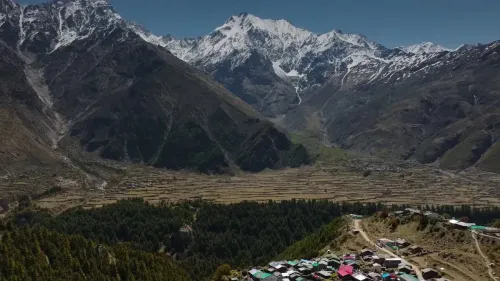
Remote mountainous districts historically cut off by vulnerable road links are the primary targets of the connectivity push.
Key beneficiaries include hill residents needing medical and economic access, and tourism operators serving the Char Dham and adventure circuits.
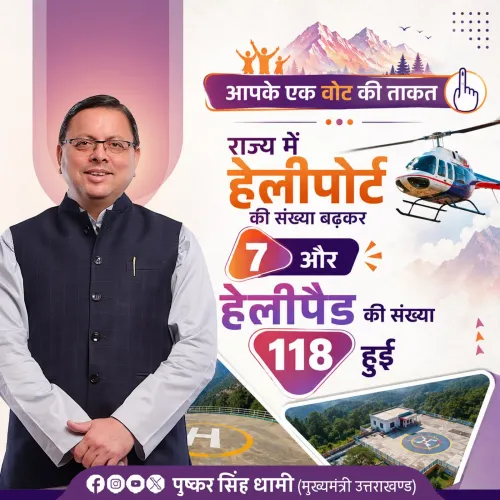
Uttarakhand has participated in multiple UDAN bidding rounds, progressively adding heliports and fixed-wing airstrips across the state.
The next round of UDAN route awards and new heliport inaugurations will signal how quickly the plan moves from announcement to operations.
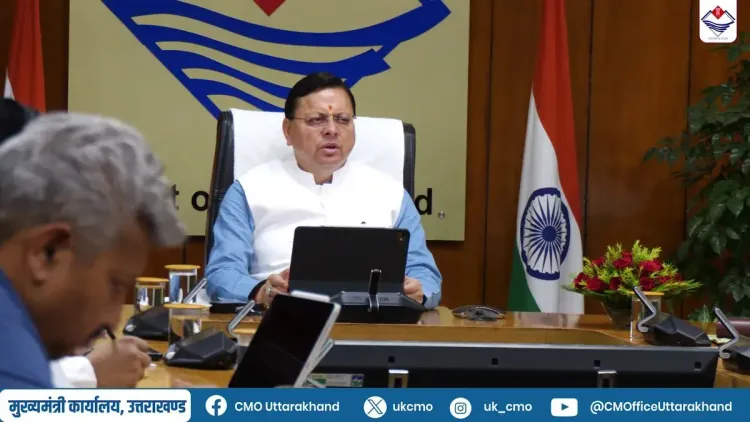
The Chief Minister's Office of Uttarakhand announced on Monday, 6 July 2026 that the state is gaining new momentum in air connectivity under the leadership of Chief Minister Pushkar Singh Dhami, with remote mountainous districts now being linked to the sky through the central government's UDAN scheme and coordinated state-level efforts.
The official post stated: 'मुख्यमंत्री श्री पुष्कर सिंह धामी के नेतृत्व में उत्तराखण्ड में हवाई संपर्क को नई उड़ान मिल रही है' ['Under Chief Minister Pushkar Singh Dhami's leadership, air connectivity in Uttarakhand is taking a new flight']. It added that distant hill regions are now being connected to the skies through the Centre's UDAN scheme and the state government's efforts.
Context
Uttarakhand is a Himalayan state whose remote districts have historically depended almost entirely on road links that remain vulnerable to landslides, floods, and seasonal closures. Reaching major urban centres from interior valleys could take many hours or, in emergency conditions, prove impossible by road alone. Air connectivity has long been identified as a strategic necessity rather than a convenience for such terrain.
The state has participated in multiple rounds of route bidding under the UDAN framework, progressively adding heliports and short fixed-wing airstrips alongside ongoing national highway and rail expansion projects.
Policy Backdrop
The UDAN (Ude Desh ka Aam Naagrik) scheme was launched by the Ministry of Civil Aviation in 2016 as a regional connectivity programme designed to subsidise flights to unserved and underserved airports through viability gap funding. The scheme targets precisely the kind of geographically isolated districts that define much of Uttarakhand's interior.
Under the model, the central government provides financial support to airlines operating on designated routes, while state governments contribute land, regulatory facilitation, and in some cases co-funding. This combination of central subsidies and state-level execution has been the backbone of Uttarakhand's civil aviation expansion strategy under successive administrations.
Stakeholders and Impact
The most direct beneficiaries are hill residents in districts such as those in the Garhwal and Kumaon divisions, for whom a reliable air link can mean faster access to medical care, education, and economic opportunity. Emergency evacuations and disaster-response operations also become significantly more viable when air infrastructure is in place.
Tourism operators stand to gain considerably as well. Uttarakhand hosts major pilgrimage circuits including the Char Dham route and draws adventure tourists year-round. Reduced travel times from metros to hill destinations directly expand the addressable visitor base and lengthen the effective tourism season.
What's Next
The next round of UDAN route awards and any fresh airport or heliport inaugurations in Uttarakhand's civil aviation pipeline will be closely watched as indicators of how quickly the connectivity push translates into operational flights. The state government's ability to clear land and regulatory hurdles in time will determine the pace of rollout.
Sustained air connectivity in the hills, if achieved at scale, could meaningfully reduce the geographic disadvantage that has historically constrained economic development across Uttarakhand's remotest communities — and set a template for other difficult-terrain states navigating similar challenges.
Point of View
Who has staked much of his governance identity on development optics, air links to the hills carry symbolic weight alongside practical utility. The post's framing — crediting both central and state efforts — is also a deliberate signal of cooperative federalism at a time when Centre-state coordination on infrastructure is under scrutiny. Whether the announcements translate into sustained, affordable flight operations will be the real test of the policy's depth.
NationPress
5 Oct 2026
Frequently Asked Questions
What is the UDAN scheme and how does it help Uttarakhand?
The UDAN (Ude Desh ka Aam Naagrik) scheme is a central government programme launched in 2016 to subsidise flights to unserved and underserved airports through viability gap funding. It helps Uttarakhand by making it financially viable for airlines to operate routes to remote hill districts that would otherwise be unprofitable.
Which areas of Uttarakhand will benefit from improved air connectivity?
Remote mountainous districts across the Garhwal and Kumaon divisions are the primary targets. These areas have historically depended on road links prone to disruption by landslides and seasonal closures, making air access a critical need.
What has CM Pushkar Singh Dhami done for air connectivity in Uttarakhand?
Under CM Pushkar Singh Dhami's leadership, the state government has combined central UDAN scheme subsidies with state-level land clearance and regulatory support to expand heliports and fixed-wing airstrips across Uttarakhand's hill regions.
How does better air connectivity affect tourism in Uttarakhand?
Improved air links reduce travel times from major cities to hill destinations, expanding the visitor base for pilgrimage circuits like Char Dham and adventure tourism zones, and effectively lengthening the viable tourism season.
What should I watch for next in Uttarakhand's civil aviation expansion?
The next round of UDAN route awards and any new airport or heliport inaugurations announced by the Uttarakhand government will be the key indicators of how quickly the connectivity push moves from policy to operational flights.