CM Dhami Launches Phase 2 of Ekal Mahila Swarozgar Yojana
Synopsis
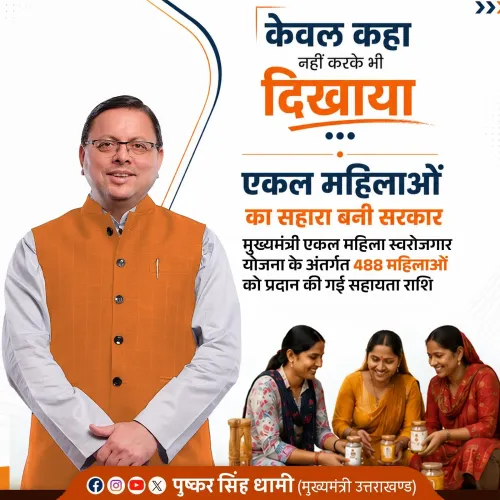
Chief Minister Pushkar Singh Dhami launched the second phase of the Mukhyamantri Ekal Mahila Swarozgar Yojana on 22 July 2026, transferring Rs 2.76 crore via DBT to 488 single, widowed, and vulnerable women in Uttarakhand, with up to 75% state grant on self-employment projects worth up to Rs 2 lakh.
Key Takeaways
Rs 2 crore 76 lakh 16 thousand 875 disbursed via DBT to 488 women beneficiaries on 22 July 2026 in a single event.
Phase 2 covers 212 new beneficiaries (first instalment: Rs 1.55 crore); Phase 1's 276 beneficiaries received second instalments (Rs 1.20 crore).
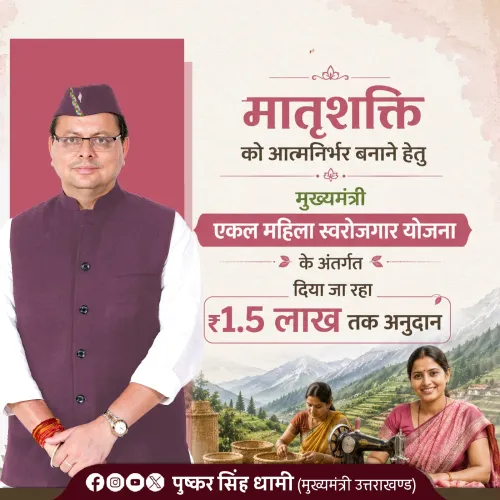
The scheme provides up to Rs 2 lakh per project with a 75% state subsidy , targeting single, widowed, deserted, acid-attack-affected women and transgender persons.
Cumulative disbursements across both phases now exceed Rs 6 crore to over 970 beneficiaries .
Uttarakhand has over 5 lakh women in 70,000-plus self-help groups and more than 2.65 lakh Lakhpati Didis .
Uttarakhand is the first Indian state to implement the Uniform Civil Code and provides 30% horizontal reservation for women in government jobs.
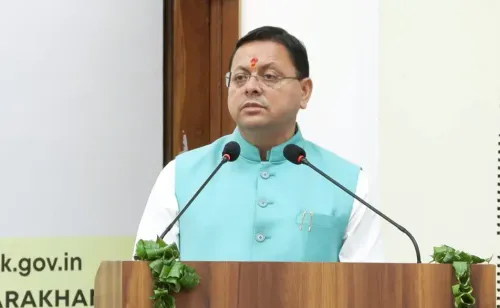
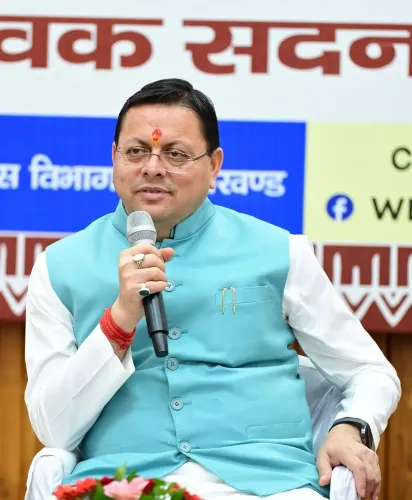
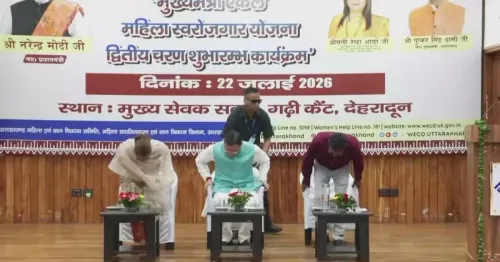
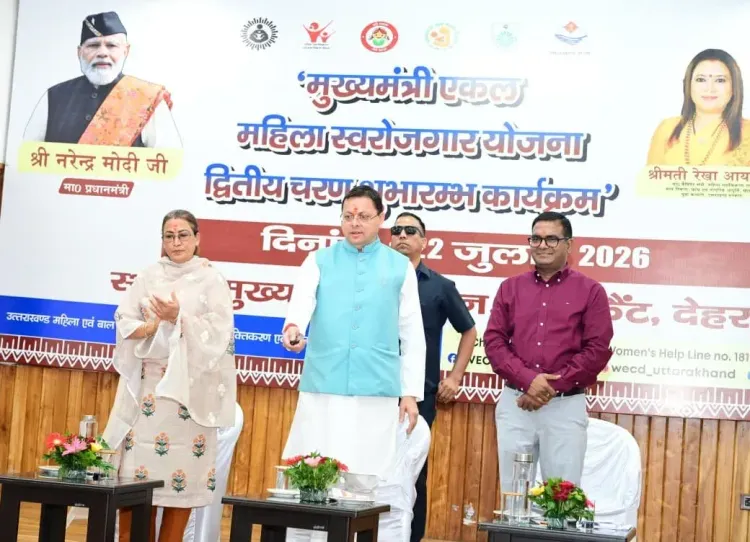
Chief Minister Pushkar Singh Dhami on Wednesday, 22 July 2026 launched the second phase of the Mukhyamantri Ekal Mahila Swarozgar Yojana at Mukhya Sevak Sadan, the Chief Minister's Camp Office, disbursing over Rs 2.76 crore to 488 women beneficiaries across Uttarakhand through Direct Benefit Transfer. The event was organised by the state's Department of Women Empowerment and Child Development.
What Was Announced
Under the second phase, 212 new beneficiaries received a first instalment totalling Rs 1 crore 55 lakh 40 thousand, while 276 beneficiaries from the first phase received a second instalment of Rs 1 crore 20 lakh 76 thousand 875 — bringing the day's total disbursement to Rs 2 crore 76 lakh 16 thousand 875. All transfers were made through the DBT mechanism directly to beneficiaries' bank accounts. The scheme's first phase had earlier provided Rs 3.45 crore to 484 women on 10 February 2026.
Context and Scheme Design
The Mukhyamantri Ekal Mahila Swarozgar Yojana targets single, destitute, widowed, deserted, and divorced women, as well as acid-attack survivors, women affected by other criminal acts, and transgender persons. Eligible beneficiaries can receive project approval of up to Rs 2 lakh to establish self-employment ventures at or near their place of residence, with the state government providing a grant of up to 75 per cent of the project cost. CM Dhami described the scheme's goal not merely as financial aid, but as providing women 'an opportunity to stand on their own feet with dignity' — 'सम्मानपूर्वक अपने पैरों पर खड़ा होने का अवसर'.
Women Empowerment and Child Development Minister Rekha Arya said the scheme is 'writing a new chapter of self-reliance, dignity and confidence in the lives of single women of the state.' The event was also attended by Secretary Chandresh Kumar and Director Banshilal Rana of the Women Empowerment and Child Development Department, along with other departmental officials.
Policy Backdrop
CM Dhami placed the scheme within a broader national and state-level framework of women's empowerment. He credited Prime Minister Narendra Modi's leadership for giving 'new direction to women's honour, safety and empowerment,' citing the Women's Reservation Act, the Beti Bachao Beti Padhao campaign, the Ujjwala Yojana, the Lakhpati Didi Abhiyan, and the abolition of triple talaq as landmark decisions. At the state level, he pointed to the Rural Livelihood Mission, the Sashakt Bahna Utsav Yojana, the Mukhyamantri Mahila SHG Sashaktikaran Yojana, and the Mukhyamantri Udyamshala Yojana as complementary initiatives linking women to self-employment and entrepreneurship.
Uttarakhand has also enacted the Uniform Civil Code — the first Indian state to do so — to protect women's rights under personal law, and has provided 30 per cent horizontal reservation for women in state government services. The state government is additionally providing incubation support to more than 15,000 women entrepreneurs, self-help groups, and Lakhpati Didis.
Stakeholders and Scale
According to CM Dhami, approximately 5 lakh women in Uttarakhand are currently engaged in economic activities through more than 70,000 self-help groups. More than 7,000 village organisations and over 500 cluster organisations are strengthening collective women's leadership across the state. Over 2 lakh 65 thousand women have become 'Lakhpati Didis', achieving annual incomes of Rs 1 lakh or more and serving as models of self-reliance.
The state government is also developing systems for processing, packaging, branding, and marketing of products made by women beneficiaries, aiming to connect cottage-level production with formal supply chains.
What's Next
With two phases now operational and cumulative disbursements crossing Rs 6 crore to over 970 beneficiaries, the trajectory of the scheme will be closely watched — particularly beneficiary enterprise survival rates and the pace of second-instalment releases to phase-two recipients. Any scale-up or budgetary enhancement is likely to feature in the state's next budget cycle or rural livelihood mission reviews. CM Dhami expressed confidence that the scheme would 'write a new chapter of self-reliance, dignity and economic empowerment in the lives of thousands of women of the state.'
Point of View
Widowed, acid-attack-affected, and transgender persons — rather than relying solely on broader SHG frameworks. By combining a 75% subsidy with DBT and linking the scheme to the state's Uniform Civil Code and horizontal reservation, the Dhami government is constructing a layered empowerment architecture that goes beyond cash transfers. The explicit inclusion of transgender beneficiaries is a notable policy evolution for a BJP-governed state, reflecting the broadening of 'women's empowerment' as a political category. The scheme's scale and pace of disbursement will be the real test: enterprise survival rates and second-instalment conversion among Phase 2 recipients will determine whether the programme delivers durable economic independence or remains a headline-friendly grant cycle.
NationPress
21 Oct 2026
Frequently Asked Questions
What is the Mukhyamantri Ekal Mahila Swarozgar Yojana?
It is an Uttarakhand government scheme that provides up to Rs 2 lakh in project funding — with a 75% state grant — to single, widowed, deserted, divorced, acid-attack-affected women and transgender persons to set up self-employment ventures near their homes.
How much money was disbursed under Phase 2 of the scheme?
On 22 July 2026, a total of Rs 2 crore 76 lakh 16 thousand 875 was disbursed via DBT to 488 women beneficiaries — Rs 1.55 crore to 212 new Phase 2 beneficiaries and Rs 1.20 crore as second instalments to 276 Phase 1 beneficiaries.
Who is eligible for the Mukhyamantri Ekal Mahila Swarozgar Yojana?
Eligible beneficiaries include single, destitute, widowed, deserted, and divorced women, acid-attack survivors, women affected by criminal acts, and transgender persons who wish to establish self-employment in or near their place of residence in Uttarakhand.
What did Uttarakhand do for women's reservation in government jobs?
The Uttarakhand government has provided 30% horizontal reservation for women in state government services, in addition to implementing the Uniform Civil Code to ensure equal rights under personal law.
How many women are part of self-help groups in Uttarakhand?
Approximately 5 lakh women in Uttarakhand are engaged in economic activities through more than 70,000 self-help groups, supported by over 7,000 village organisations and 500-plus cluster organisations.