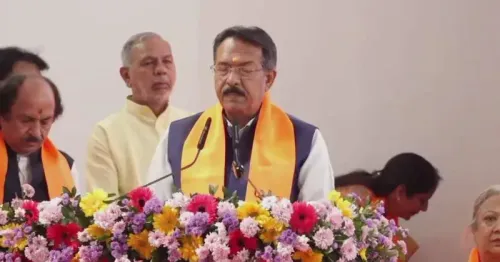
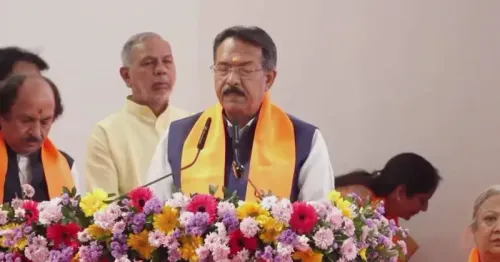
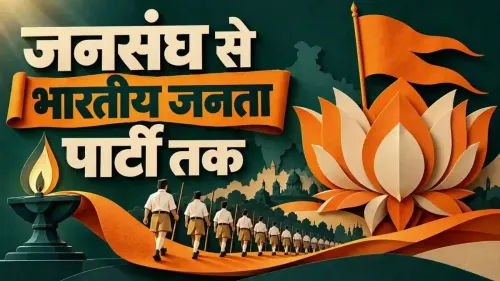
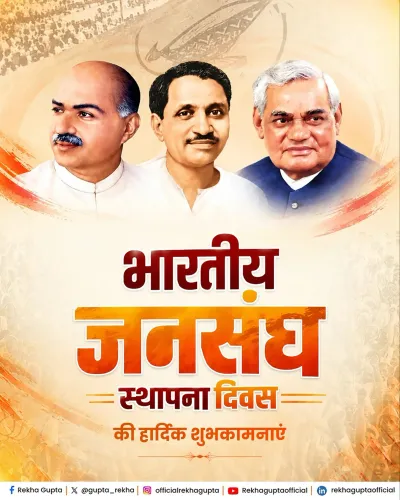
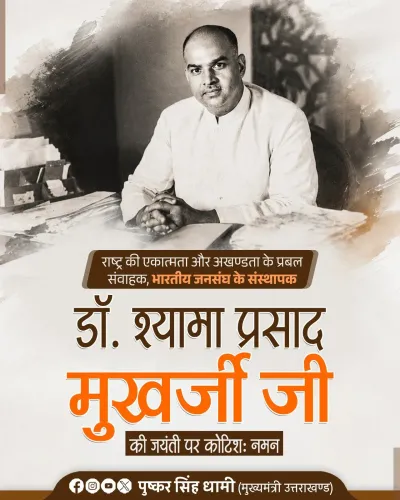
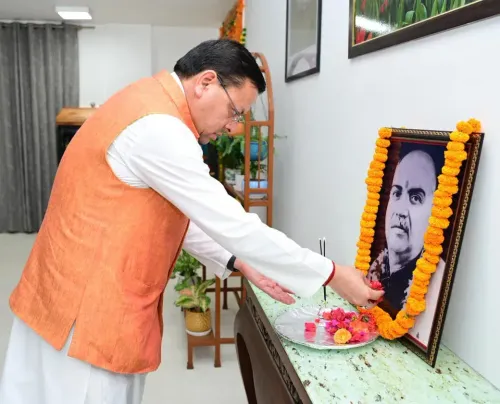
CM Dhami marks Bharatiya Jan Sangh's 75th founding anniversary
Synopsis
Uttarakhand CM Pushkar Singh Dhami marked the Bharatiya Jan Sangh's 75th founding anniversary on October 21, 2026, honouring Dr. Shyama Prasad Mookerjee's legacy and the party's role in shaping the ideological and organisational foundation of today's BJP.
Key Takeaways
Bharatiya Jan Sangh was founded on 21 October 1951 by Dr.
Shyama Prasad Mookerjee .
CM Pushkar Singh Dhami extended greetings to all party workers on the party's 75th founding anniversary .
Dhami credited the Jan Sangh with placing national interest and national unity at the centre of Indian political discourse.
The Jan Sangh merged into the Janata Party in 1977 ; its members went on to form the BJP in 1980 .
BJP leaders routinely mark Jan Sangh anniversaries to highlight ideological continuity from the 1950s to the present.
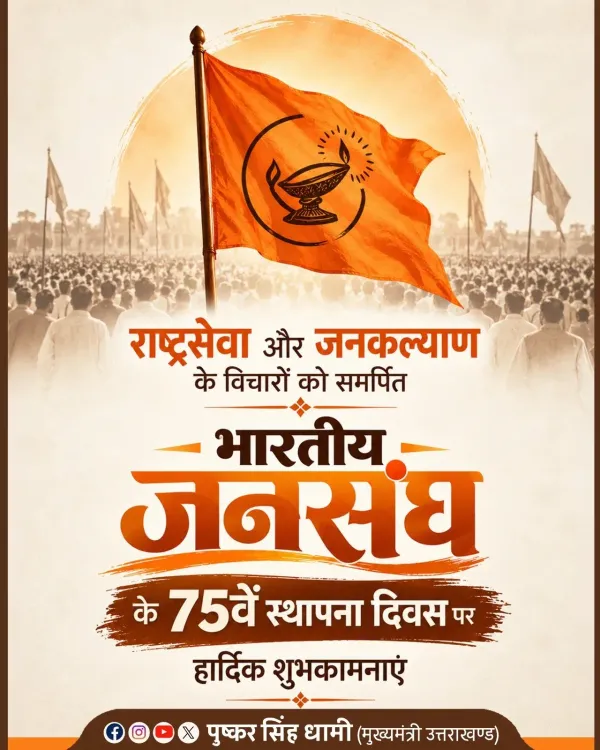
Seventy-five years after Dr. Shyama Prasad Mookerjee planted a nationalist flag in Indian politics, Uttarakhand Chief Minister Pushkar Singh Dhami on Wednesday, October 21, 2026, marked the Bharatiya Jan Sangh's 75th founding anniversary with a message to party workers tracing the ideological thread that runs from the Jan Sangh's founding to the Bharatiya Janata Party of today.
Writing in Hindi, CM Dhami extended warm greetings — 'हार्दिक शुभकामनाएँ' ('heartfelt good wishes') — to all workers, honouring the party's founding ideals of 'देशसेवा, राष्ट्रवाद और जनकल्याण' ('service to the nation, nationalism, and public welfare'). He credited the Jan Sangh with bringing the concepts of national interest and national unity to the centre of political discourse.
The party Dr. Mookerjee built on October 21, 1951
The Bharatiya Jan Sangh was formally founded on 21 October 1951 by Dr. Shyama Prasad Mookerjee, a former minister who broke with the Congress government over what he saw as policies that undermined national integration. The party carved out a distinct space in post-independence Indian politics by anchoring itself in cultural nationalism and an idea of 'one nation, one people, one culture.'
For nearly three decades it remained an influential minority voice — winning legislative seats, shaping debate, and nurturing a disciplined cadre — before the political earthquake of 1977, when the Jan Sangh merged into the broad anti-Emergency Janata Party coalition. When that coalition fractured, its former Jan Sangh members reconstituted themselves as the Bharatiya Janata Party on April 6, 1980, carrying the organisational muscle and ideological framework of the parent body into a new vehicle.
Why BJP leaders keep returning to the Jan Sangh story
Dhami's post is part of a well-established pattern: senior BJP leaders and chief ministers across states use the Jan Sangh's founding anniversary to reinforce the party's claim to a deep ideological lineage stretching back to India's early post-independence decades. The message does two things at once — it honours the past and signals ideological consistency to the present-day rank and file.
For workers on the ground, the anniversary is both a reminder of sacrifices made in leaner years and an affirmation that the party's current dominance has ideological roots, not merely electoral ones. Statements from other BJP state units and national-level commemorations are expected to follow through the day.
Point of View
BJP leaders frame their current nationalist positioning not as a modern invention but as a 75-year continuum. For CM Dhami, the tribute also serves an internal audience — reinforcing his credentials as an ideologically grounded leader within the party ecosystem. More broadly, the ritual of anniversary commemorations reflects how the BJP manages its identity politics: the past is not nostalgia, it is a recurring legitimising resource.
NationPress
21 Oct 2026
Frequently Asked Questions
When was the Bharatiya Jan Sangh founded?
The Bharatiya Jan Sangh was founded on 21 October 1951 by Dr. Shyama Prasad Mookerjee as a platform for nationalist political discourse in post-independence India.
What is the connection between the Jan Sangh and the BJP?
The Jan Sangh merged into the Janata Party in 1977 . When that coalition broke apart, former Jan Sangh members formed the Bharatiya Janata Party in 1980 , carrying forward the Jan Sangh's organisational base and ideology.
Who was Dr. Shyama Prasad Mookerjee?
Dr. Shyama Prasad Mookerjee was the founder of the Bharatiya Jan Sangh who emphasised national integration and opposed policies he saw as divisive in post-independence India.
Why did CM Dhami post about the Jan Sangh anniversary?
CM Pushkar Singh Dhami posted to mark the Jan Sangh's 75th founding anniversary , a tradition among BJP leaders to highlight the party's ideological continuity from the 1950s to the present.
What were the core ideals of the Bharatiya Jan Sangh?
The Jan Sangh was built around the ideals of service to the nation, nationalism, and public welfare , and it advocated for national interest and national unity as central themes in Indian politics.