What Clarifications Did the ECI Provide on Data Release Post-Bihar Elections?
Synopsis
As the Bihar Assembly elections unfold, the ECI's recent clarifications aim to address concerns about data release, security measures, and gender participation. This article explores the implications of these statements amid ongoing speculations.
Key Takeaways
The ECI is committed to accuracy over speed in releasing election data.
Security forces are sourced to ensure impartiality during elections.
Gender participation is a key focus for the ECI in promoting balanced voting.
Observers are appointed without bias towards any ruling party.
CCTV monitoring ensures the integrity of electronic voting systems.
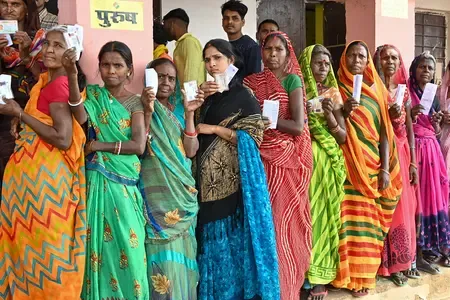
New Delhi, Nov 10 (NationPress) In an effort to quell growing speculations, the Election Commission of India (ECI) took decisive action on Monday, stating that data is not being disclosed following the conclusion of the initial phase of the Bihar Assembly elections.
Rumors regarding an upward adjustment in the final voter turnout numbers are circulating for the recently finished first phase of the Bihar Assembly elections.
The overall gender ratio (Male/Female) in voter engagement is usually presented at the time of the final turnout report.
The issue arose after opposition leaders and social media commentators questioned the ECI's delay in releasing the conclusive data.
Responding to specific inquiries about gender participation, ECI sources indicated that the overall male-female voter turnout ratio is generally revealed only in the final report.
Provisional figures, often derived from incomplete data, can distort public perception.
"The ECI consistently prioritizes accuracy over speed," the ECI sources remarked.
This approach reflects the Commission's long-standing commitment to promoting gender-balanced voting through focused awareness initiatives in rural areas.
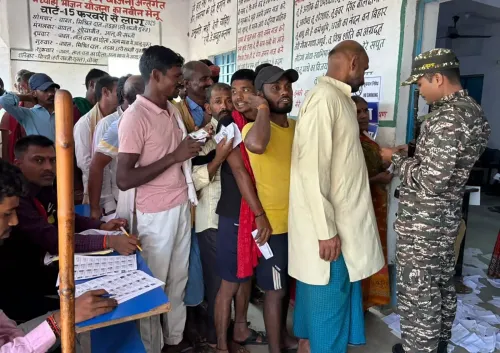
Regarding security measures, the ECI countered claims of biased policing by disclosing that nearly 80 percent of forces—over 200 companies—were sourced from the Central Armed Police Forces (CAPF), ensuring impartiality.
The remaining 20 percent was drawn from State Armed Police (SAP) units proportionately from 24 states, including Jharkhand, Telangana, Kerala, Punjab, Himachal Pradesh, and Karnataka.
"No single state dominates; availability and logistics dictate allocations," the ECI sources explained.
This diverse composition, comprising more than 85,000 personnel, was praised for maintaining order during the critical elections, with no major incidents reported.
Observer impartiality was also emphasized.
The Commission deployed over 500 general, police, and expenditure observers from various regions of India, chosen irrespective of the ruling party in their home states.
"Proportionality ensures checks and balances," the ECI sources affirmed, dismissing allegations of bias favoring the incumbent NDA-led coalition.
Lastly, on electronic safeguards, the ECI confirmed comprehensive CCTV monitoring at all 25 strong rooms housing EVMs.
"Functionality is 100 percent; any minor issues—just 12 instances—were resolved within hours," the ECI sources stated.
Footage from these locations, available to party representatives, will be archived for 45 days in accordance with protocol.
Point of View
I find the ECI's commitment to transparency and accuracy vital for maintaining public trust during elections. The measures taken to ensure impartiality and the emphasis on gender-balanced voting reflect a progressive approach. The integrity of the electoral process must always remain paramount, and the ECI's actions should reassure citizens that their votes are valued and protected.
NationPress
29 Sept 2026
Frequently Asked Questions
Why is the ECI delaying the release of election data?
The ECI has clarified that the delay is due to a commitment to accuracy over speed, ensuring that all data released is reliable and comprehensive.
How does the ECI ensure impartiality in elections?
The ECI ensures impartiality by deploying security forces from diverse regions and appointing observers without regard to the ruling party in their home states.
What measures are in place to safeguard electronic voting?
The ECI has implemented comprehensive CCTV surveillance at all strong rooms housing EVMs, ensuring that any minor issues are resolved promptly.