How is ECI's SIR drive Reinforcing the Moral Foundation of Indian Democracy?
Synopsis
The Election Commission of India's Special Intensive Revision (SIR) initiative, which faced internal opposition, has gained international acclaim for reinforcing democratic values. By purging electoral rolls, it aims to ensure every vote matters, aligning with the essence of democracy.
Key Takeaways
SIR aims to purify electoral rolls .
Enhances democratic participation .
Removes duplicate and ineligible entries .
Supports universal adult franchise .
Reinforces the integrity of elections .
New Delhi, Jan 4 (NationPress) The initiative of revamping electoral rolls through the Special Intensive Revision (SIR), a significant undertaking by the Election Commission of India (ECI), faced considerable pushback within the country but garnered substantial praise in international discussions.
Several foreign publications have commended this initiative as a crucial move towards revitalizing the electoral register.
Greek City Times, an Australian-based Greek news outlet, lauded the significant effort by the electoral authority, referring to it as a manifestation of the principle of one person, one vote.
The article emphasized that this groundbreaking initiative has rejuvenated India’s democratic spirit by reaffirming the importance and dignity of each vote while also highlighting a commitment to increased civic engagement.
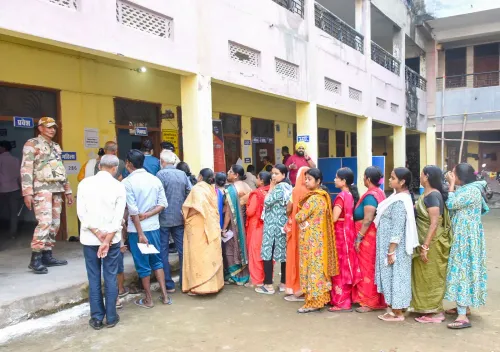
Importantly, the ECI successfully executed the SIR process in Bihar in advance of the Assembly elections, marking the first revision of electoral rolls in two decades. Following the Bihar elections, the ECI expanded the SIR to 12 additional states and Union Territories, provoking criticism from opposition factions.
The Greek City Times celebrated the initiative, stating that the SIR plays a vital role in upholding and fortifying the democratic framework, ensuring that every eligible citizen has an equal and genuine voice in the political arena.
“By systematically eliminating duplicate entries, deceased individuals, and ineligible voters while incorporating newly qualified citizens—particularly young voters who have just reached voting age—this exercise aims to better align the electoral rolls with current realities,” the article detailed, evaluating the motives and implications of the electoral revision.
It asserted that the SIR will enhance the credibility and legitimacy of electoral results, with multi-layered verification processes making voter registration more accessible and inclusive.
Moreover, a renewed and transparent voter list will foster public trust, and the removal of ghost entries will encourage greater engagement with the electoral process.
“This promotion of participation, especially among first-time voters and marginalized groups, directly supports the democratic principle of universal adult suffrage,” it further noted.
The SIR was described as a pivotal development in the ongoing maturation of Indian democracy, serving as “a testament to the resilience and adaptability of India’s electoral institutions,” and stating that “democracy flourishes when the electorate is recognized, verified, and heard in its entirety.”
Point of View
It is crucial to acknowledge the importance of the SIR initiative by the Election Commission of India. While it has faced criticism, its intent to purify the electoral rolls and enhance voter participation is a step in the right direction for Indian democracy. Ensuring each vote is recognized is fundamental to a functioning democracy, and the SIR initiative reflects a commitment to this principle.
NationPress
6 Oct 2026
Frequently Asked Questions
What is the Special Intensive Revision (SIR)?
The SIR is an initiative by the Election Commission of India aimed at updating and purging electoral rolls to ensure accuracy and inclusivity.
Why is SIR important for democracy?
SIR reinforces the principle of 'one person, one vote' by ensuring accurate voter representation and participation.
What challenges has the SIR faced?
The SIR has encountered resistance from opposition parties, but it has also received international acclaim for its democratic intentions.
How does SIR affect voter participation?
By removing inaccuracies and introducing new eligible voters, SIR aims to enhance civic engagement and trust in the electoral process.
What are the expected outcomes of SIR?
The expected outcomes include increased credibility of electoral results, higher public confidence, and a more inclusive voting process.